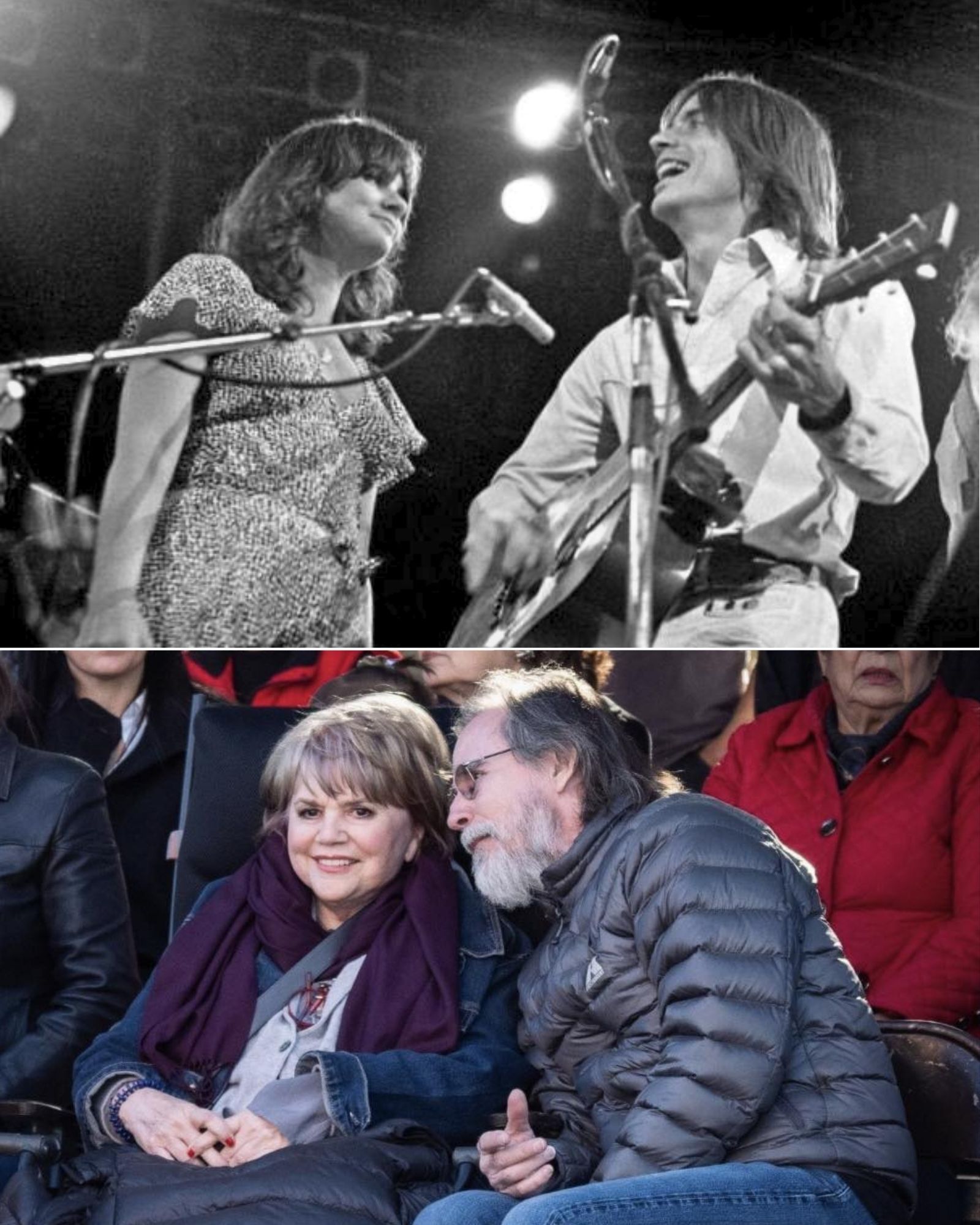
“THE SECRET HE’S KEPT FOR DECADES IS FINALLY SPILLING OUT” For years, fans only guessed what truly happened between Jackson Browne and Linda Ronstadt — the two hearts that shaped the California sound of the ’70s. Their songs spoke in whispers, but their silence said even more. Now, decades later, Browne has broken that silence. “Linda wasn’t just a muse,” he admitted softly, “she was the heartbeat of that era.” Those words hit like a confession long overdue — filled with admiration, nostalgia, and quiet regret. Behind every chord they played was a moment they never spoke of, a look that lingered a little too long. It wasn’t fame that tied them together; it was truth, and the ache of what could never be. And now, after all these years, he finally dares to say it aloud.

Jackson Browne

Jackson Browne Reveals the Untold Truth About Linda Ronstadt

LOS ANGELES, CA — For decades, Linda Ronstadt and Jackson Browne have stood as pillars of American music, their lives and artistry deeply connected through the vibrant, free-spirited Laurel Canyon scene of the 1970s. But in a recent interview, Browne revealed a truth that left fans stunned — not a scandal, but a deeply moving acknowledgment of Ronstadt’s quiet greatness, her struggles, and her enduring influence on generations of musicians.

The Unspoken Leader of an Era

During the conversation, Browne looked back on the golden age of Southern California music — a time when Ronstadt’s voice ruled the airwaves with classics like “You’re No Good,” “Blue Bayou,” and “When Will I Be Loved.” He described her as the “unspoken leader” of the Laurel Canyon community, a creative hub that gave rise to legends like the Eagles, Joni Mitchell, and Crosby, Stills & Nash.

“Linda wasn’t just a singer,” Browne said. “She was the glue that held so many of us together. She gave younger artists their first shot and pushed us all to be better. Without her, that scene wouldn’t have been what it was.”

The Shocking Truth — A Legacy Overlooked

The “shocking truth,” as Browne put it, wasn’t about controversy, but about injustice — that Linda Ronstadt never fully received the recognition she deserved. Despite her role in shaping the sound of an era, she remained humble, often doubting her own worth even as her influence rippled across the industry.

“She launched the Eagles. She fought for authenticity when the industry wanted her to play it safe,” Browne revealed. “She was the greatest of us all, but she never saw herself that way.”

Indeed, Ronstadt’s courage to defy the norms of commercial pop — to blend country, rock, folk, and Latin music — paved the way for countless artists who followed. Yet her humility often kept her revolutionary impact out of the spotlight.

A Voice Silenced, But a Spirit That Endures

Browne also spoke tenderly about Ronstadt’s health, a heartbreaking chapter that has left fans around the world deeply moved. Diagnosed with progressive supranuclear palsy (PSP), she has lost her ability to sing, speak, and now even hear — an unimaginable fate for a woman whose life was defined by sound.

“Linda once told me that silence was the hardest part,” Browne said softly. “The world remembers her voice, but she feels the absence of it every day.”

For fans and peers alike, his words hit hard. Across social media, tributes poured in — memories of her warmth, generosity, and musical brilliance. “She wasn’t just the queen of the ’70s,” one fan wrote. “She was the heartbeat of a generation.”

Remembering Linda’s Generosity and Strength

Artists who knew Ronstadt best echoed Browne’s sentiments. Dolly Parton and Emmylou Harris, her collaborators on the acclaimed Trio albums, have long called her one of the finest vocalists in history. But Browne’s words reminded the world that her greatest gift wasn’t just her voice — it was her selflessness, her integrity, and her courage to uplift others even while battling her own insecurities.

“The shocking truth,” Browne concluded, “is that Linda’s greatness wasn’t just in her voice — it was in her heart. She carried us all, even when she doubted herself.”

The Legacy That Lives On

Though illness has silenced her physically, Linda Ronstadt’s spirit continues to sing through the artists she inspired and the fans who still find comfort in her music. Her influence — from the Eagles to Sheryl Crow, from Miranda Lambert to Brandi Carlile — remains woven into the fabric of American song.

Jackson Browne’s revelation is not a story of loss, but of gratitude — a reminder that true legends are not defined by awards or headlines, but by the love and light they leave behind. For Linda Ronstadt, that light still burns bright, echoing in every voice that dares to be true.

0 Shares:
Leave a Reply

Your email address will not be published. Required fields are marked *

You May Also Like
Paul McCartney Linda
Read More

The Forgotten Sunday Inside the Get Back Sessions — Linda McCartney Quietly Brought Her Six-Year-Old Daughter Into the Studio, Paul McCartney Let the Child Take Over the Drum Kit as If It Were a Family Living Room, the Cameras Never Cut, and a Brief Domestic Moment Unfolded That Wasn’t About the Band at All but About a Father Figure, a New Kind of Family, and the Passing of Music From One Generation to the Next — a Detail Viewers Would Only Begin to Recognize Decades Later While Rewatching the Footage

The Sunday That Broke the Tension: How a Six-Year-Old Girl Wandered Into the Get Back Sessions — And Accidentally Humanized…
Ignazio Boschetto
Read More

When Silence Spoke Loudest: Ignazio Boschetto’s Quiet Moment During “Grande Amore”It was meant to be a charity concert in Rome, but for those present, it became something far more intimate—a moment that felt less like a performance and more like a memory unfolding in real time. Ignazio Boschetto took the stage that evening with the quiet confidence of someone used to standing in front of audiences. Yet this time, the focus shifted away from him. The spotlight slowly moved toward Michelle Bertolini, his wife, who stepped forward without dramatic introduction or visible tension. The choice of song was not random. “Grande Amore” is not just one of the defining pieces of Ignazio’s career—it is a song that represents a chapter of his artistic identity, one that has been performed across stages around the world. But this time, it returned in a different form, carried by the voice of someone who shares his private world. As the opening notes began, the atmosphere in the room shifted almost instantly. Conversations faded. Movement slowed. The audience seemed to collectively recognize that what they were witnessing was not a standard performance. Ignazio did not join in. Instead, he remained still. With his hands gently resting and his posture calm, he watched and listened. There was no attempt to perform alongside her, no interruption of the moment. His silence became part of the performance itself—an unspoken presence that grounded everything happening on stage. Observers in the room noted how his expression remained steady throughout. It was not detachment, but attention. A quiet acknowledgment of something deeply familiar being reshaped in front of him. Hearing a song so closely tied to his own career, performed by someone he loves, created a layer of meaning that words would likely have interrupted rather than enhanced. As the song progressed, the silence around him seemed to deepen rather than fade. In many concerts, applause or vocal reactions fill the gaps between powerful moments. Here, however, the absence of noise became the defining feature. Every note carried further because nothing competed with it. There was no need for spectacle. No exchange of gestures between performer and audience. Just a shared experience unfolding slowly, almost carefully, between two people and the music that connected them. When the final notes finally faded, the room reportedly remained quiet for a brief moment longer than expected—an instinctive pause, as if no one wanted to break the atmosphere too quickly. What stayed with many in attendance was not a dramatic gesture or a climactic reaction, but the simplicity of Ignazio’s stillness. A silence that did not feel empty, but full—of memory, meaning, and something deeply personal that could not be fully expressed through applause. In the end, it wasn’t just “Grande Amore” that was heard that night. It was what silence can sometimes say when words and music briefly meet in the same space.

It was meant to be a charity concert in Rome, but for those present, it became something far…