On a day dominated by the energy and spectacle of NFL Christmas Game Day, most eyes were fixed firmly on the field. The lights were bright, the stakes were high, and millions of viewers were absorbed in the action. Yet, away from the cameras and noise, a very different kind of moment was unfolding—one that would only later capture the attention of audiences around the world.
Backstage, Andrea Bocelli and his son Matteo Bocelli shared something simple, unplanned, and deeply personal. There were no microphones positioned for a performance, no audience waiting for applause. Instead, the two stood together and sang “White Christmas” a cappella, just for themselves.
It wasn’t meant to be a highlight. In fact, it wasn’t meant to be seen at all.

“We were just singing for ourselves,” Matteo later explained—a line that seems to capture the entire spirit of the moment. Without the expectations that come with a live performance, their voices took on a different quality. There was no need to project, to impress, or to shape the sound for an audience. What remained was something more natural: a shared expression between father and son.
Andrea Bocelli, known worldwide for his powerful and refined tenor, has spent decades performing on some of the largest stages imaginable. Matteo, following in his footsteps, has begun carving out his own place in the music world. But in that backstage setting, those roles seemed to fall away. They weren’t global artists or rising stars—they were simply two people connected by both family and music.
The choice of song added another layer to the moment. “White Christmas” is one of the most familiar holiday songs in the world, often associated with grand arrangements and nostalgic performances. Yet here, stripped of instrumentation and production, it felt entirely different. Each note carried a quiet warmth, shaped only by their voices and the shared understanding between them.
What makes this moment so compelling is its contrast to the event happening just outside. While the stadium buzzed with excitement and millions watched from afar, this performance existed in a kind of stillness. It didn’t compete with the spectacle—it existed apart from it.
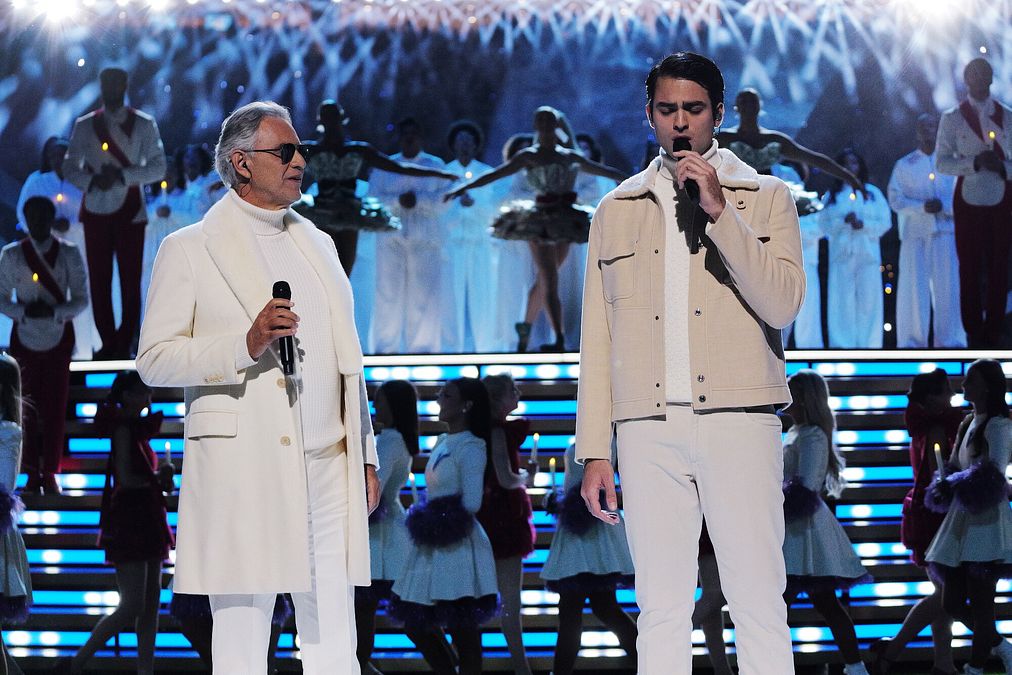
And perhaps that’s why it resonated so strongly once it began to circulate. In an era where performances are often designed for maximum impact, this moment offered the opposite. It was understated, unpolished, and entirely genuine.
Listeners who later discovered the recording weren’t drawn in by production value or scale. They were drawn in by authenticity—the sense that what they were hearing hadn’t been crafted for them, but simply shared.
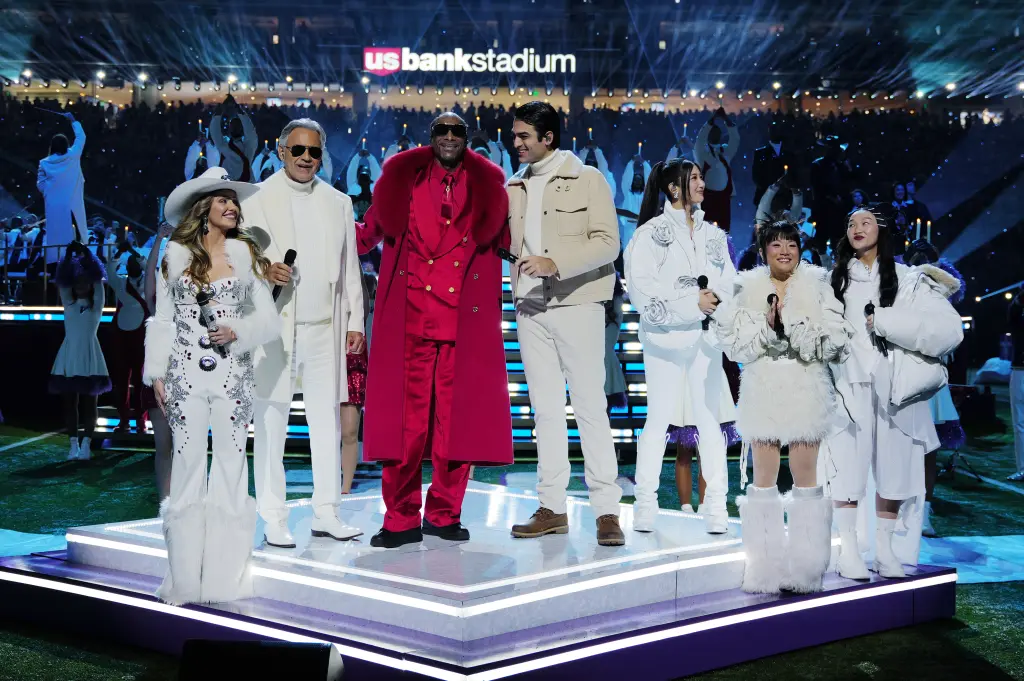
In the end, the Bocellis didn’t set out to create a viral moment or redefine a holiday classic. They simply sang. Yet in doing so, they reminded audiences of something essential: that music doesn’t always need a stage or an audience to matter. Sometimes, its most powerful form is the one that happens quietly, when no one is watching—until, somehow, everyone is.