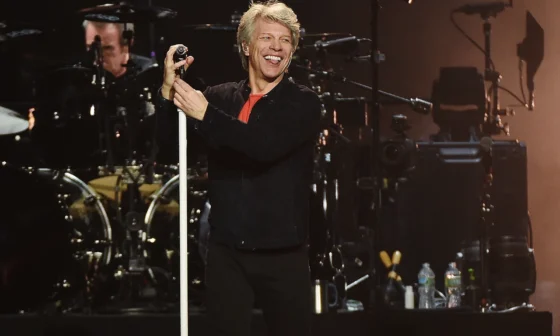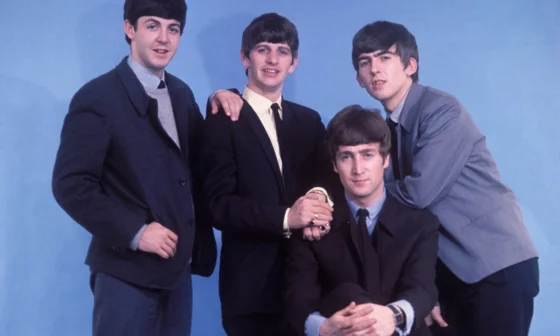
Most live performances follow a familiar rhythm: the lights dim, the music begins, and the audience is drawn in from the very first note. But when Celtic Thunder took the stage for a Christmas performance, they chose a different path—one that started not with music, but with connection.
Before a single note was sung, the group paused. Instead of lau
 nching into a song, they began talking. They joked with one another, shared lighthearted moments, and offered Christmas wishes directly to the audience. It wasn’t part of a scripted introduction or a polished setup. It felt natural, almost spontaneous, as though the performers and the crowd were simply sharing the same space rather than occupying separate roles.
In doing so, they quietly set aside one of the unspoken “rules” of live performance—the idea that the music must come first. Instead, they focused on something more immediate: creating a sense of closeness. The stage no longer felt elevated or distant. It felt approachable, even familiar, like a gathering among friends.
By the time they transitioned into “We Wish You a Merry Christmas,” something had already shifted. The audience wasn’t just watching anymore—they were part of the moment.

The opening note arrived softly, without fanfare. There were no dramatic flourishes or attempts to overwhelm the listener. Instead, the harmonies unfolded gently, blending together in a way that felt effortless. It was the kind of sound that invites stillness, drawing people in without demanding attention. Conversations quieted, movements slowed, and the room seemed to settle into the music naturally.
What made the performance stand out wasn’t technical complexity or vocal power—though both were certainly present. It was the restraint. The group didn’t try to force emotion or create a spectacle. They allowed the simplicity of the moment to carry the performance.
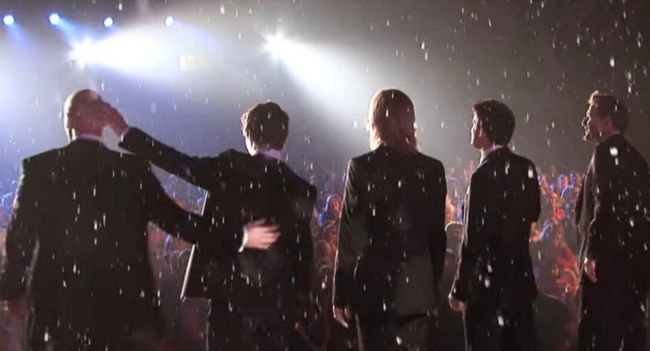
That simplicity is often what defines the most memorable musical experiences. Without elaborate staging or dramatic effects, the focus shifts entirely to the connection between performers and audience. Every note feels more direct, every harmony more personal.
As the song continued, it became clear that something had changed. The usual boundaries—stage versus audience, performer versus listener—had softened. The experience no longer felt like something being presented from one side to the other. It felt shared.
This is what sets certain performances apart. They move beyond entertainment and become something more lasting. Not because of scale or spectacle, but because of the feeling they create in the moment.

By the time the final notes faded, the performance had transformed. It was no longer just a rendition of a familiar Christmas carol. It had become a memory—one shaped not only by the music, but by the sense of connection that came before it.
And perhaps that’s the quiet power of what Celtic Thunder achieved that night. They reminded everyone in the room that sometimes, the most meaningful part of a performance isn’t the song itself—it’s the space created around it, where people feel something real, together.