The Song Born in a Waiting Room: How a Tornado, a Magazine, and a Moment of Stillness Gave Jessi Colter One of Country Music’s Most Enduring Truths

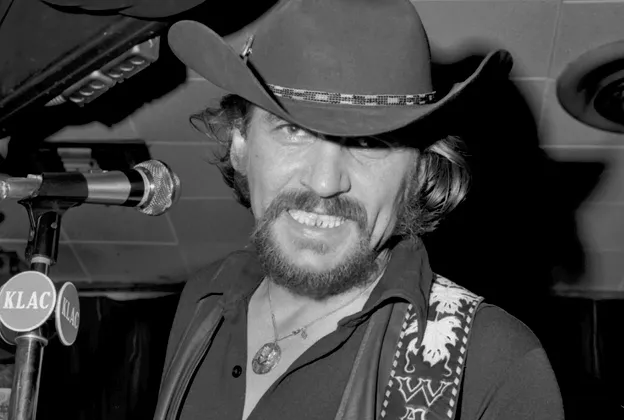
Waylon Jennings

In 1974, there was nothing remarkable about the room.

A doctor’s waiting area. Neutral walls. Chairs arranged too neatly. Old magazines stacked in uneven piles, their corners curled from too many restless hands. Jessi Colter sat there simply passing time — not searching for inspiration, not chasing a melody, not thinking about legacy.

And yet, it was there — in that quiet, ordinary pause — that something lasting took shape.

Colter, born Mirriam Johnson, was already deeply woven into the fabric of country music and into the life of Waylon Jennings. Their partnership — romantic, artistic, and spiritual — was intense, complicated, and forged under constant pressure. Fame had arrived, but so had chaos. Love existed alongside uncertainty.

As she flipped through a magazine, one image stopped her cold.

It showed a house torn open by a tornado — walls ripped away, rooms exposed to the sky, the foundation laid bare. The photograph was unsettling not because of its violence, but because of its vulnerability. A life laid open. Everything visible. Nothing hidden.

Beneath it was a short caption. Plain. Almost forgettable.

But Jessi Colter couldn’t forget it.

When an Image Refuses to Let Go

She turned the page. Then turned back.

Something about that house — standing despite the devastation — lodged itself deep in her thoughts. It wasn’t just destruction she saw. It was endurance. Survival. The quiet truth that storms can tear everything apart and still pass on, leaving behind what matters most.

That idea followed her home. It followed her through days and nights. It began to shape itself into words — not dramatic ones, not poetic flourishes, but honest lines rooted in lived experience.

Colter wasn’t writing about weather.

She was writing about love under strain.
About relationships tested by forces beyond control.
About standing together when the walls feel ripped away.

Carrying the Storm Into the Studio

On August 7, 1975, Colter brought that feeling into Glaser Sound Studio in Nashville. The session wasn’t marked by spectacle. It didn’t need to be. The song was intimate, reflective — built on emotional truth rather than radio ambition.

The recording became part of her album I’m Jessi Colter, released later that year by RCA. Within the track was a quiet reassurance: no matter how violent the storm, it does not last forever.

Listeners felt it immediately.

The song didn’t shout its message. It spoke calmly — the way real comfort often does.

A Song That Grew With Its Singers

The story didn’t end in 1975.

By 1981, Jessi Colter and Waylon Jennings had weathered their own storms — personal struggles, addiction, fame, distance, reconciliation. When they returned to the song together for their joint album Leather and Lace, produced by Chips Moman, it was no longer just a composition.

It was testimony.

Their duet carried something no solo performance could: shared history. Every harmony held experience. Every pause carried understanding. It wasn’t two voices blending — it was two lives acknowledging survival.

Audiences heard the difference.

The song rose to No. 5 on the Billboard Hot Country Singles chart, but its real success couldn’t be measured by numbers. It became one of the most cherished relationship-driven songs of its era — not because it promised perfection, but because it promised endurance.

The Song That Never Left the Road

Even after the charts faded, the song stayed alive.

Waylon Jennings carried it onto stages night after night, performing it with his touring band long after the duet version had made its mark. His voice — weathered, unmistakable, honest — turned the song into a steady reassurance offered to thousands at a time.

In a genre often defined by heartbreak, this song offered something rarer: hope without denial.

Not “nothing bad will happen.”
But “this won’t last forever.”

Why the Song Still Matters

What makes this song endure isn’t its origin story alone — though a moment of inspiration in a waiting room feels almost mythic in its simplicity. It endures because it speaks to something universal.

Everyone has stood in a metaphorical storm.
Everyone has felt exposed.
Everyone has wondered if what remains will be enough.

Jessi Colter found those answers not in spectacle, but in stillness. In a photograph. In a thought that refused to let go.

And decades later, the song still stands — like that house in the image — altered, tested, but upright.

A reminder, sung quietly and carried faithfully across years and stages:

No matter how fierce the storm…
it never lasts forever.

0 Shares:
Leave a Reply

Your email address will not be published. Required fields are marked *

You May Also Like
Bruce
Read More

“**“Nobody Saw It Coming. The Memorial For Charlie Kirk Was Heavy With Silence, Until A Murmur Spread Through The Crowd—Bruce Springsteen Was There. Moments Later, ‘The Boss’ Stepped Into View, His Face Carved With Grief, And The Entire Gathering Froze. He Took A Deep Breath, Looked Toward Kirk’s Young Daughters, And Said Through Shaking Words: ‘I’ve Buried Friends, I’ve Buried Heroes… But Watching Children Lose A Father Cuts Deeper Than Any Song I’ve Ever Written.’ Tears Poured Across The Room As Springsteen Paused, Placing His Hand Over His Heart. ‘Your Dad’s Love Won’t Fade—Not Today, Not Ever,’ He Whispered, His Voice Breaking. Witnesses Say Erika, Charlie’s Widow, Couldn’t Hold Back Sobs As Supporters Reached For Each Other In Consolation. Social Media Exploded With Clips Within Minutes, Fans Calling It ‘The Most Unexpected, Tearful Moment Of The Year.’ And As One Attendee Wrote: ‘We Came To Mourn Charlie Kirk… But Bruce Springsteen Walked In And Made It A Moment We’ll Be Telling Our Children About.’ The Real Shock? Reports Claim This May Not Be The Last Time ‘The Boss’ Honors Kirk—Raising Questions About What He’s Planning Next.”**”

Across America, communities gathered in sorrow to mourn the sudden death of Charlie Kirk, gone at just 31 after…
andrea bocelli
Read More

Andrea Bocelli’s Quiet Support for Vulnerable Children Is Inspiring Fans Around the WorldFor decades, Andrea Bocelli has been admired for the emotional power of his voice. Through opera, classical crossover, and international performances, he has built a career that has touched millions of listeners across generations. But according to recent reports from Italy, some of his most meaningful work may be happening far away from concert stages and recording studios. Over the past three years, Bocelli has reportedly directed a considerable portion of earnings from selected musical projects toward helping fund a center that supports orphaned and economically disadvantaged children in Italy. While details of the financial contributions have remained mostly private, individuals connected to the organization say the support has played an important role in expanding educational programs, housing assistance, music activities, and emotional care services for children facing difficult circumstances. What has especially moved many people is the quiet way the support was handled. Unlike many celebrity charitable campaigns that arrive with press conferences and media tours, Bocelli’s involvement was reportedly kept intentionally low-profile. Staff members connected to the center explained that the singer preferred avoiding attention around the donations, focusing instead on the long-term needs of the children themselves. That approach has only increased admiration among supporters who believe the gesture reflects genuine compassion rather than publicity. Recently, however, a deeply personal moment connected to the center began attracting public attention. According to individuals present during a private visit, Bocelli spent time meeting several children supported by the organization. During one conversation, a young child reportedly spoke about discovering comfort through music while coping with loss and instability at home. Witnesses described the atmosphere becoming emotional almost immediately. The child explained how listening to music — particularly songs associated with hope and calmness — helped create moments of peace during extremely difficult periods. Staff members later said Bocelli listened carefully throughout the conversation, occasionally asking gentle questions while remaining visibly affected by the story. At one point, those present said the tenor became emotional himself. For many observers, the moment reflected something larger than charity alone. It showed the powerful connection between music and human experience — especially for children searching for stability, identity, and encouragement during painful chapters of life. Bocelli has often spoken publicly about resilience, faith, and overcoming adversity. After losing his sight at a young age, he built one of the most celebrated careers in modern classical music through determination and discipline. Supporters say that personal understanding of struggle may help explain why initiatives involving vulnerable children appear especially meaningful to him. Fans online reacted warmly after hearing about the reported visit and the emotional interaction. Many praised the tenor not only for his financial support, but also for taking time to connect personally with the children involved. Others noted that acts of quiet generosity often leave the strongest impression precisely because they are not designed for headlines. As the story continues circulating, supporters around the world have shared messages celebrating Bocelli’s compassion and the positive influence music can have beyond entertainment alone. For many people, the story serves as a reminder that some of the most important performances in life happen far away from the spotlight — in quiet rooms, personal conversations, and moments of kindness that never appear on stage.

For decades, Andrea Bocelli has been admired for the emotional power of his voice. Through opera, classical crossover,…