PART I — THE WOMAN WHO LOVED TOO QUIETLY
My name is Reva Solis.
If you ask anyone who remembers me from before, they’ll tell you I was soft.
Gentle. Forgiving to the point of foolishness. The kind of woman who gave second, third, tenth chances. The kind who chose peace even when the war was already inside her.
They’ll tell you I loved my family.
They’ll tell you they loved me back.
And maybe that was true — once.
Before the will.
Before the signatures.
Before the day I learned what love looks like when money enters the room.
I grew up in a small coastal town where salt lived in our hair, gulls screamed into the morning, and the ocean was both a boundary and a teacher. It taught me rhythm. It taught me patience. It taught me that even waves break eventually.
My parents owned a bakery — Solis & Dough — the kind of place where people didn’t just buy bread, they built mornings around it. I ran it with my mother from the age of eighteen. My brother, Rowan, was three years younger — charming, handsome, impatient in a way that made people mistake recklessness for ambition.
Where I kneaded dough, he planned skyscrapers. Where I balanced books, he bought cars he couldn’t afford. We were opposite shapes cut from the same heart.
Our mother died on a Wednesday.
At 4:17 PM.
In a room that smelled like antiseptic and wilted lilies.
She held my hand and whispered:
“You were the one who stayed.”
And I thought those words would be my inheritance.
But grief is a door, and on the other side of it waited Rowan — with a suit too new, eyes too dry, and a lawyer who spoke like he was reading a grocery list.
PART II — THE WILL WITH MY NAME ERASED
The reading of the will took place in the bakery office.
The walls smelled like sugar and lemon.
I sat where my mother used to write recipes in looping cursive. Rowan leaned back like he owned the air.
The lawyer placed two envelopes on the table.
“One for Ms. Solis,” he said, sliding a thin envelope toward me.
“And one for Mr. Solis.”
Mine was light.
His was thick.
I didn’t breathe.
I opened it.
My dearest Reva,
I know you will choose kindness even when the world gives you none.
When this letter reaches you, I hope you are eating breakfast, not grieving.
The bakery is yours.
Always and only yours.
My throat tightened. The bakery — our family legacy — the thing I had poured myself into for over a decade. She left it to me fully.
Or so I thought.
Rowan opened his. His smile grew like mold.
“If I sign,” he said, tapping the document, “you owe me $480,000 for my half of the bakery, effective immediately.”
I blinked.
“Your half?” I whispered.
He slid his papers toward me. His letter was not handwriting — it was typed. Short. Sharp.
Rowan receives fifty percent ownership and full discretion to sell his equity.
I re-read my letter.
Bakery yours.
Always.
Only.
Mine.
Rowan leaned close.
“She changed her mind last minute,” he murmured. “I convinced her. You weren’t built for business, Reva. You’re built for ovens and kindness. Things I can’t cash.”
I stared at the signatures.
Identical strokes.
Perfect symmetry.
No tremor of illness.
Too perfect.
“She was barely awake that week,” I whispered. “She couldn’t sign her own name without help.”
“Then maybe someone helped her,” he smiled.
My heart cracked clean.
My brother forged our mother’s will.
And that was the day I stopped being soft.
PART III — THE SIX-YEAR REVENGE
This isn’t a story of rage.
It’s a story of patience.
I didn’t fight him.
I didn’t scream.
I signed the papers, handed him the keys, and watched him sell our bakery to a corporation for nearly a million dollars — money I should have inherited entirely.
He basked in luxury.
I moved into a one-bedroom above a laundry shop.
But wolves don’t need palaces to hunt.
Year One — I built something unseen.
I used my severance to start a small brand — Reva’s Rise — just sourdough and honey butter jars. Farmers’ markets. Social media reels. No storefront. No overhead.
People loved it.
Year Two — I scaled.
Local cafés begged for weekly supply.
Tourists packed my stall.
Our town whispered: Solis bread tastes alive again.
Rowan opened a trendy rooftop bistro with his money.
He posted champagne.
I posted crumbs and heart.
Year Three — my brand exploded.
An influencer bit into my loaf and cried on live camera.
One viral clip turned into twelve.
Orders crashed my website.
Rowan laughed.
“Bread doesn’t scale.”
I let him believe it.
Year Four — I bought a small industrial space.
Nothing fancy.
Just ovens.
Just silence.
Just hunger.
Rowan expanded his bistro. Investors bought in. His menu bragged Michelin ambition.
Year Five — I made my move.
I purchased the building next door to his restaurant — quietly, through a shell company.
I opened Solis Hearth, a bakery café glowing with golden morning light and warm bread at dawn. While his restaurant slept, mine fed the town.
Lines curled around the block.
Reporters came.
Articles spread.
His reservations dried like stale pastry.
Year Six — I unveiled the truth.
Rowan called.
“You’re ruining me,” he hissed.
I smiled softly.
“No, Rowan. I’m replacing you.”
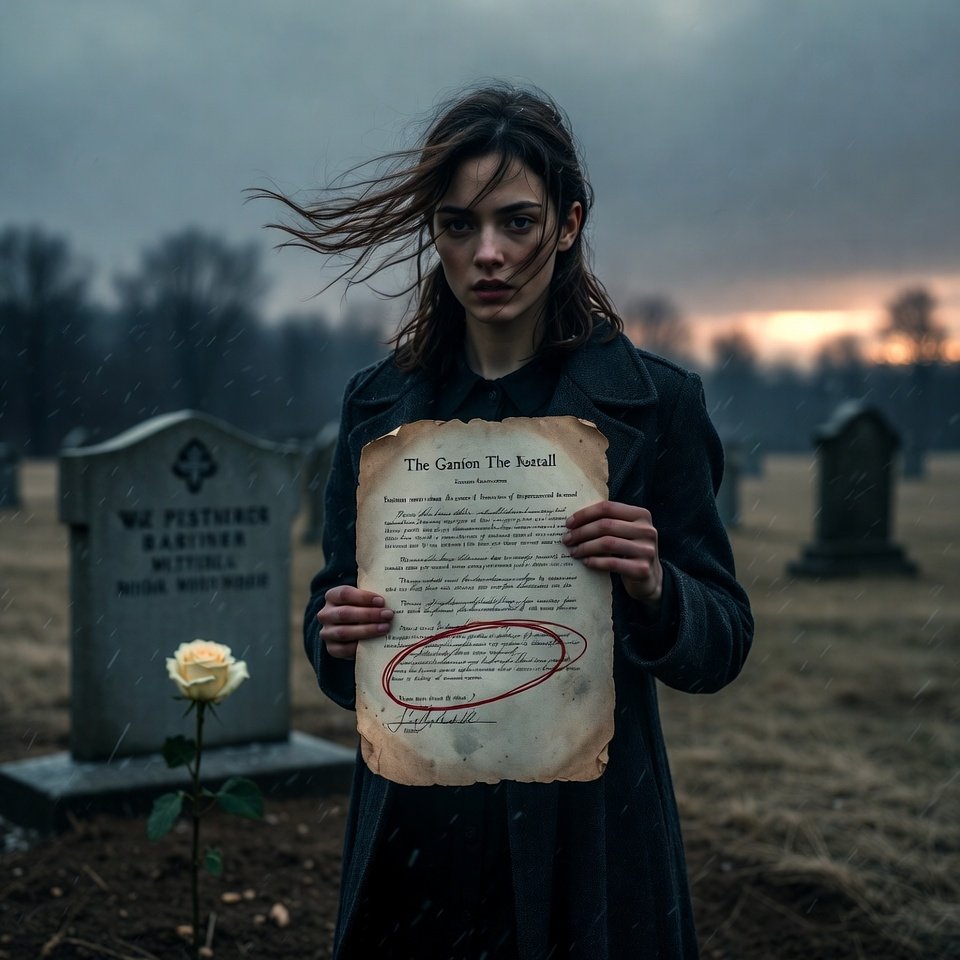
That night, I handed the real estate clerk a manila folder — mother’s real will.
The one Rowan never knew existed.
The one she gave me in the hospital when she whispered:
“Hide this until you’re ready to come back for what’s yours.”
Handwriting verified.
Witness signatures intact.
Notarized properly.
The forged will was declared void.
His ownership revoked retroactively.
Fraud charges pending.
He fell like a building with no foundation.
PART IV — THE FINAL MORNING
Last month, I reopened the old bakery — the original Solis & Dough — restored exactly as my mother left it. Wooden counters, handwritten menus, windows smelling like childhood.
At 6:02 AM, Rowan walked in.
He looked small.
Not evil — just empty.
“I loved this place too,” he whispered.
I poured him coffee.
Black, the way he used to drink when we were kids.
“I know,” I said softly. “But you loved having more than sharing.”
He swallowed.
“Can I have a job?”
I looked at him — really looked.
The boy who chased seagulls with me.
The teenager who stole Mom’s car keys.
The man who sold her legacy for gold.
And for the first time in years, I felt… nothing burning.
Just clarity.
“You can work in deliveries,” I said. “Minimum wage. Earn trust back like anyone else.”
He nodded.
Maybe he’ll rebuild.
Maybe he’ll run.
Maybe he’ll learn.
But his lesson lives in flour now — beneath my palms, between my ribs.
I wasn’t the sister who lost everything.
I was the sister who waited.
And when the moment came,
I rose — like dough under warm hands.