“They just wanted to go home… so we told them to have a cup of tea.” One late night at Abbey Road, the Beatles decided the session wasn’t over — even if the producer thought it was. Years later, George Harrison finally revealed what was really in that teapot… and why George Martin didn’t find out until decades after. Some studio legends weren’t written in the liner notes. They were brewed after hours.

GEORGE HARRISON

“They were asking, ‘Can we go home now?’ We said, ‘No. Have a cup of tea.‘” George Harrison on the night the Beatles got George Martin and his crew high

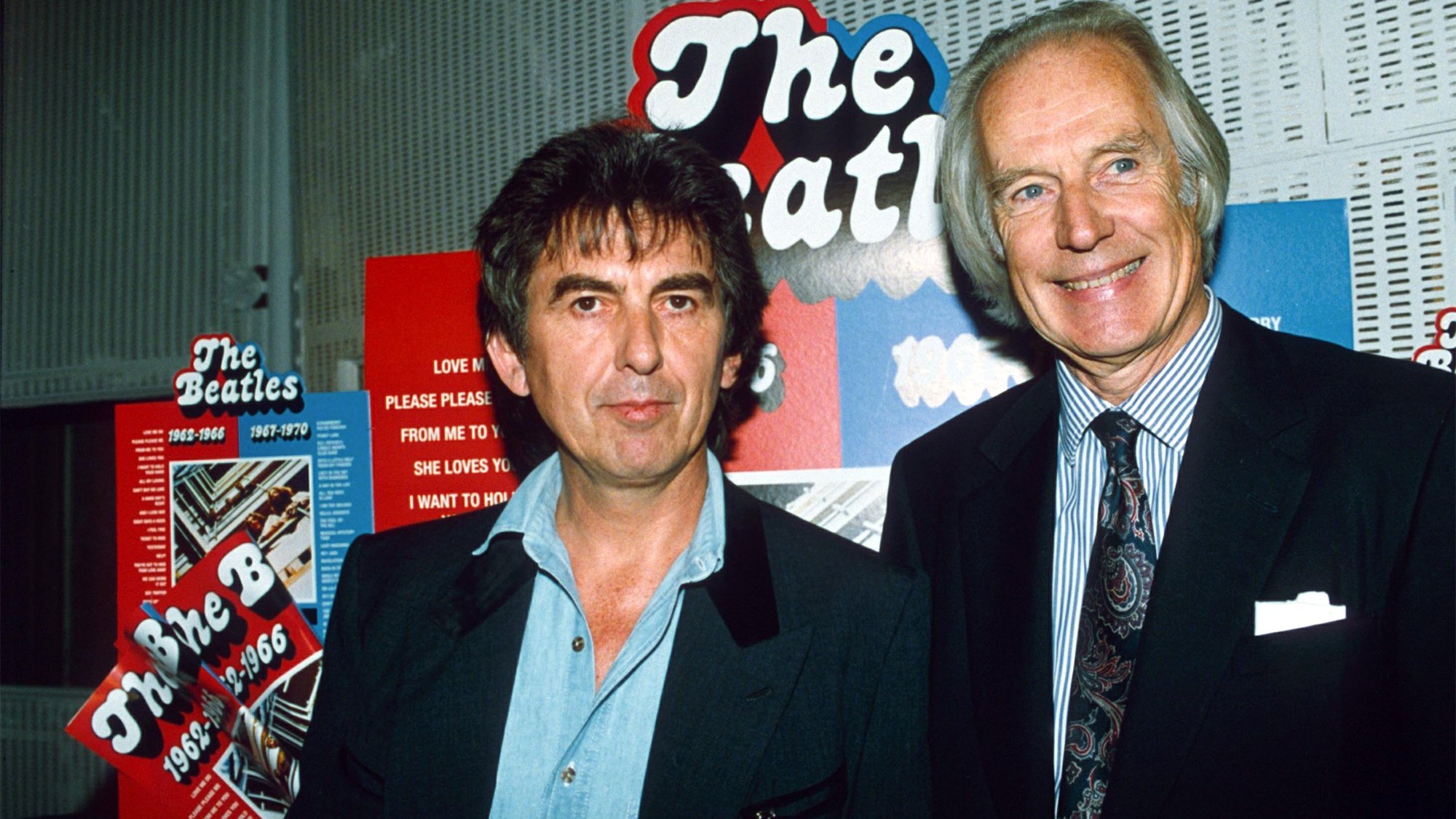
George Harrison And George Martin
George Harrison and George Martin at the press launch for CD reissue of the Beatles‘ Red and Blue albums, at Abbey Road Studios, September 9, 1993. (Image credit: Brian Rasic/Getty Images)

In George Martin, the Beatles had a producer who excelled at thinking outside the box. Martin‘s innovative studio techniques and openness to new ideas made him the ideal producer for a group as wildly creative as the Beatles.

But he was only human, and like most people he preferred to wrap up the workday at a reasonable hour.

That didn‘t always sit well with the Beatles, particularly in their later years, when recording sessions frequently carried over past midnight..

“Some of the people here — the engineer, for instance — would always be trying to go home at 5:30, and we’d be trying to make history,” George Harrison says in the 1991 Beatles Anthology documentary as he, Paul McCartney and Ringo Starr sit in Abbey Road Studios.

The Beatles certainly knew how to fight fatigue. When performing night-long sets in Hamburg in the early 1960s, they‘d take Preludin, an appetite suppressant and stimulant with effects similar to amphetamines — a.k.a. speed, or uppers — to help them stay awake.

Which is how they managed to get Martin and engineer Geoff Emerick to work after hours on one particular night in the late 1960s: by lacing a pot of tea — prepared by their roadie, Mal Evans — with speed.

“Mal had this big teapot,” Harrison explained. “It was a big aluminum teapot, and I remember one specific incident where he made a pot of tea, and we doused the tea with uppers.”

Evans proceeded to take cups of tea up to the control booth overlooking the studio. “‘Cause they were asking, ‘Can we go home now?’” Harrison continues. “‘No, you can’t, you bastard. Have a cup of tea!’

“And then they were up there until 11 o‘clock at night.”

“Yeah, and then they didn’t want to go home,” McCartney adds. “They wouldn‘t let us leave.”

It was only when the 1995 documentary — which has now received a follow-up episode — first aired that Martin learned about the episode.

Ironically, Harrison and John Lennon’s first time taking LSD came after a dentist friend spiked their coffee.

It wasn‘t all fun and games, though. McCartney’s love of pot got him busted in Japan. And American singer-songwriter James Taylor — who signed to the Beatles’ Apple label in 1968 — claimed his heroin use influenced Lennon’s decision to try the drug. He subsequently became addicted.

0 Shares:
Leave a Reply

Your email address will not be published. Required fields are marked *

You May Also Like
Loretta Lynn’s Granddaughter & Willie Nelson’s Son
Read More

THE NIGHT THE DUET DIED: Loretta Lynn’s Final Song Beside Conway Twitty Still Haunts Country Music — A Goodbye the World Never Saw Coming.Saw Coming. It happened quietly, without fanfare — a night that began like so many others for two of country music’s greatest voices, and ended as the closing chapter of one of its most beloved partnerships. When Loretta Lynn and Conway Twitty walked onstage together for the final time, no one in the crowd realized they were witnessing the end of an era — the night the duet, as the world knew it, died. The year was 1988. The place: Nashville, under the soft golden lights of a charity concert meant to celebrate country’s classic voices. Loretta and Conway had performed together hundreds of times, their chemistry effortless, their harmonies as natural as breathing. But that night, something felt different. Loretta was quiet backstage — not nervous, but reflective. Conway, too, seemed distant, pacing the hallway with a look that friends later described as “heavy, like he knew something the rest of us didn’t.” When they took the stage and the opening chords of “Louisiana Woman, Mississippi Man” filled the room, the audience erupted. For a moment, time folded back — the magic, the laughter, the playful glances that defined their duets returned as if nothing had changed. But then came their final song: a tender, stripped-down version of “Feelins’.” The crowd fell silent as they began. Loretta’s voice quivered just slightly; Conway’s baritone softened, trembling with something unsaid. Their eyes met for a moment longer than the lyrics required — two souls bound by music, by friendship, and by years of shared triumph and heartache. When the last note faded, they didn’t bow. They simply stood there — looking at each other, smiling through tears — before walking offstage hand in hand. “That was the last time,” Loretta later told a friend. “We didn’t know it, but maybe we did. It felt like goodbye.” Just months later, Conway Twitty would fall ill and pass away unexpectedly in 1993, leaving Loretta shattered and the country music world in mourning. She would go on to perform again, of course, but she never truly sang those duets again — not the way she did when Conway was beside her. In the years that followed, that final performance became legend. Fans still trade bootleg tapes and faded photographs, calling it “the night the duet died” — not because the music ended, but because something sacred was lost with it. “There’ll never be another Conway,” Loretta once said softly in an interview. “And there’ll never be another us.” Their voices — hers like sunlight through lace, his like a river’s low hum — blended in a way that no producer could recreate and no era could replace. Together, they gave the world songs of love, laughter, and longing that felt achingly real because they were real. Now, decades later, when “After the Fire Is Gone” or “Feelins’” plays on the radio, there’s a pause — a quiet ache that sweeps over anyone who remembers. Because deep down, everyone who loved them knows: that night in Nashville wasn’t just a concert. It was a farewell whispered in harmony — the sound of two legends singing their last truth. And when they walked off that stage, country music was never the same again. Video

It happened quietly, without fanfare — a night that began like so many others for two of country…
Dolly Parton
Read More

“The King” demanded her crown jewel. When Elvis Presley wanted to record I Will Always Love You, it was the ultimate honor. But the night before the session, his manager dropped a brutal ultimatum: Elvis gets 50% of the publishing rights, or he doesn’t sing. The industry rule was absolute: You never say no to Elvis. But Dolly Parton, heartbroken and trembling, did the unthinkable. She looked at the deal of a lifetime and refused. People whispered that she had committed career suicide. She walked away from a guaranteed fortune and the biggest star on Earth. But Dolly knew something they didn’t. That agonizing “No” wasn’t a mistake—it was a setup for the greatest revenge in music history. The real payoff was yet to come…

Here is a complete blog post telling the legendary story of Dolly Parton, Elvis Presley, and the song…