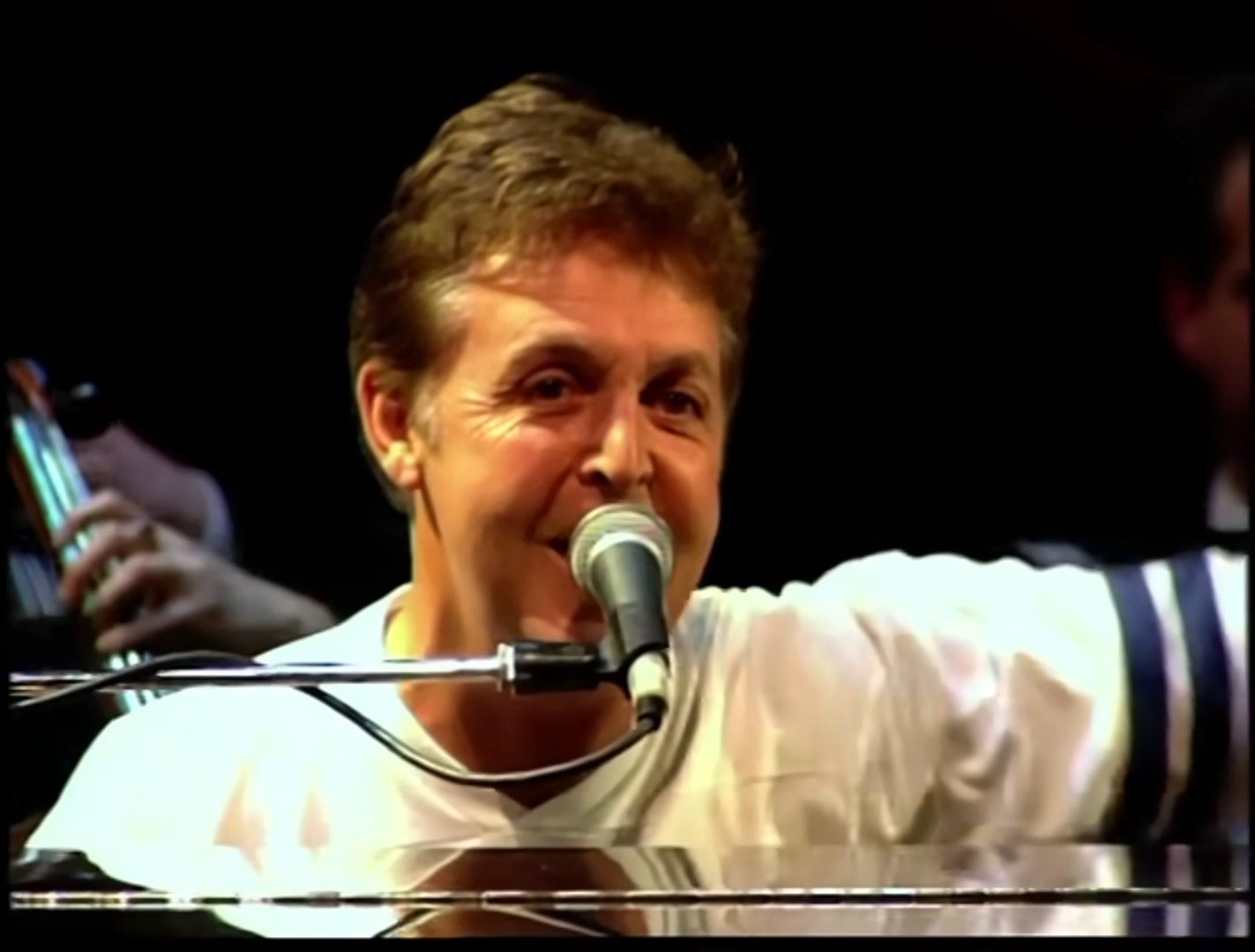
PAUL MCCARTNEY & RINGO STARR REUNITE ON THE GRAMMY STAGE — AND TURNED THE 2026 CEREMONY INTO A QUIET PIECE OF HISTORY
They didn’t arrive to steal the night — yet the night slowly bent toward them anyway.

As the 2026 Grammy Awards ceremony unfolded with its usual spectacle of first-time nominees, viral moments, and tightly timed medleys, the atmosphere shifted when Paul McCartney and Ringo Starr stepped onto the stage together — not as a surprise gimmick, but as something far more deliberate. No dramatic announcement. No thunderous intro. Just two familiar figures, side by side, under softened lights, carrying decades of shared history without saying a word about it.
For the first time in years, the final living members of The Beatles performed together on one of music’s most-watched stages, offering a set that felt less like a reunion and more like a conversation — between songs, between eras, and between the past and present of popular music.

The performance unfolded with restraint. McCartney opened with a stripped-back arrangement that leaned on melody rather than memory, his voice weathered but steady, while Starr settled in behind a minimal kit, playing with the same unforced feel that once anchored the biggest band in the world. When Ringo joined Paul vocally, the room seemed to hold its breath — not because of novelty, but because of recognition. This wasn’t about re-creating the 1960s. It was about acknowledging what still remains.
There were no screens filled with archival footage. No overt tributes to Lennon or Harrison. Instead, the moment trusted the audience to understand the weight without explanation. Younger viewers watched icons perform not as legends frozen in time, but as musicians still choosing how to stand onstage together. Older fans recognized something quieter and rarer — not nostalgia, but continuity.
Industry insiders noted how unusual the moment felt in a ceremony increasingly driven by pace and spectacle. The Grammys have long celebrated legacy acts, but this appearance wasn’t framed as a lifetime achievement detour. It was placed carefully within the show’s flow, suggesting something subtle yet powerful: that the story of modern music is still incomplete without its earliest architects present.
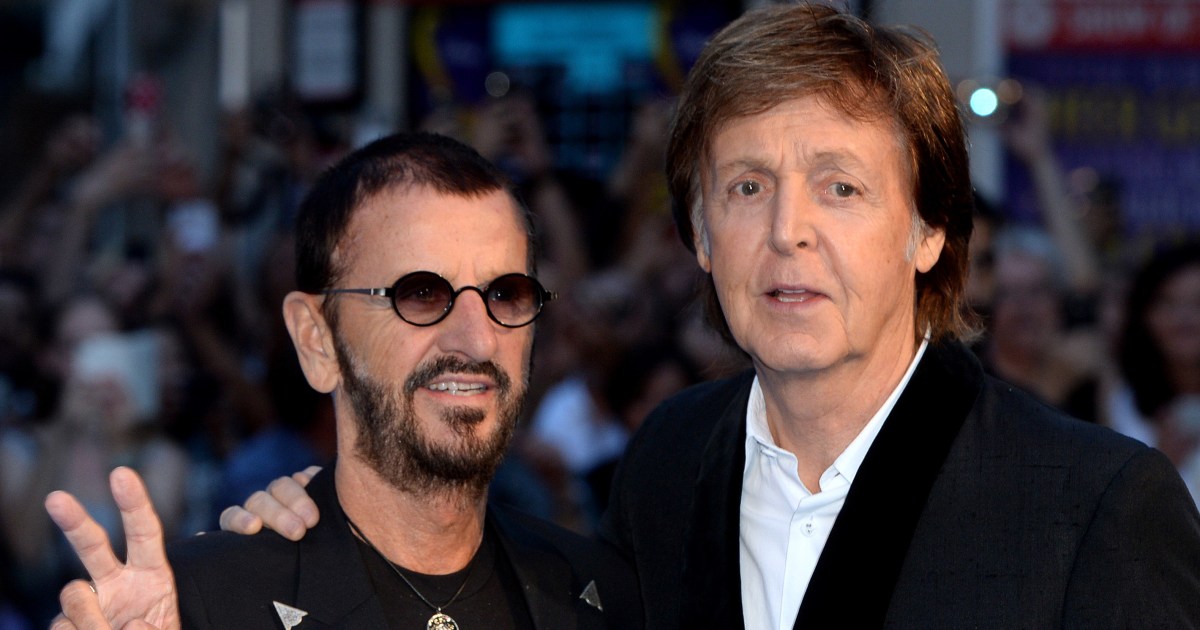
As the final notes faded, there was no immediate cutaway. Cameras lingered just long enough to capture a shared glance, a half-smile, and a mutual nod — the kind exchanged by people who no longer need to prove anything to each other. The applause followed, sustained but not frenzied, as if the audience instinctively understood that shouting would miss the point.
In a night filled with winners, debuts, and bold statements about the future of music, Paul McCartney and Ringo Starr offered something else entirely — a reminder that history doesn’t always announce itself loudly, and that sometimes the most meaningful performances are the ones that simply show up, play the song, and let time do the rest.