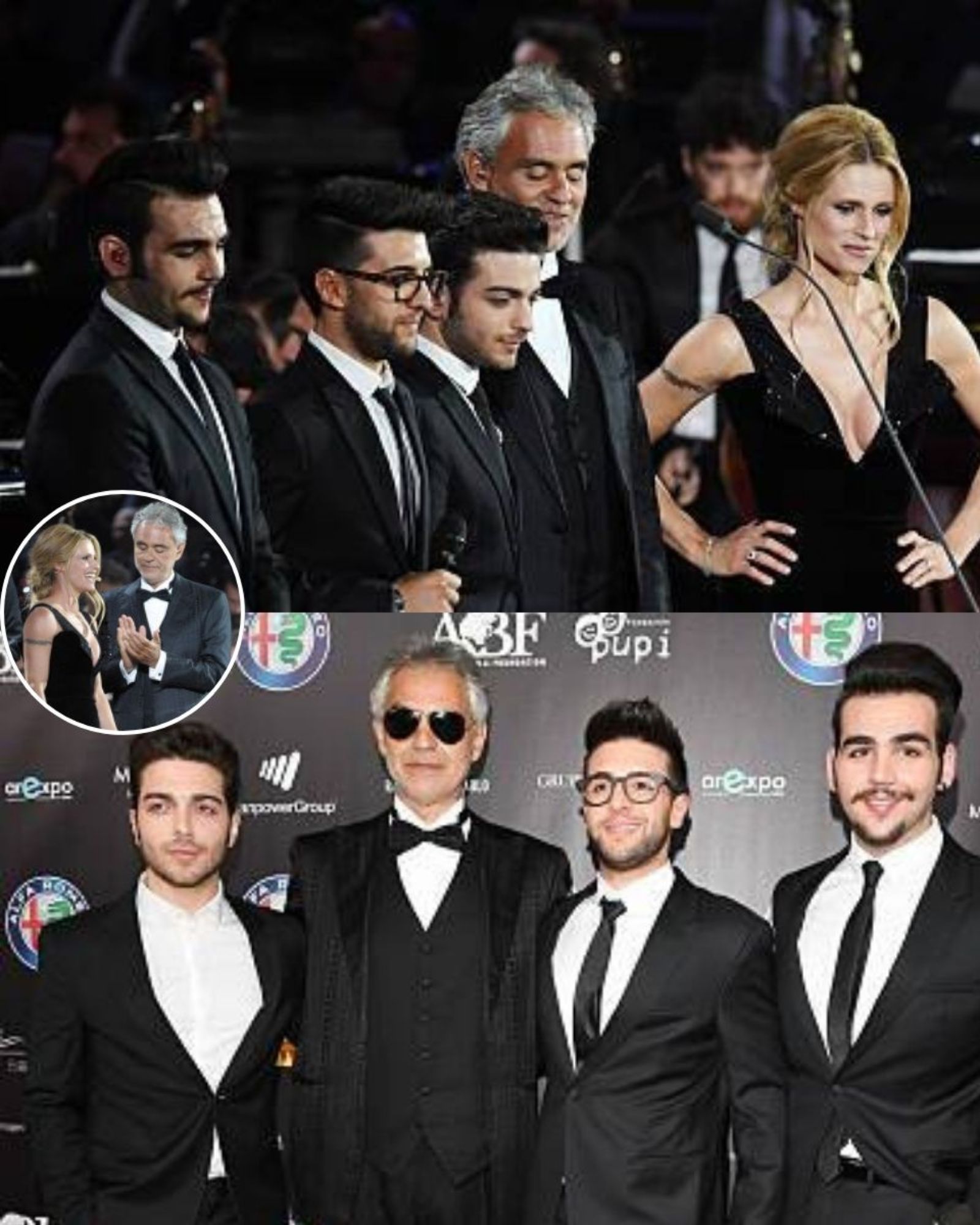
WHEN A MAESTRO MEETS A TRIO, TIME STOPS FOR ONE SONG. Andrea Bocelli steps into the soft light. Il Volo stands beside him, young and visibly nervous. No one speaks. There’s only a thin layer of silence before the first note rises. Bocelli’s voice is deep and steady, like a memory returning. The three voices beside him are brighter, trembling slightly with youth. As the melody moves forward, the hall grows quieter. In their eyes, something familiar appears. Not a lesson. Trust. Old songs suddenly feel new again, as if they’ve learned how to breathe. What stays with you isn’t just the high notes, but the invisible thread between master and students. And when the last sound fades, it feels like you’ve overheard a small secret of bel canto.

andrea-bocelli-brian

A Stage Was Set, But a Story Was About to Begin

The lights dimmed in a historic theater known for hosting voices that once filled opera houses and radio waves. The audience had come to hear Andrea Bocelli, the maestro whose career has carried Italian song across the world for more than three decades. What they did not expect was the quiet presence of three young men waiting in the shadows.

They were Il Volo—a trio born into a different generation, raised on both pop charts and classical technique. Their suits were sharp, but their posture betrayed nerves. This was not just another collaboration. It felt like an invitation into something sacred.

No announcement was made. No dramatic introduction. Bocelli simply stepped forward, guided by the warm glow of the stage lights, and the trio followed.

The Silence Before the First Note

There is a kind of silence that happens only when people sense something meaningful is about to occur. It filled the room that night. Programs were lowered. Phones slipped back into pockets. Even the orchestra seemed to hold its breath.

Bocelli lifted his chin slightly, listening for the opening cue. The three young singers glanced at him, then at one another. It was not fear in their eyes—it was respect. The kind you feel when you realize the person beside you once sang these melodies when you were still a child.

The first note arrived gently, like a door opening.

Old Songs, New Voices

Bocelli’s voice came first—deep, steady, familiar. It carried the weight of decades: opera halls, television stages, quiet recordings made late at night. When Il Volo joined him, the sound changed shape. Their harmonies were lighter, brighter, touched with the urgency of youth.

The song was one everyone recognized. A classic Italian piece passed down through generations. But something about this version felt different. The tempo seemed softer. The pauses felt longer. As if the music itself wanted to look back before moving forward.

Audience members later said it felt like watching time fold in on itself—past and future meeting in the same breath.

A Lesson That Was Never Spoken

No one on stage explained what was happening. There was no speech about mentorship or legacy. Yet it was clear: this was more than a performance. It was a quiet exchange.

Bocelli did not overpower the trio. He leaned into their sound, letting their voices lift certain phrases higher than his own. The trio, in turn, followed his phrasing closely, shaping each note as if tracing his footsteps.

It did not look rehearsed. It looked shared.

Between verses, Bocelli turned his head slightly toward them, smiling. One of the young singers nodded back, barely noticeable, but enough to suggest understanding. Not instruction. Trust.

The Audience Felt It Too

Some people closed their eyes. Others leaned forward without realizing it. A few wiped their cheeks when the harmony rose into the final section of the song.

There was no dramatic climax. No fireworks. Just a long final note that seemed to hang in the air even after the orchestra fell silent.

For a moment, nobody clapped.

Then the room broke open.

The applause was not explosive. It was heavy and full, like rain after a long summer. Bocelli placed a hand over his heart. The trio stood straighter, as if they had crossed an invisible line and would never step back to where they were before.

What the Night Quietly Proved

In interviews later, Bocelli would say little about the moment. He spoke instead about music as a language that does not belong to one generation. Il Volo, on the other hand, described the performance as “a conversation without words.”

Fans replayed the video online, noticing small details: how Bocelli waited a fraction of a second before the final phrase, how the trio adjusted their breathing to match his rhythm, how no one rushed the ending.

Some called it a lesson in bel canto. Others called it a handoff.

But perhaps it was something simpler.

When Music Remembers and Learns at the Same Time

That night did not produce a chart-topping single or a viral dance trend. It produced a feeling. The kind that stays with you when you hear the same song weeks later and realize it sounds different now.

The classics were still the classics. But they carried new color. New patience. New life.

And somewhere between the maestro’s memory and the trio’s ambition, a small secret revealed itself:
music does not age. It only changes voices.

Those who were there swear the song did not end when the last note faded. It simply walked offstage… wearing three young faces and one timeless voice.

0 Shares:
Leave a Reply

Your email address will not be published. Required fields are marked *

You May Also Like
Piero Barone
Read More

Piero Barone’s Late-Night Livestream Sparks Reactions Across Social MediaFans of Il Volo were caught completely off guard when Piero Barone suddenly appeared live on social media at nearly 3 a.m. What initially seemed like a casual late-night livestream quickly turned into one of the most talked-about moments among fans online. Without any warning or promotion beforehand, viewers began receiving notifications that Piero had started broadcasting live. Within minutes, hundreds of fans joined the stream, many expecting a relaxed conversation or perhaps a quick greeting before bed. Instead, the atmosphere quickly became far more emotional and intense than anyone anticipated. Appearing tired but sincere, Piero reportedly spoke openly about the pressure that can come with life in the spotlight, the emotional weight of constant travel, and the importance of staying connected to the people who truly matter. Fans watching the livestream described the moment as unusually personal, especially because the singer is often known for maintaining a calm and composed public image. Throughout the livestream, viewers flooded the comment section with messages of support, surprise, and concern. Some fans even admitted they initially thought the live notification had been a mistake because of the unusual hour. What seemed to resonate most strongly with viewers was the honesty in Piero’s tone. Rather than delivering a polished public statement, he appeared to simply speak from the heart, creating the feeling of a direct and genuine conversation with fans awake at that late hour. Several clips from the livestream quickly spread across social media platforms shortly afterward, with fans debating the meaning behind some of his comments and praising him for his openness. Others noted how rare it is for artists of his level to share such unfiltered moments publicly. Despite the speculation online, many supporters focused less on the mystery surrounding the livestream and more on the human side of the moment. For longtime followers of Il Volo, the broadcast became another reminder that even internationally recognized performers experience exhaustion, reflection, and emotional moments away from the stage. As discussions about the livestream continue circulating online, one thing is clear: what started as an unexpected late-night broadcast became a moment fans will likely remember for a long time. Not because of dramatic announcements or controversy, but because it allowed viewers to see a more vulnerable and authentic side of Piero Barone — something that resonated deeply with audiences around the world.

Fans of Il Volo were caught completely off guard when Piero Barone suddenly appeared live on social media…
Long-Lost Conway Twitty Performance
Read More

I can still recall the first time Conway Twitty’s “Touch the Hand” came across the radio back in the ’70s. His voice, smooth yet filled with raw emotion, felt like it was reaching straight through the speaker and into my soul. The simple act he sang about — reaching out, holding on — carried so much tenderness and longing that it left me completely still, just listening. Conway had a way of turning everyday moments into unforgettable truths, and this song was proof of that gift. Even now, every time I hear “Touch the Hand,” I’m transported back to that summer evening, when country music wasn’t just sound — it was a feeling, a memory, and a companion for life.

Conway Twitty’s “Touch the Hand” – A Timeless Country Love Song About the Song Some songs have the…
Reba
Read More

ON HER 93RD BIRTHDAY, THE OPRY FELL COMPLETELY SILENT. Reba McEntire didn’t stop the show at the Grand Ole Opry. She slowed it down. On what would’ve been Loretta Lynn’s 93rd birthday, Reba stepped into the spotlight and sang “You Ain’t Woman Enough (To Take My Man).” Not loud. Not flashy. Just honest. You could feel the room change. Cheers turned into quiet sniffles. People smiled through tears. Like they were remembering someone they loved, not just a legend. Reba’s voice stayed steady, but her eyes said everything. This wasn’t about the past. It was about how Loretta is still here — in the songs, the strength, the way women stand a little taller because she did. Some nights don’t end. They stay with you.

The Grand Ole Opry has heard every kind of sound over the decades. Thunderous applause. Nervous first notes.…