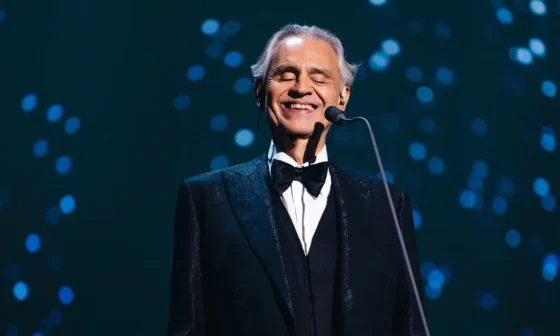
There are performances that entertain, and then there are those that seem to suspend time entirely. When Il Volo took the stage at the National Theatre Miguel Ángel Asturias, the audience may have expected vocal brilliance. What they experienced instead was something far more intimate.
The trio—known for blending classical technique with contemporary emotion—chose to perform Hallelujah, the timeless piece written by Leonard Cohen. It’s a song that has been interpreted countless times, yet remains deeply personal for both artists and listeners. That night, it became a vessel for something unspoken.
From the very first note, the atmosphere shifted. The theater, grand and ornate, seemed to shrink into a quiet, shared space. Ignazio Boschetto stepped into the opening lines with a voice that felt both controlled and fragile. There was power in it, but also restraint—as though each phrase carried a story just beneath the surface.

As the performance unfolded, the orchestral arrangement began to swell, adding layers of intensity. Strings rose and fell like waves, echoing the emotional undercurrent in the trio’s delivery. The harmonies, a signature strength of Il Volo, felt especially deliberate—less about perfection, more about connection.
What stood out wasn’t just the sound, but the subtle details. A pause held a fraction longer. A breath that seemed heavier than expected. A glance exchanged between the singers that suggested shared understanding. These were small moments, but together they created something deeply human.
“Hallelujah” has always walked a fine line between sorrow and hope. In this performance, that balance felt especially present. The lyrics—familiar to many—took on renewed weight, shaped by the trio’s interpretation. It wasn’t about reinventing the song, but about inhabiting it fully.
Then came the ending.
As the final note stretched into the hall, it didn’t resolve in a dramatic flourish. Instead, it softened—fragile, almost hesitant. The trio lowered their microphones in unison, signaling the close not with a gesture, but with stillness.
What followed was unexpected.
No immediate applause. No cheers. The audience remained silent, as if unsure whether to break the moment. It wasn’t hesitation—it was absorption. The kind of silence that happens when people are still processing what they’ve just felt.
In that pause, the performance seemed to continue in a different form. The absence of sound became part of the experience, carrying as much weight as the music itself. Only after a few seconds did the applause begin, gradually building as the audience returned to the present.
For Il Volo, it was another example of their ability to bridge technical mastery with emotional storytelling. But for those in the room, it was something more personal—a reminder that music doesn’t always need to be loud to be powerful.
Sometimes, the most lasting note is the one that isn’t sung at all.