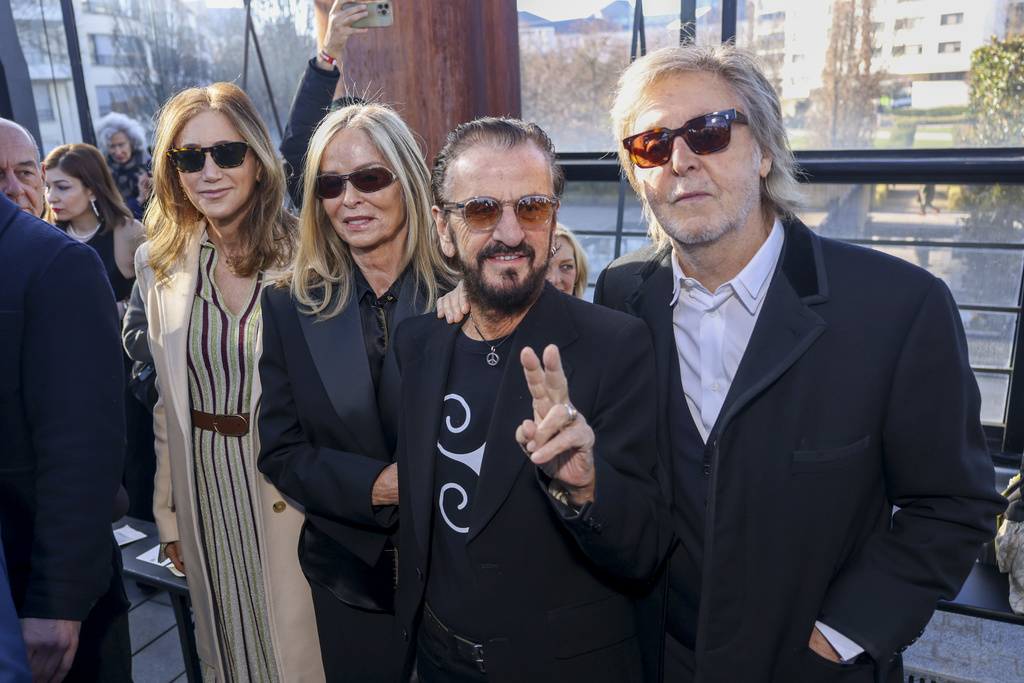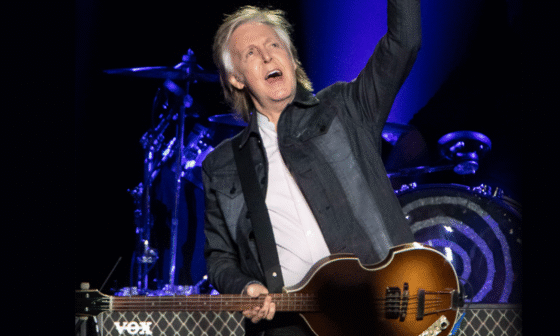
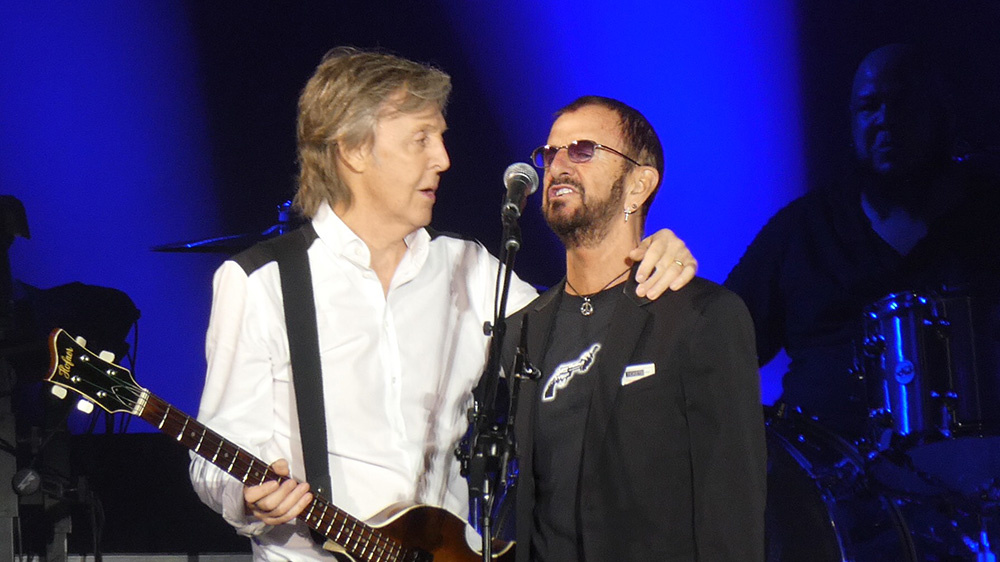
There are moments in music that feel less like performances and more like echoes—reminders that some connections don’t fade, even as decades pass. That feeling came rushing back when Paul McCartney and Ringo Starr stood face to face once again, sharing a duet that carried the weight of history.
For fans of The Beatles, the image is almost surreal. The two remaining members of a band that reshaped music are no longer young men on the rise—they are legends whose work has already stood the test of time. And yet, in that moment, something familiar reappears.
To understand why it resonates so deeply, it helps to go back to Savile Row rooftop in 1969. That final rooftop performance has become symbolic—not just as the last public appearance of The Beatles, but as a closing chapter to one of the most influential collaborations in history. It was spontaneous, raw, and filled with an energy that couldn’t quite be contained.
Now, more than fifty years later, McCartney and Starr are no longer closing a chapter—they are revisiting a connection. The duet they share is not grand or theatrical. Instead, it feels conversational. Lines are exchanged naturally, as if the rhythm between them never truly disappeared.

What stands out most is how little effort it seems to take. There’s no sense of forcing a moment for the sake of nostalgia. Rather, it unfolds organically, built on years of shared experience. It’s the kind of musical communication that can’t easily be recreated—it comes from having been part of something that changed both their lives and the world around them.
For longtime listeners, the impact is immediate. It’s not just about hearing familiar voices; it’s about recognizing the relationship behind them. McCartney’s melodic instincts and Starr’s steady, understated presence have always complemented each other. Together, they formed a foundation that helped define the sound of The Beatles, even as other elements evolved.
What makes this moment different is its perspective. When they first played together, the future was unknown. Now, the legacy is firmly established. Every note carries not just the present, but everything that came before it.
And yet, the performance doesn’t feel heavy. There’s a lightness to it—a sense of enjoyment that suggests they are not trying to relive the past, but simply to share something meaningful in the present. That distinction matters. It transforms the moment from a tribute into something alive.

For a brief time, the years seem to collapse. The distance between the rooftop and the current stage becomes less important than the connection that bridges them. Fans watching aren’t just witnessing history—they’re seeing it continue, however briefly.
In the end, what makes this duet memorable isn’t its scale or spectacle. It’s its simplicity. Two musicians, standing face to face, responding to each other in real time. No elaborate setup, no need for explanation.
Just a shared language that, even after all these years, still speaks clearly.