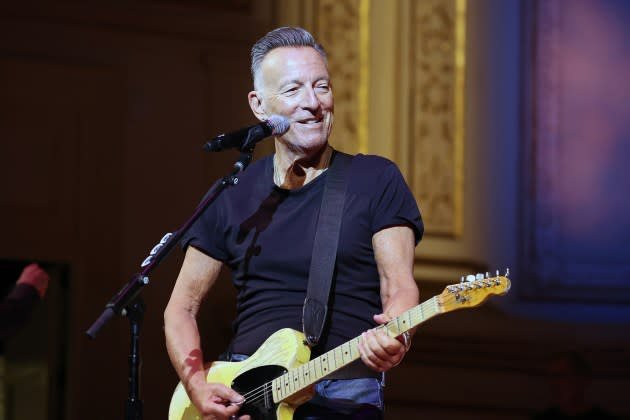
In the United States, the intersection of entertainment and politics is nothing new. From musicians to actors, public figures have long used their platforms to express opinions on national issues. Today, that conversation continues with figures like Bruce Springsteen and Robert De Niro, whose public statements often reach millions and spark widespread discussion.
What makes their involvement notable isn’t simply their visibility—it’s the level of attention their words receive. In an era shaped by social media and instant communication, a single comment from a widely recognized figure can quickly become part of a broader national dialogue. Supporters may amplify those messages, while critics may push back just as strongly, creating a dynamic and often polarized response.
For Springsteen, whose music has frequently reflected themes tied to American life, speaking on social issues is not a sudden shift. His work has long explored identity, struggle, and the idea of the nation itself. When he comments publicly, many see it as an extension of that artistic voice. Similarly, De Niro has built a reputation for being direct and outspoken, particularly when addressing topics he views as important. His remarks often carry the same intensity that defines many of his on-screen performances.

Still, their involvement raises broader questions that go beyond any single individual. What role should celebrities play in political discussions? Does their reach create an opportunity for awareness, or does it risk overshadowing other voices? These questions don’t have simple answers, and opinions tend to vary depending on perspective.
Some argue that public figures have every right to participate in civic conversations, just like anyone else. From this viewpoint, their influence can help bring attention to issues that might otherwise go unnoticed. Others, however, believe that the weight of celebrity status can complicate those discussions, potentially shifting focus away from policy and toward personality.
Another factor shaping this debate is the changing nature of media itself. In the past, celebrity commentary might have been limited to interviews or public appearances. Today, platforms allow immediate, unfiltered communication with global audiences. This direct connection can strengthen engagement—but it can also intensify reactions.
What remains clear is that voices like Bruce Springsteen and Robert De Niro will continue to be part of the conversation. Whether viewed as influential advocates or controversial participants, their presence highlights the evolving relationship between culture, media, and public discourse.
In the end, the discussion isn’t just about two individuals. It’s about how influence works in a connected world—who shapes conversations, how those conversations spread, and what it means when familiar faces step into spaces that affect millions.
And as long as those questions remain open, the dialogue around celebrity voices in politics is unlikely to fade anytime soon.