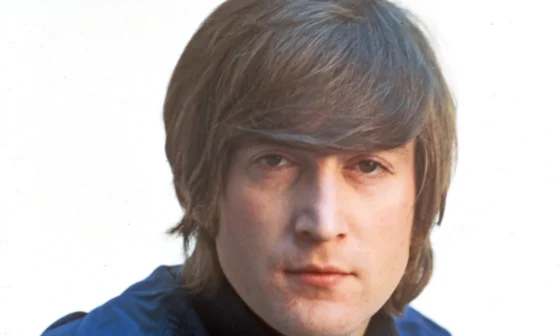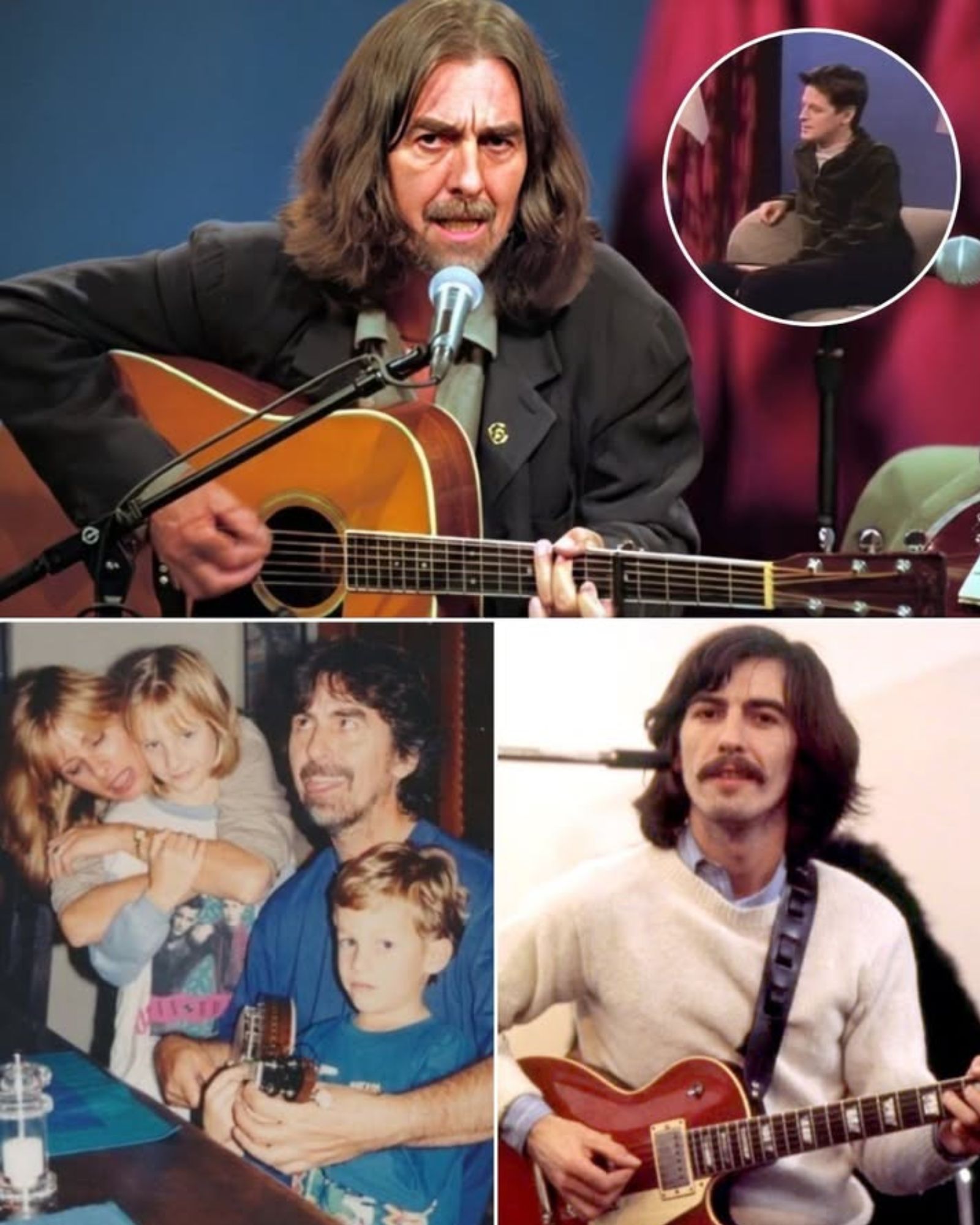
“WHO KNEW HIS LAST SONG WOULD COME FROM A VOICE BEHIND HIM?” George Harrison didn’t plan a grand farewell. It just happened — quiet, almost shy — inside a small New York studio in 1997. He sat there with an acoustic guitar, trying to choose a song, when two crew guys casually shouted from the back: “All Things Must Pass!” George turned around, gave that soft little smile fans never forget, and started playing. No spotlight. No crowd. Just a man singing the truth of his own life. None of them knew it was his last time performing in public. But somehow… the moment felt final. Gentle. Honest. A legend closing the door without making a sound.

George Harrison

On July 24, 1997, George Harrison walked into a modest studio in New York City—not as a former Beatle or global icon, but as a friend, a collaborator, and a quietly devoted musician. There were no stage lights or roaring audiences. Instead, VH1’s studio held a calm, almost sacred atmosphere as Harrison joined his lifelong friend and Indian music pioneer Ravi Shankar to promote their project Chants of India.

Harrison hadn’t planned to showcase his own music. His role was to support Shankar, having produced the album and contributed musically. But when asked if he might sing something, George offered a soft, unassuming “yes.” What followed was a moment of quiet magic—one that would become his final public performance.

“All Things Must Pass” — A Gentle, Echoing Truth

Sitting on a simple stool with only his acoustic guitar, Harrison performed “All Things Must Pass,” the timeless title track from his 1970 solo debut. Without the lush production of the studio version, the song felt even more intimate. Its message about the fleeting nature of life carried a deeper resonance, as if George were sharing a private truth with the room.

His voice—weathered, tender, and deeply human—floated softly, offering comfort paired with a quiet sense of closure.

Then, an Unexpected Gift

Harrison followed with a surprise: “Any Road,” a thoughtful, playful song he first began writing back in 1988. He had never performed it live before—and would never perform it again. The tune remained a hidden treasure until its posthumous release in 2003 on Brainwashed, the final album he completed.

The performance was unfiltered and beautifully honest. Just George, his guitar, and a room full of people who understood the privilege of witnessing something rare. When he finished, he smiled and joked, “I could go home and practice a bit and do it properly.” It was classic Harrison—humble, understated, and wonderfully sincere.

A Quiet Farewell

The appearance, later aired as The George & Ravi Show and hosted by John Fugelsang, became the last time Harrison would sing publicly. Four years later, in November 2001, the world said goodbye to the “quiet Beatle” after his long battle with cancer.

In those two songs, George Harrison offered everything that defined him: spiritual insight, gentle humor, and a heartfelt authenticity that required no theatrics. There were no dramatic finales, no encores—just a soft-spoken farewell that still lingers like a warm echo long after the final chord fades.

0 Shares:
Leave a Reply

Your email address will not be published. Required fields are marked *

You May Also Like
John Lennon
Read More

“More popular than Jesus.” Five words — and suddenly the world caught fire. In 1966, John Lennon’s offhand remark exploded into a full-blown storm: records burned in public, radio bans rolled out, protests flared, and death threats piled up as The Beatles headed into tour. A tense, globally televised apology followed — and not long after, the biggest band on the planet quietly made a decision that changed music history: they stopped touring for good. This wasn’t just a scandal. It was the moment fame, faith and pop culture collided — and rock’s future shifted overnight.

THE NIGHT AMERICA TURNED ON THE BEATLES: Inside John Lennon’s ‘BIGGER THAN JESUS’ Bombshell That Sparked Record Burnings,…
Reba McEntire And Dolly Parton
Read More

THE LAST YEARS OF Loretta Lynn WERE QUIETER — AND THAT’S WHAT MADE THEM LOUDER. By the time her final years arrived, Loretta Lynn wasn’t chasing controversy or rewriting rules. That work was already done. What remained was something harder to witness. The slowing. The pauses. The careful steps toward the microphone, as if each one carried decades of stories beneath it. Some nights, the crowd noticed how long she held the silence before a lyric. Other nights, they swore her voice sounded sharper because of it. Rumors drifted through Nashville. Whispers about her health. About how much longer she could keep going. But Loretta never explained. She sang. She endured. And in those last appearances, something unspoken began to follow her— a feeling that the real story hadn’t ended yet.

THE LAST YEARS OF Loretta Lynn WEREN’T ABOUT PROVING ANYTHING — THEY WERE ABOUT ENDURANCE A LEGEND WHO HAD NOTHING…
Bob dylan
Read More

“When Legends Collide and History Listens” — Bob Dylan’s rare, almost accidental union with George Harrison, Jeff Lynne, Tom Petty, and Roy Orbison didn’t just create a supergroup, it created a living chapter of music history that still breathes decades later, and when paired with Dylan’s hushed, deeply personal tribute to Woody Guthrie, it reveals how collaboration, influence, and artistic inheritance can turn fleeting moments into songs that refuse to age, refuse to fade, and keep traveling across generations long after the stage lights go out.

When Legends Unite: Traveling Wilburys Magic and Dylan’s Quiet Nod to Guthrie From supergroup alchemy to a hushed…