The plan was simple. Sing the chorus, wave to the crowd, and keep the show moving. That was how these moments were supposed to go—tight cues, perfect timing, no surprises. A tribute folded neatly into a live broadcast, respectful but controlled.
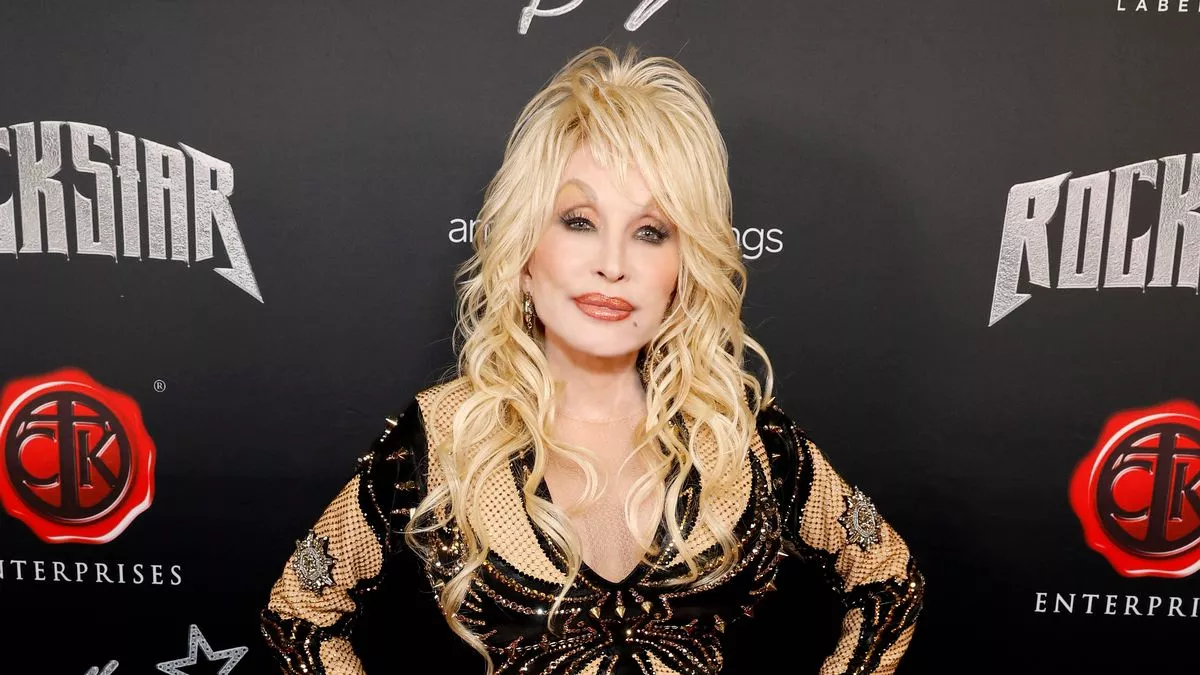
But when Dolly Parton reached the microphone, something quietly shifted.
She didn’t scan the stadium. She didn’t smile for the cameras. Instead, she looked upward, as if searching for someone who wasn’t there anymore. The band waited for her signal. It never came.
What followed wasn’t planned.
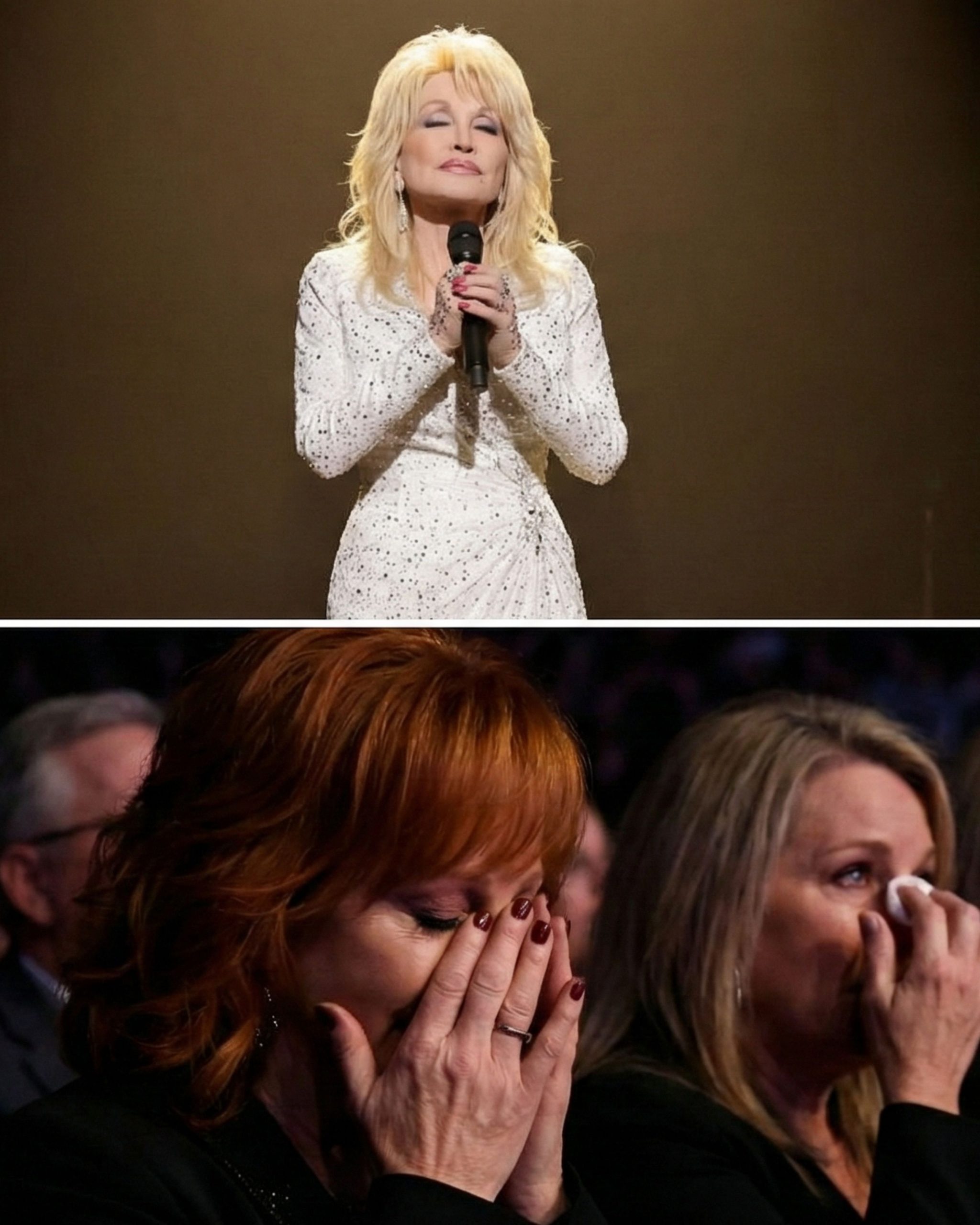
Dolly closed her eyes and began to sing I Will Always Love You completely a cappella. No guitar. No harmony. No safety net. Just one voice—slightly trembling, unmistakably human—cutting through a stadium that had gone perfectly still.
This wasn’t the polished version the world knew. This was slower. Softer. Fragile in places. The kind of singing that doesn’t try to impress, only to tell the truth.
She wasn’t singing for the crowd.
She was singing for Whitney Houston.
Everyone there seemed to understand it at the same time. The producers froze, unsure whether to intervene. Then they stopped worrying. This wasn’t a performance slipping off-script. This was something sacred finding its way out.
In the front row, Reba McEntire covered her face with both hands. Not for the cameras. Not for drama. Just the way people do when a memory hits too close, too fast.
Dolly didn’t reach for big notes. She didn’t stretch the moment. She let the silences breathe. Each lyric felt less like a song and more like a letter being read out loud for the last time.
As she reached the final line, her voice thinned to almost nothing. The word “You” barely rose above a whisper. But it landed heavier than any full orchestra ever could.
For a long moment, no one moved.
Then the crowd stood—not cheering, not clapping at first. Just standing. As if applause felt too small for what had just passed between them.
It wasn’t country music.
It wasn’t pop.
It wasn’t even a tribute in the traditional sense.
It was grief. Love. Gratitude.
And a goodbye that didn’t need anything else to be understood.
Sometimes the most powerful moments aren’t rehearsed.
They’re remembered.