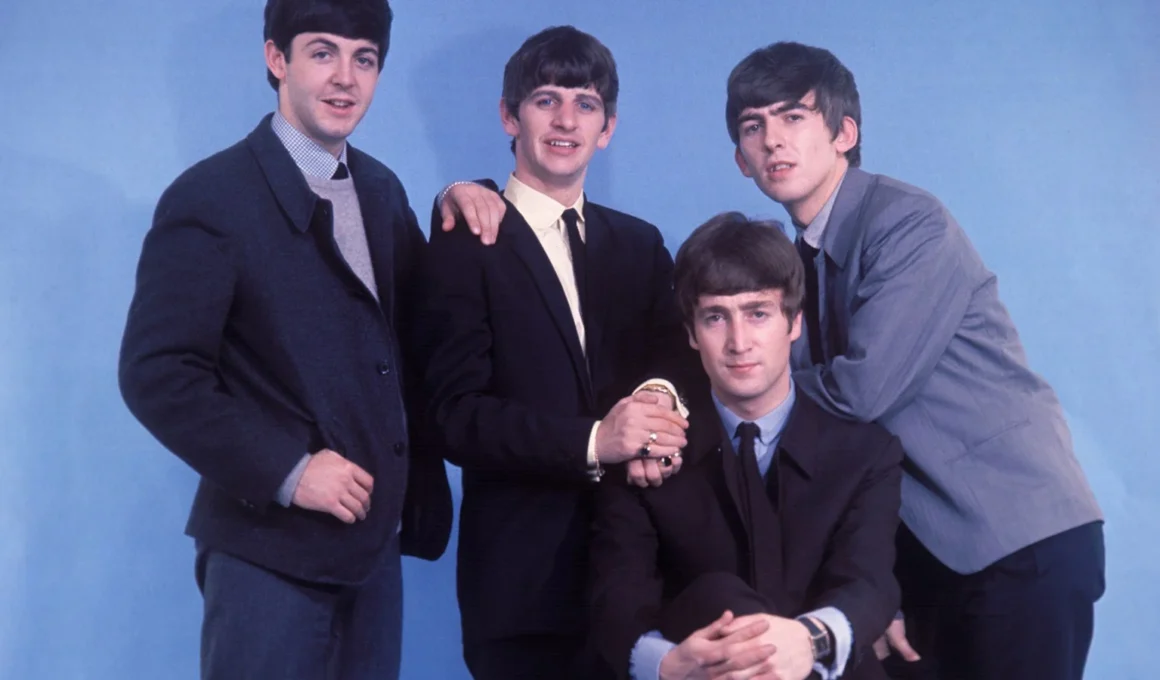
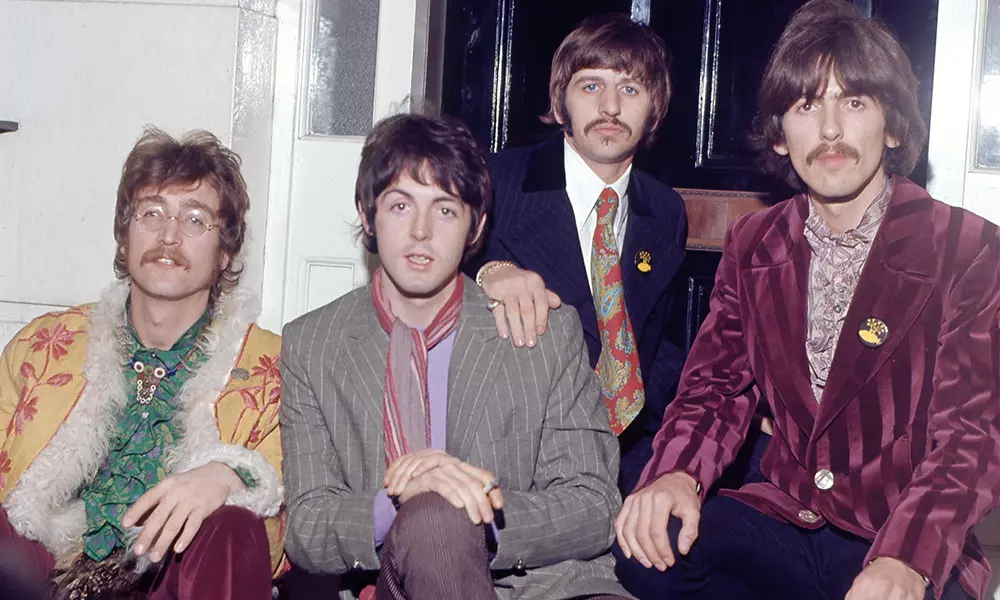
As founding members and the two musicians who had been playing together the longest, John Lennon and Paul McCartney were the natural choice for any two songwriters of the four. Starr, for his part, seemed content to be the band’s backbone and throw in a novelty song every now and then. But for the band’s youngest member, George Harrison, this was a wall he would throw himself against time and time again before The Beatles’ final split in 1970.
According to an interview in Anthology, McCartney and Lennon discussed Harrison’s role in the group privately. “It was an option, you know, to include George in the songwriting team,” he said. Optional, sure. Wanted? Maybe not.
Paul McCartney and John Lennon Discuss George Harrison at Woolton
Paul McCartney continued, “Without wanting to be too sort of mean to him, we had decided. I remember walking up through Woolton past Woolton Church with John one morning and, you know, going over these questions. ‘Should we? Should three of us write, or would it be better just to keep it simple? And we decided, ‘No, we’ll just keep the two of us. So, George [Harrison] used to write his own songs.”
For Harrison, songwriting was more of a novel pursuit than with McCartney and John Lennon. Just by age alone, Harrison hadn’t been playing guitar, let alone writing songs, for as long as his older bandmates. And as Harrison would later explain in Anthology, Lennon and McCartney had the advantage of already getting through their “bad song” phase. Harrison felt like he was coming in completely fresh, and considering he wasn’t a part of Lennon and McCartney’s songwriting team, he also lacked the advantage of ready assistance from his colleagues.
Interestingly, McCartney and Lennon’s meeting place of Woolton was also where the two musicians first met at the St. Peter’s Church Fete in July 1957.

This Oft-Overlooked Beatle Ended Up Being a Prolific Solo Artist
In the years following Paul McCartney and John Lennon’s fateful stroll past Woolton Church, many of George Harrison’s songs were rejected for The Beatles’ records. The Fab Four’s discography remained a largely Lennon-and-McCartney endeavor. Unsurprisingly, this became a driving factor in Harrison’s eagerness to leave the group in the late 1960s. And that wasn’t lost on his bandmates.
Speaking of The Beatles’ increasing disinterest in putting the band first in a 1969 interview with New Musical Express, Lennon said, “None of us want to be background musicians most of the time. It’s a waste. We didn’t spend ten years ‘making it’ to have freedom in the recording studios to be able to have two tracks on an album.” Lennon said he and McCartney always approached albums in the same way, “[taking] it in turns to record a track. Usually, in the past, George lost out because Paul and I are tougher.”
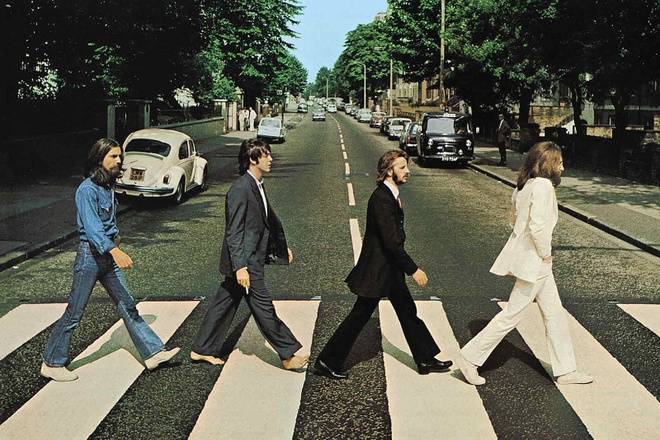
“[George] has got songs he’s been trying to get on since 1930,” Lennon continued. “He’s got to make an album of his own. And maybe if he puts ‘Beatles’ on the label rather than George Harrison, it might sell more. That’s the drag.”
Ironically, that’s not what happened. Harrison became the first ex-Beatle to hit No. 1 post-breakup with the release of his 1970 track, “My Sweet Lord” from All Things Must Pass. Lennon, a driving force in The Beatles’ songwriting machine, wouldn’t achieve the same feat until four years later with “Whatever Gets You Thru the Night”. Perhaps all those solo songwriting sessions were more beneficial to Harrison than any of them could have realized.