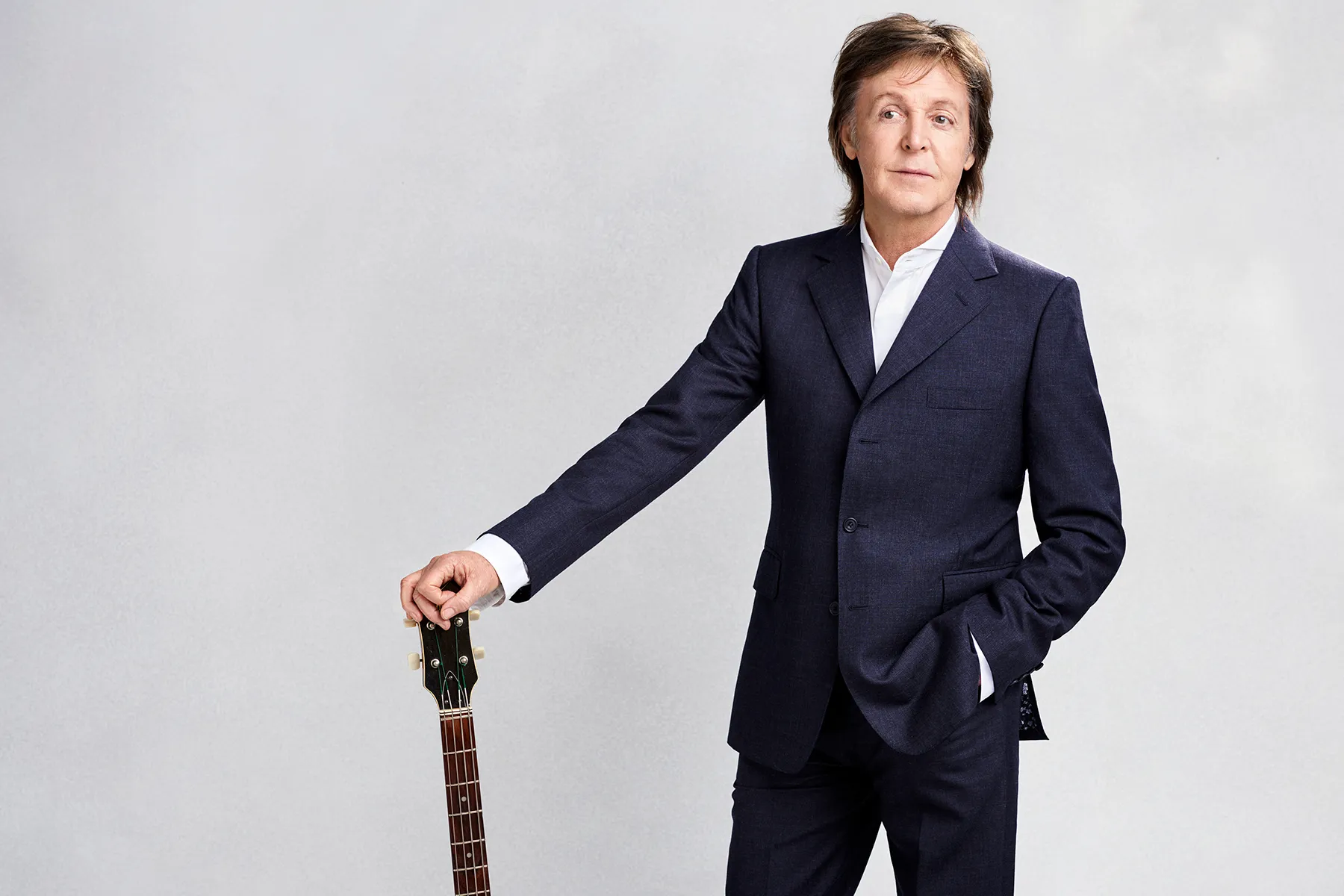
At eighty-three, when most legends would quietly step back from the spotlight, Paul McCartney is stepping forward. The announcement of his brand-new tour did not arrive wrapped in nostalgia or framed as a final bow. Instead, it carried a simple message — motion. “I’m not done yet.” For an artist whose catalog includes “Hey Jude,” “Let It Be,” “Yesterday,” and “Live and Let Die,” the phrase feels less like marketing and more like identity. This is not a man revisiting history. This is a musician extending it.
The unveiling of the tour sent immediate waves across the globe. Fans who grew up with vinyl copies of The Beatles reacted alongside younger listeners who discovered McCartney through streaming platforms. For both generations, the excitement was not rooted in memory alone. It was rooted in presence. McCartney’s decision to tour at this stage of life challenges assumptions about aging in music. In an industry often obsessed with youth, he offers endurance instead — not as defiance, but as devotion.

According to early details, the new tour promises refreshed arrangements rather than simple recreations. Beloved classics will return, but not frozen in time. McCartney has reportedly adjusted tempos, layered new instrumentation, and refined vocal phrasing to match the texture of his voice today. The goal is not to imitate 1965, but to reinterpret it through 2026. In doing so, he bridges decades without pretending they never happened.
Rehearsals, sources say, have been unexpectedly emotional. As the band revisited familiar melodies, moments of silence followed certain songs — not because something failed, but because the weight of history filled the room. McCartney has lived inside these songs for more than sixty years. Each lyric now carries additional meaning. Each chord echoes with memory. The rehearsals are not mechanical preparations; they are reflections.
Visually, the stage production is described as ambitious yet restrained — a fusion of timeless rock spirit with modern lighting and immersive design. Large-scale visuals and contemporary sound engineering will frame the performances, but they will not overshadow them. At the center remains McCartney himself, holding a bass, stepping toward the microphone, allowing the music to breathe. The spectacle supports the songs; it does not replace them.

What makes this tour remarkable is not merely its scale, but its symbolism. Many artists speak of legacy when they reach their eighties. McCartney speaks of continuation. There is no farewell branding, no countdown language, no sentimental framing of an ending. Instead, there is movement forward. His energy in rehearsals has been described as focused and deliberate — not frantic, not nostalgic, but purposeful. He is not chasing relevance. He is sustaining it.
“I’m not done yet” resonates because it reflects a lifetime of persistence. From Liverpool clubs to global stadiums, from the collapse of The Beatles to the reinvention with Wings and decades of solo work, McCartney has repeatedly adapted without abandoning himself. This new tour feels like another chapter in that long narrative — a living celebration of a career that helped shape modern music while still refusing to be confined by it. At eighty-three, Paul McCartney is not closing the book. He is turning the page, and the world is ready to listen.