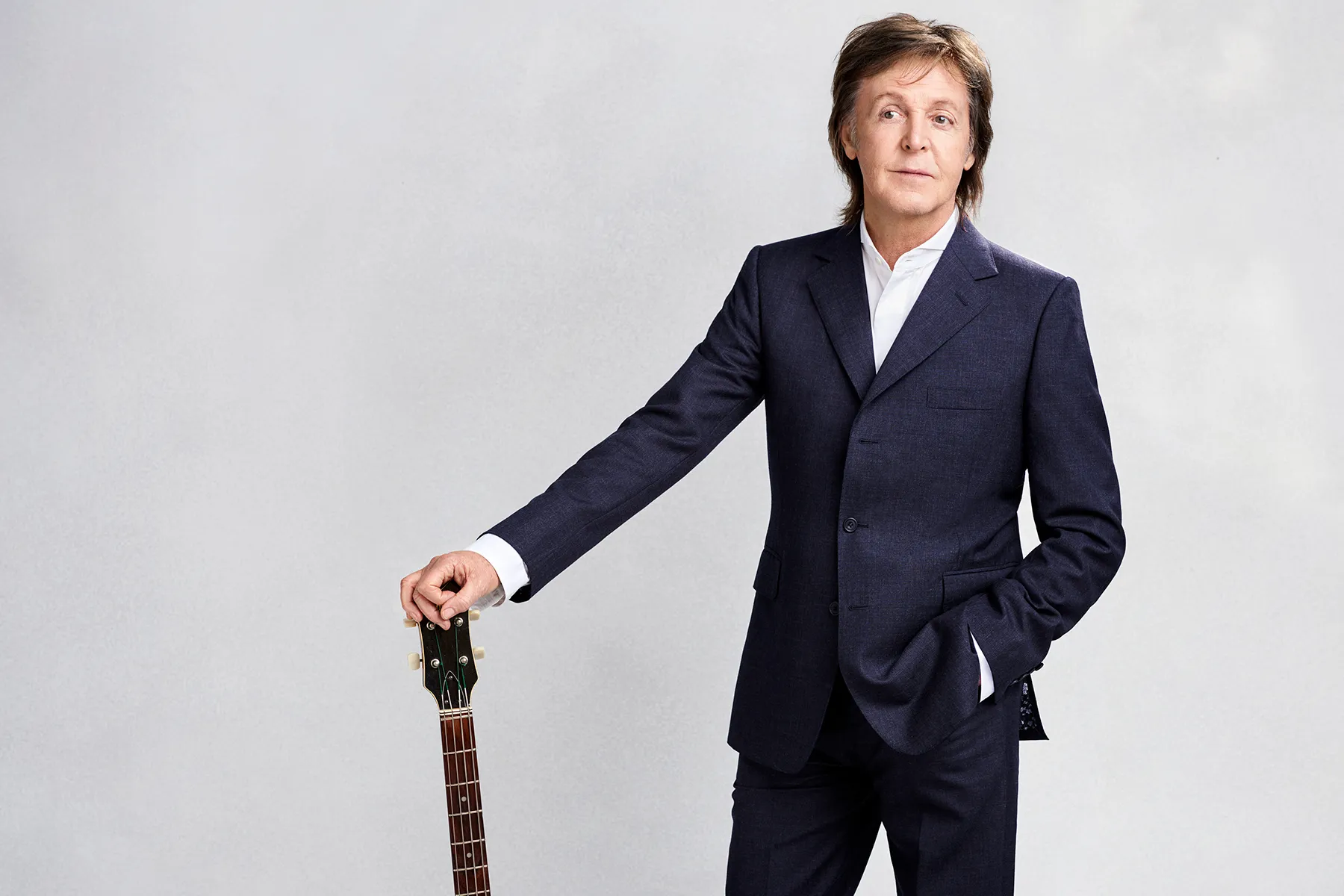
History often simplifies greatness. In the case of Paul McCartney, it once came in the form of a label that seemed almost dismissive: “the cute one.” It was a phrase that followed him through the early years of The Beatles, shaping how some critics and fans viewed his place within the group.
But labels rarely tell the full story.
McCartney’s journey began in Liverpool, where music wasn’t a guarantee—it was a pursuit. Growing up in a working-class environment, he developed his craft with persistence, long before global recognition was even a possibility. Those early years were defined not by certainty, but by risk.

When The Beatles rose to international fame, the narrative around the band quickly took shape. John Lennon was often cast as the edgy, intellectual force, while McCartney was framed as the melodic counterpart—the one who wrote accessible, emotionally resonant songs. It was a contrast that made for compelling storytelling, but it also overlooked the depth of his contributions.
Melody, after all, is not simplicity. It’s structure, instinct, and emotional precision. Songs like “Yesterday,” “Hey Jude,” and “Let It Be” didn’t endure because they were easy—they endured because they connected. And that connection became one of McCartney’s defining strengths.
Still, perception can be difficult to change, especially when it becomes part of a larger cultural narrative. Even at the height of Beatlemania, there were those who underestimated him, viewing his work as softer or more commercial, rather than recognizing its craftsmanship.
Then came the moment that changed everything: the breakup of The Beatles.
For many, it felt like an ending—not just for the band, but for the individuals within it. The assumption was that without the collective identity, each member would struggle to maintain the same level of impact. For McCartney, those expectations were particularly strong. If he had been seen as part of a greater whole, what would he become on his own?
The answer unfolded in real time.
Rather than fading, he began again. He formed Wings, stepping into a new chapter that required reinvention. It wasn’t an immediate continuation of success—it was a process, one that involved rebuilding credibility and redefining his artistic voice outside the shadow of The Beatles.

What followed was a body of work that proved his resilience. Albums, tours, and songs that stood on their own, independent of the legacy he had helped create. He didn’t abandon melody—instead, he expanded it, showing that accessibility and depth could coexist.
Over time, the narrative began to shift. The same qualities that had once been used to diminish his role were now recognized as strengths. His ability to write songs that people returned to, generation after generation, became central to his legacy.
Looking back, it’s clear that the idea of McCartney as “just the cute one” was never an accurate reflection. It was a snapshot—a limited perspective in a much larger story.
Because what defines his career isn’t how he was labeled, but how he responded to it.
He didn’t argue with it. He outgrew it.

And in doing so, he proved something that extends beyond music: that being underestimated can sometimes be the beginning of something far greater.