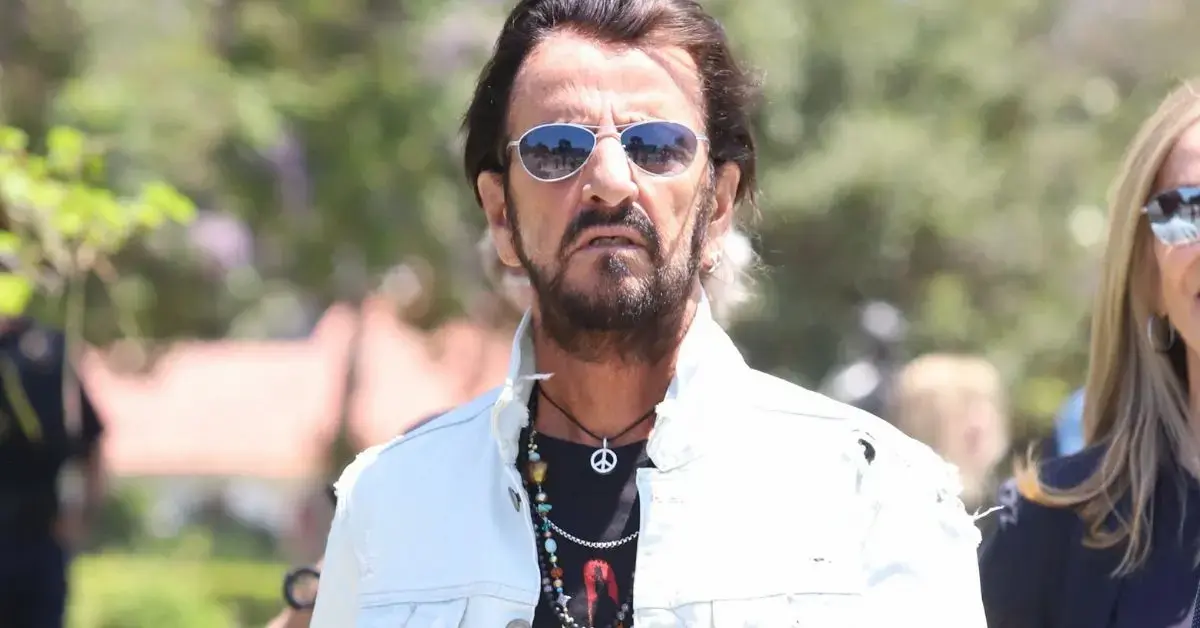
In the story of The Beatles, certain narratives have repeated themselves over the years. John Lennon and Paul McCartney are often framed as the visionary songwriters, the driving creative force behind a catalog that changed music forever. Meanwhile, Ringo Starr has sometimes been cast in a simpler role—the steady drummer who kept everything on track.
But that version of the story misses something essential.
Ringo Starr didn’t just keep time. He shaped it.

One of the most distinctive aspects of his playing came from a subtle but significant detail: he is naturally left-handed, yet he played on a standard right-handed drum kit. This created a style that felt slightly unconventional. His fills didn’t follow the patterns most drummers were trained to use. Instead, they moved in ways that felt unexpected—sometimes delayed, sometimes leaning into the beat rather than sitting squarely on it.
That difference gave Beatles songs a unique rhythmic identity. Tracks like “Come Together” or “A Day in the Life” don’t just rely on melody—they depend on feel. And much of that feel comes from Ringo’s approach: restrained, deliberate, and always in service of the song.

Unlike many drummers who aim to stand out through complexity or speed, Ringo’s strength was in knowing when not to play. He left space. He allowed songs to breathe. And in doing so, he created parts that were not only effective but memorable—so much so that they became inseparable from the music itself.
His personality within the band reflected that same philosophy. He didn’t compete for attention. He didn’t try to dominate creatively. Instead, he contributed in a way that balanced the group, providing a foundation that allowed the others to explore freely.

That importance became especially clear in 1968, during the sessions for what would become known as the “White Album.” Tensions within the band were high, and for a brief period, Ringo stepped away. During his absence, the remaining members attempted to carry on—but something was missing.
They noticed it almost immediately.
The groove felt different. The cohesion wasn’t the same. It wasn’t just about technical ability—it was about feel, chemistry, and instinct. Realizing this, they reached out to him, asking him to return. When he came back, he was welcomed in a way that spoke volumes: his drum kit was decorated with flowers, a quiet but meaningful gesture of appreciation.
It was a turning point, not just for the band, but for how his role was understood.

Ringo Starr may not have sought the spotlight, but his influence is undeniable. He helped redefine what it means to be a drummer—not as someone who simply supports the music, but as someone who shapes its identity from within.
Over time, musicians and fans alike have come to recognize what was once overlooked. His style, once considered simple, is now seen as deceptively complex. His choices, once understated, are now understood as intentional and essential.
In the end, the idea that he was “the lucky one” says more about perception than reality. Because what Ringo Starr brought to The Beatles wasn’t luck.
It was feel. It was instinct. And it was something no one else could quite replicate.