Beyond the Label: How Paul McCartney Redefined Himself After The Beatles

paul-mccartney

History often simplifies greatness. In the case of Paul McCartney, it once came in the form of a label that seemed almost dismissive: “the cute one.” It was a phrase that followed him through the early years of The Beatles, shaping how some critics and fans viewed his place within the group.

But labels rarely tell the full story.

McCartney’s journey began in Liverpool, where music wasn’t a guarantee—it was a pursuit. Growing up in a working-class environment, he developed his craft with persistence, long before global recognition was even a possibility. Those early years were defined not by certainty, but by risk.

When The Beatles rose to international fame, the narrative around the band quickly took shape. John Lennon was often cast as the edgy, intellectual force, while McCartney was framed as the melodic counterpart—the one who wrote accessible, emotionally resonant songs. It was a contrast that made for compelling storytelling, but it also overlooked the depth of his contributions.

Melody, after all, is not simplicity. It’s structure, instinct, and emotional precision. Songs like “Yesterday,” “Hey Jude,” and “Let It Be” didn’t endure because they were easy—they endured because they connected. And that connection became one of McCartney’s defining strengths.

Still, perception can be difficult to change, especially when it becomes part of a larger cultural narrative. Even at the height of Beatlemania, there were those who underestimated him, viewing his work as softer or more commercial, rather than recognizing its craftsmanship.

Then came the moment that changed everything: the breakup of The Beatles.

For many, it felt like an ending—not just for the band, but for the individuals within it. The assumption was that without the collective identity, each member would struggle to maintain the same level of impact. For McCartney, those expectations were particularly strong. If he had been seen as part of a greater whole, what would he become on his own?

The answer unfolded in real time.

Rather than fading, he began again. He formed Wings, stepping into a new chapter that required reinvention. It wasn’t an immediate continuation of success—it was a process, one that involved rebuilding credibility and redefining his artistic voice outside the shadow of The Beatles.

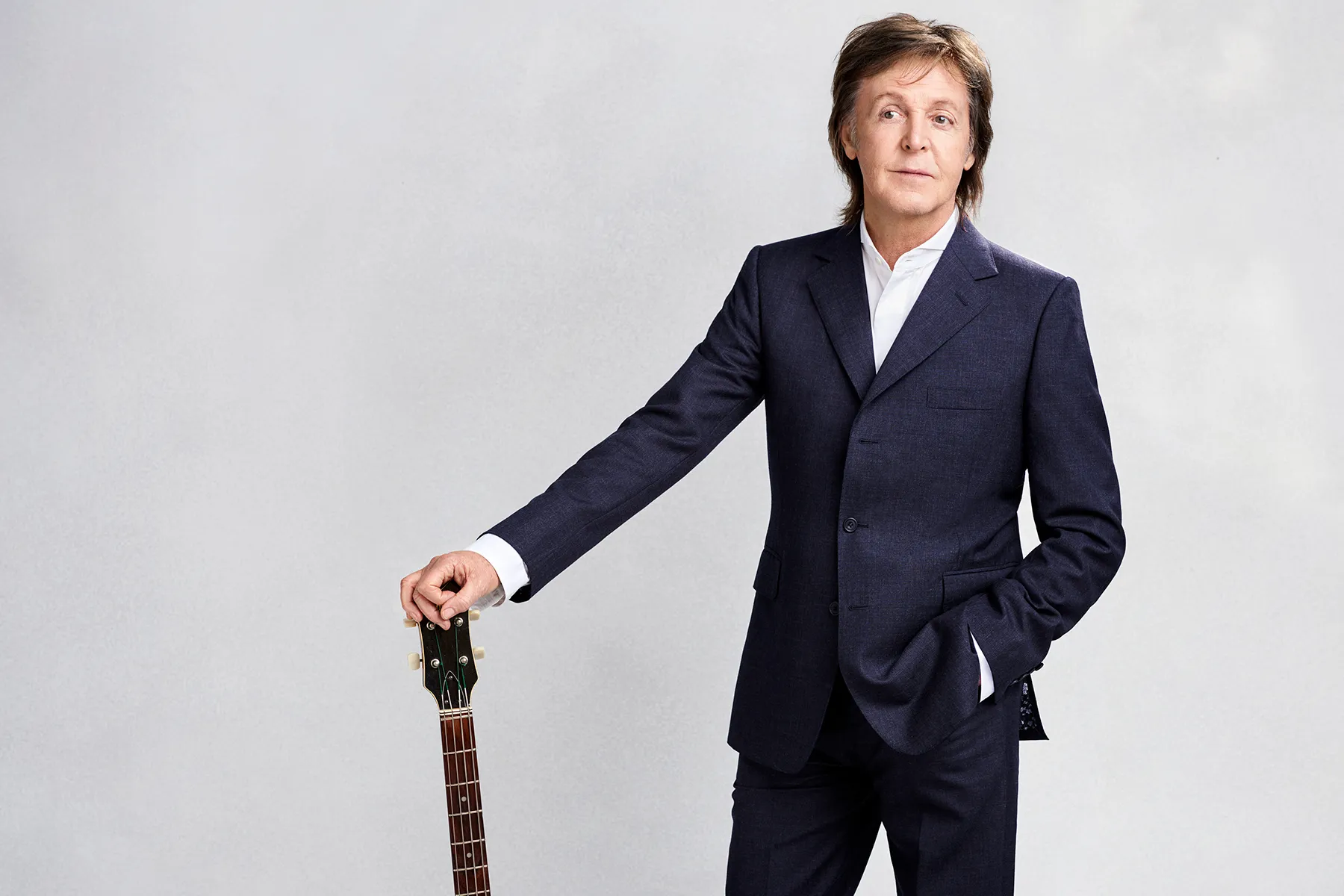
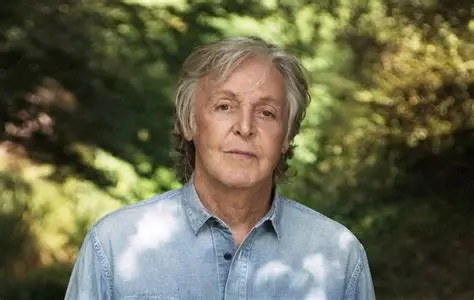
Pictured: Paul McCartney performs "Medley" on February 16, 2025 --

What followed was a body of work that proved his resilience. Albums, tours, and songs that stood on their own, independent of the legacy he had helped create. He didn’t abandon melody—instead, he expanded it, showing that accessibility and depth could coexist.

Over time, the narrative began to shift. The same qualities that had once been used to diminish his role were now recognized as strengths. His ability to write songs that people returned to, generation after generation, became central to his legacy.

Looking back, it’s clear that the idea of McCartney as “just the cute one” was never an accurate reflection. It was a snapshot—a limited perspective in a much larger story.

Because what defines his career isn’t how he was labeled, but how he responded to it.

He didn’t argue with it. He outgrew it.

Sir Paul McCartney attends the Stella McCartney Womenswear Fall/Winter 2024-2025 show as part of Paris Fashion Week on March 04, 2024 in Paris,...

And in doing so, he proved something that extends beyond music: that being underestimated can sometimes be the beginning of something far greater.

0 Shares:
Leave a Reply

Your email address will not be published. Required fields are marked *

You May Also Like
Paul-dave-grohl-
Read More

THE NIGHT PAUL McCARTNEY SANG FOR CHUCK NEGRON There was no hint in the setlist. No dramatic introduction. Just a quiet shift in the atmosphere as Paul McCartney stepped onto the stage holding nothing but a worn acoustic guitar. He paused, scanning the crowd, then softly said, “Tonight, this one is for Chuck Negron.” What followed was a stripped-down rendition of “One” — slower, deeper, almost like a prayer drifting into the rafters. His voice may have carried the years, but it also carried something greater: decades of music shaped by triumph, heartbreak, and brotherhood. Each lyric felt personal, as though it wasn’t just being sung, but remembered. When the final note faded, McCartney didn’t take a bow. He simply pressed his hand to his chest. The room stayed hushed for a breathless moment — before rising together, not just in applause, but in tribute to Chuck Negron and a voice that will never truly fade. ▶️ Listen to the song in the first comment 👇

THE NIGHT PAUL McCARTNEY SANG FOR CHUCK NEGRON A Show That Didn’t Promise Anything Unusual The arena had…
paul-mccartney
Read More

73 million Americans tuned in — and nothing in pop culture was ever the same again. On February 9, 1964, The Beatles stepped onto the stage of The Ed Sullivan Show and sparked Beatlemania in real time. The screams were deafening. The tears were unstoppable. In just a few electrifying minutes, music, fashion, and youth culture split into a clear “before” and “after.” It wasn’t just a television performance. It was a cultural detonation. From the haircuts to the harmonies, from the attitude to the global hysteria, that night redrew the blueprint for what a modern superstar could be. Sixty-two years later, the footage still feels surreal — raw, chaotic, historic. And here’s the lingering question: would today’s biggest icons even exist without that moment rewriting the rules? Watch the video below 👇👇👇

THE NIGHT THAT CHANGED AMERICA FOREVER: How 73 MILLION Viewers Watched The Beatles Ignite ‘Beatlemania’ on The Ed…
Willie-Nelson
Read More

YOU COULD HAVE MISSED THE MOST HEARTBREAKING MOMENT OF CMA 2025 — WHEN LEGEND WILLIE NELSON, FRAIL BUT UNBROKEN, SILENTLY WATCHED FROM THE CROWD AFTER THE AUDIENCE HAD ALREADY LEFT, BEFORE KEITH URBAN PUSHED HIS WHEELCHAIR ONSTAGE, LEAVING THE WHOLE ARENA IN TEARS — A HOMECOMING THAT LEFT LAINEY WILSON, VINCE GILL, AND GEORGE STRAIT SOBBING LIVE IN FRONT OF MILLIONS! Just when most of the audience had already started to leave, thinking CMA 2025 was over and the lights were dimmed for good, a frail but iconic figure quietly appeared in the emptying arena — Willie Nelson. No one knew he had been there all along, silently watching every final moment with a proud, soulful gaze that spoke volumes. It felt as if the true spirit of country music had quietly come home. Then, in the night’s most powerful and emotional surprise, Keith Urban gently pushed Willie’s wheelchair onto the stage. The arena, now quieter and more intimate, fell into stunned silence before erupting into overwhelming emotion. Fellow legends Vince Gill and George Strait couldn’t hold back their tears, standing frozen with heartfelt whispers and trembling voices. Host Lainey Wilson broke down, rushing to embrace Willie in a moment of pure love and reverence. As Willie settled onstage, he softly whispered, “I’m just glad to be home with my family.” Keith nodded, his voice choked with emotion, “You’ve carried all our hearts for decades, Willie.” Vince Gill added quietly, “Your spirit is the soul of this music.” George Strait’s voice cracked as he said, “Welcome back, brother. We’ve missed you.” Lainey Wilson, tears streaming down, wrapped her arms around Willie and said, “This is where you belong.” This wasn’t just a performance — it was a sacred homecoming, a testament to resilience, legacy, and the unbreakable bond that country music holds. It was a CMA moment for the ages, a reminder that legends never truly leave—they live on in every note, every tear, every heart touched. WATCH THIS UNFORGETTABLE MOMENT BELOW

The CMA 2025 Moment Nobody Saw Coming: Willie Nelson’s Silent Return That Brought the House to Tears The…