
Behind every powerhouse high note Ignazio Boschetto hits today lies a ghost from his past—the memory of a voice that almost vanished. Before the world knew him as one-third of the powerhouse trio Il Volo, Ignazio was a boy grappling with the cruelest irony of a young male singer’s life: puberty. For a child prodigy who had been singing opera since the age of three, the “breaking” of his voice felt less like a rite of passage and more like a terminal diagnosis for his career.
The Crisis in Bologna
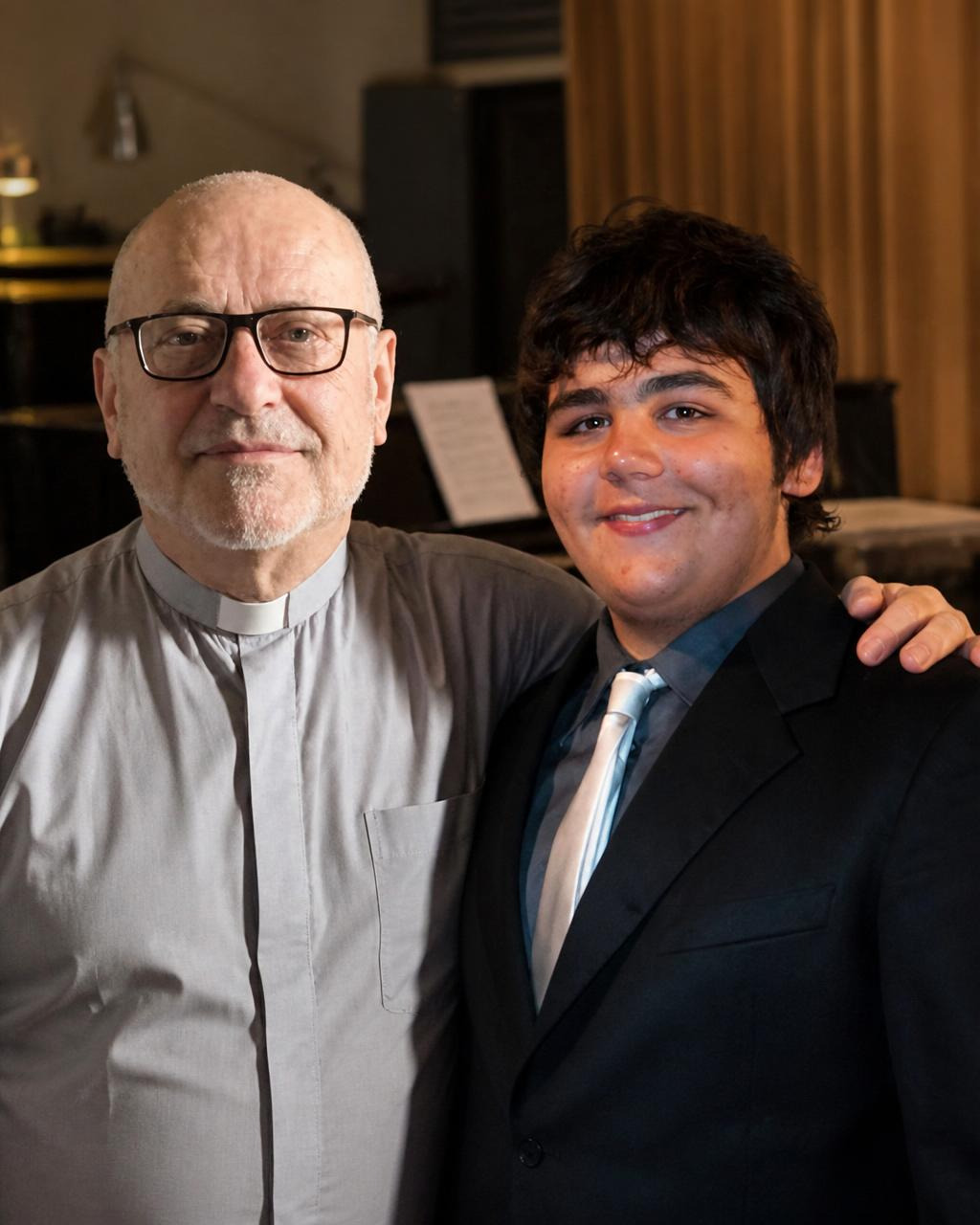
By the time he was fifteen, the effortless “C” notes that had made him a local sensation in Sicily were becoming treacherous. In the middle of phrases, his voice would crack, a physical betrayal that left him terrified. He traveled to Bologna to study under the esteemed Maestro Sergio Bertocchi, but he didn’t arrive with a song; he arrived with a heavy heart, ready to quit before the world ever truly heard him.
Maestro Bertocchi, however, saw past the cracking notes. He recognized that Ignazio’s instrument wasn’t broken—it was simply transitioning. But to save it, he had to do something that felt like torture to a young performer: he had to silence it.
The Power of the Breath
For several agonizing weeks, Bertocchi wouldn’t let Ignazio sing a single lyric. There were no scales, no arias, and no rehearsals. Instead, the curriculum was entirely silent. They spent hours on “appoggio”—the art of breath support.
Ignazio was forced to focus on his diaphragm, his posture, and the way air moved through his body. It was a lesson in humility. While other kids his age were showing off their range, Ignazio was lying on a studio floor, learning how to breathe. He hated it. He felt like a racer being told he could only look at the tires but never start the engine.
The Sentence That Changed Everything
When the Maestro finally gave him the nod to sing again, the tension in the room was palpable. Ignazio opened his mouth, and the sound that came out was different—deeper, richer, and more stable than the boyish soprano he was mourning.
Bertocchi looked at him and delivered the sentence that would define Ignazio’s professional life: “The voice is a wild animal; if you don’t build the cage of breath to hold it, it will eventually run away from you.”
That “cage” of breath support is the reason Ignazio, now 31, remains one of the most consistent tenors in the crossover genre. He doesn’t just sing with his throat; he sings with the foundation he built during those silent weeks in Bologna.
Courage in the Quiet
Between the urge to quit at 15 and the discipline to stay silent, the latter clearly required the greater courage. Quitting is a sudden exit, but staying silent while your peers move forward requires a profound level of trust. Ignazio had to trust that his teacher was right, and more importantly, he had to trust that his voice was still in there, waiting for the right moment to return.
Today, every time Ignazio warms up before a show, he isn’t just checking his range. He is revisiting that small studio in Bologna, honoring the silence that taught him how to truly sing. He didn’t just find his voice; he earned it.