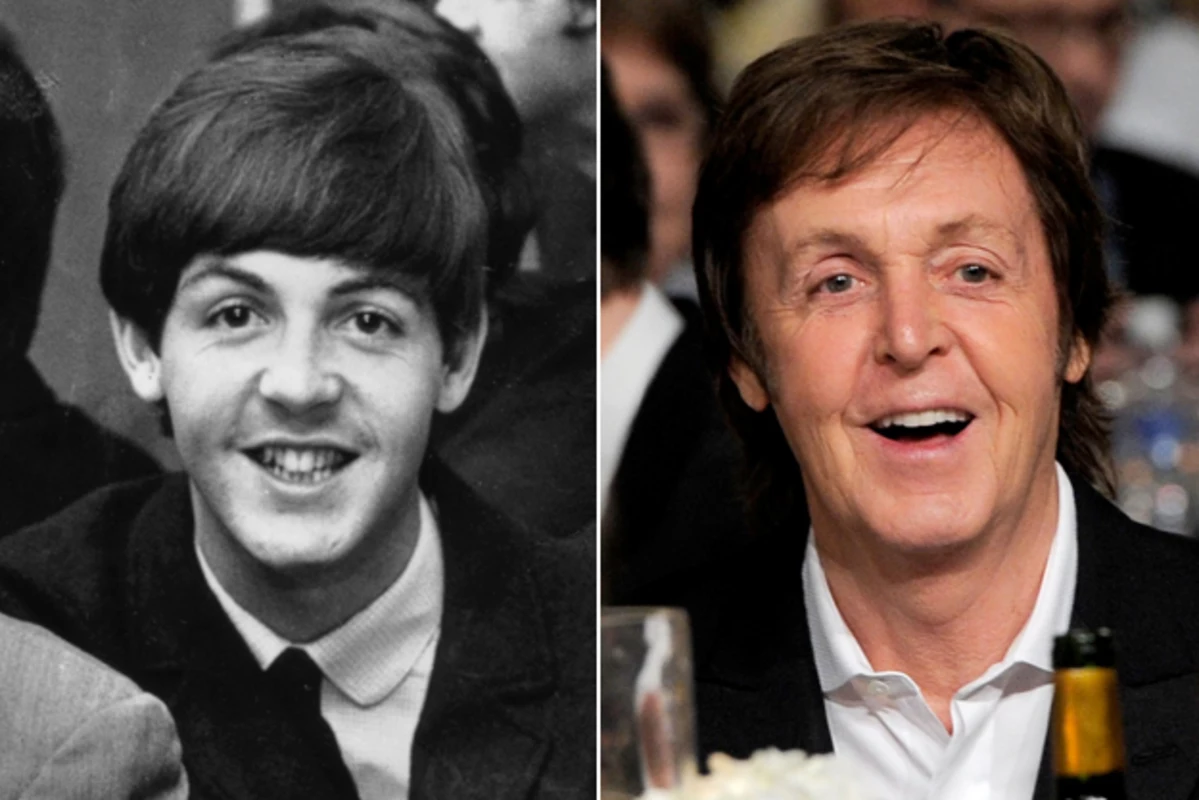
Why Paul McCartney Still Feels Timeless at 84

There are few artists in history whose music feels woven into everyday life across generations. Paul McCartney is one of them. At 84 years old, the former Beatle continues to do something that seems almost impossible — step onto a stage and make tens of thousands of people feel like they are hearing the soundtrack of their lives all over again.

For many musicians, longevity in the spotlight can become a struggle to remain relevant. Careers fade, tours become nostalgia acts, and audiences slowly move on. But Paul McCartney exists in a different category entirely. He does not perform as someone trying to relive former glory. Instead, he carries the rare confidence of an artist who knows his music never truly left people in the first place.
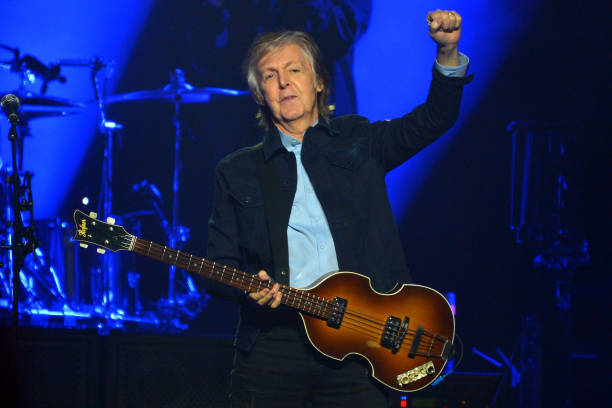
Sir Paul McCartney performs live on stage at the O2 Arena during his 'Freshen Up' tour, on December 16, 2018 in London, England.

When the lights dim before one of his concerts, the atmosphere feels different from a typical live show. There is excitement, certainly, but there is also emotion. Fans are not only there to watch a legend perform. They are there to reconnect with moments tied to his songs — first loves, road trips, heartbreaks, weddings, family memories, and entire decades of their lives.

That connection becomes especially powerful the moment McCartney begins playing songs like “Hey Jude” or “Let It Be.” Entire arenas sing together, often louder than the sound system itself. It stops feeling like a concert and becomes something shared between generations. Parents stand beside children and grandchildren, all knowing the same lyrics, all understanding the same melodies that somehow never age.

Paul McCartney performs onstage during the 36th Annual Rock & Roll Hall Of Fame Induction Ceremony at Rocket Mortgage Fieldhouse on October 30, 2021...

Part of McCartney’s lasting appeal comes from how genuine he still appears after all these years. There is no sense of desperation in his performances, no attempt to force himself into modern trends. He walks onstage comfortably, armed with little more than his guitar, his stories, and a catalog of songs that changed popular music forever.

Even now, fans often remark on the joy he seems to feel while performing. That energy matters. McCartney does not act like someone burdened by the weight of his own legacy. Instead, he seems grateful to still share the music with people who continue to treasure it decades later.

Of course, there is also an emotional reality that quietly follows every appearance he makes. Paul McCartney represents one of the final living links to a cultural era that transformed music forever. For millions of fans, seeing him live is not just entertainment — it feels historical.

Paul McCartney performs on The Pyramid Stage during day four of Glastonbury Festival at Worthy Farm, Pilton on June 25, 2022 in Glastonbury, England.

That awareness can create a bittersweet feeling in the audience. Every performance carries the understanding that moments like these cannot last forever. As the years pass, fans increasingly find themselves wondering how the world will react when McCartney finally decides to stop touring, or when the voice that helped define modern songwriting is eventually gone.

Yet perhaps that question misses something important.

Artists like Paul McCartney never truly disappear in the traditional sense. Long after the tours end and the stage lights go dark, the songs remain. “Blackbird,” “Maybe I’m Amazed,” “Yesterday,” and countless others continue moving through homes, radios, films, celebrations, and memories around the world.

That is why watching Paul McCartney at 84 feels so meaningful. It is not simply about witnessing a music legend continue to perform. It is about seeing living history still capable of creating new memories while honoring old ones at the same time.

And maybe that is the closest thing to timelessness music can ever achieve.

0 Shares:
Leave a Reply

Your email address will not be published. Required fields are marked *

You May Also Like
Keith Harkin
Read More

“Wait Until You Hear This — Keith Harkin Just Turned ‘Castles in the Air’ Into Something Even Don McLean Never Imagined.” Fans Were Left Breathless the Moment Keith Harkin Stepped Forward With Nothing but His Guitar and That Unmistakable Celtic Thunder Charm. His Performance of Don McLean’s Classic Didn’t Just Honor the Original — It Transformed It. Listeners Swore His Tender Tone, Gentle Phrasing, and Emotional Depth Made the Song Feel Brand New. But the Real Shock Came at the End: Instead of Finishing the Familiar Way, Keith Added a Haunting, Heart-Melting Twist That Stopped the Crowd in Their Tracks. That Unexpected Final Touch Had Fans Rushing Online To Declare It “Better Than the Original” and Replaying the Moment Again and Again.

Standing center stage with his guitar, Celtic Thunder’s Keith Harkin delivered a heartfelt rendition of Don McLean’s “Castles…
Sean-Ono
Read More

No stage. No music. Just memory. When Sean Lennon and Stella McCartney stood side by side to honor John Lennon, the room seemed to slow to a hush. And when Paul McCartney silently fought back tears — without a single word or song — time itself felt like it stopped. It wasn’t a grand tribute, but something far more powerful: a deeply human moment of family, loss, and love. One quiet moment that spoke louder than any Beatles anthem. WATCH BELOW 👇👇👇

SEAN LENNON & STELLA McCARTNEY’S HEARTBREAKING TRIBUTE TO JOHN LENNON — PAUL’S SILENT TEARS MADE TIME STAND STILL…
DON WILLIAMS
Read More

WHEN DON WILLIAMS RELEASED I TURN THE PAGE, HE WASN’T COMING BACK TO COUNTRY MUSIC — HE WAS COMING BACK TO HIMSELF. In 1998, after nearly seven years of silence, Don Williams returned to the studio without headlines or fanfare—only a quiet phrase: I Turn the Page. It sounded less like an album title and more like a confession. Insiders said he walked back into Nashville as if carrying unfinished verses in his coat pocket. The songs were slower. The voice deeper. Each track felt like a memory he wasn’t ready to name out loud. This wasn’t a comeback meant to chase charts or trends. It was something riskier—a return meant to face time itself. What really pushed the Gentle Giant to open that page again is a story whispered between the lines.

The Silence Before the Song By the mid-1990s, Don Williams had quietly stepped away from the spotlight. No…
Beatles-on-the-Rooftop
Read More

The wind along Savile Row still cuts through the air much as it did in 1969. But this time, the street below was eerily quiet—no sirens, no crowds, no commotion. Only five men, each bearing one of the most storied surnames in music, moving quietly onto the rooftop of Apple Corps. Julian Lennon, Sean Lennon, James McCartney, Dhani Harrison, and Zak Starkey were not there for a film crew or public attention. They came without ceremony, plugging into vintage amplifiers that had been silent for decades. When the opening chords of Don’t Let Me Down filled the air, something unmistakably shifted. This was more than a tribute—it felt like a revival. Yet it was the stillness after the final note, when the sound disappeared and the silence returned, that lingered longest, quietly reshaping how their shared bond is understood. ▶️ Listen to the performance in the first comment below 👇

The wind on Savile Row still howls the same way it did on January 30, 1969. But yesterday,…