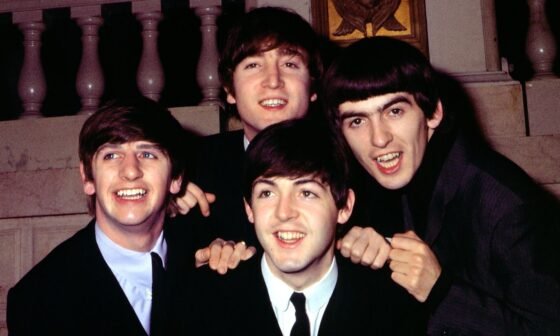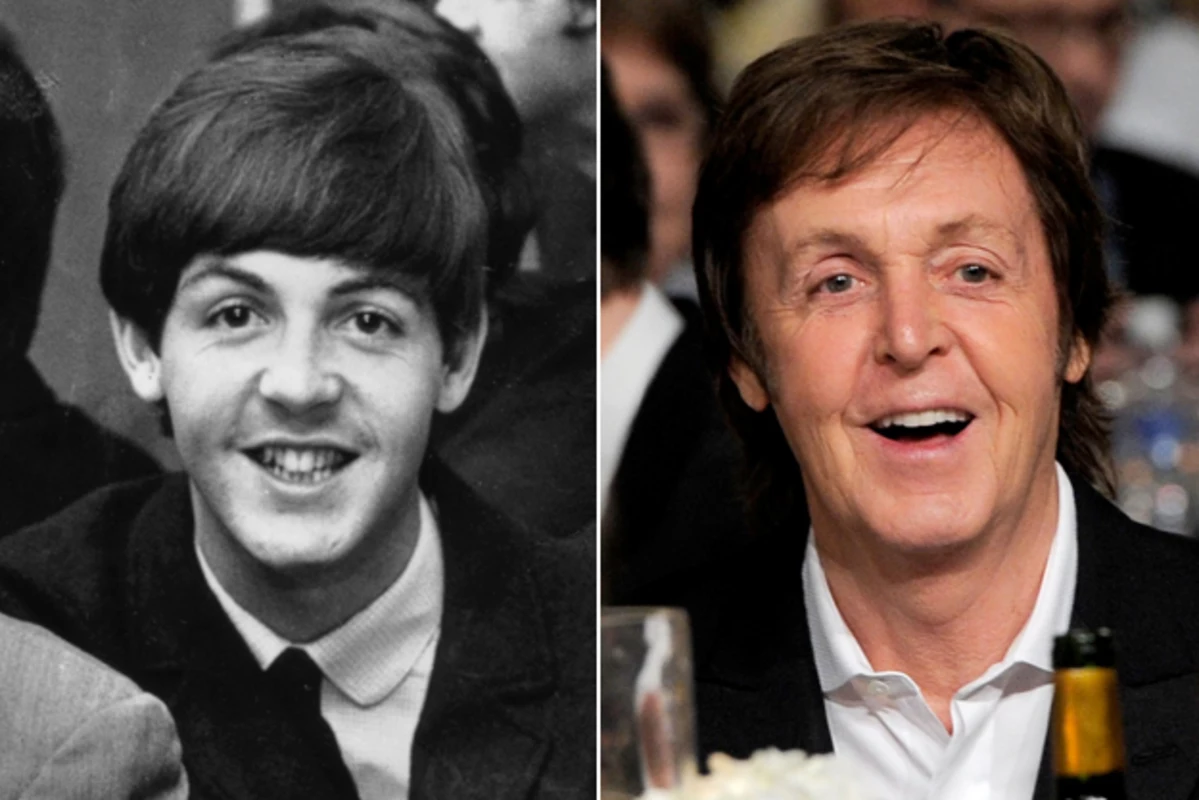
There are few artists in history whose music feels woven into everyday life across generations. Paul McCartney is one of them. At 84 years old, the former Beatle continues to do something that seems almost impossible — step onto a stage and make tens of thousands of people feel like they are hearing the soundtrack of their lives all over again.
For many musicians, longevity in the spotlight can become a struggle to remain relevant. Careers fade, tours become nostalgia acts, and audiences slowly move on. But Paul McCartney exists in a different category entirely. He does not perform as someone trying to relive former glory. Instead, he carries the rare confidence of an artist who knows his music never truly left people in the first place.
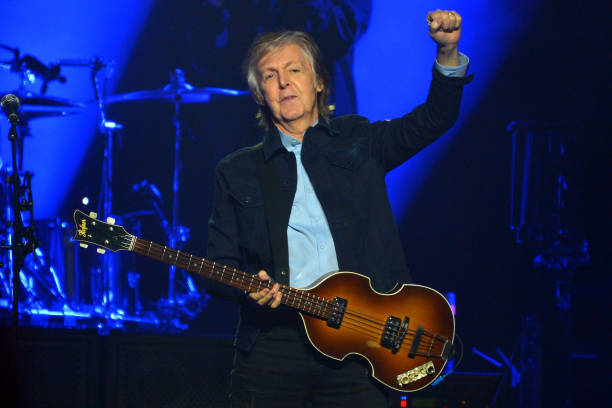
When the lights dim before one of his concerts, the atmosphere feels different from a typical live show. There is excitement, certainly, but there is also emotion. Fans are not only there to watch a legend perform. They are there to reconnect with moments tied to his songs — first loves, road trips, heartbreaks, weddings, family memories, and entire decades of their lives.
That connection becomes especially powerful the moment McCartney begins playing songs like “Hey Jude” or “Let It Be.” Entire arenas sing together, often louder than the sound system itself. It stops feeling like a concert and becomes something shared between generations. Parents stand beside children and grandchildren, all knowing the same lyrics, all understanding the same melodies that somehow never age.

Part of McCartney’s lasting appeal comes from how genuine he still appears after all these years. There is no sense of desperation in his performances, no attempt to force himself into modern trends. He walks onstage comfortably, armed with little more than his guitar, his stories, and a catalog of songs that changed popular music forever.
Even now, fans often remark on the joy he seems to feel while performing. That energy matters. McCartney does not act like someone burdened by the weight of his own legacy. Instead, he seems grateful to still share the music with people who continue to treasure it decades later.
Of course, there is also an emotional reality that quietly follows every appearance he makes. Paul McCartney represents one of the final living links to a cultural era that transformed music forever. For millions of fans, seeing him live is not just entertainment — it feels historical.

That awareness can create a bittersweet feeling in the audience. Every performance carries the understanding that moments like these cannot last forever. As the years pass, fans increasingly find themselves wondering how the world will react when McCartney finally decides to stop touring, or when the voice that helped define modern songwriting is eventually gone.
Yet perhaps that question misses something important.
Artists like Paul McCartney never truly disappear in the traditional sense. Long after the tours end and the stage lights go dark, the songs remain. “Blackbird,” “Maybe I’m Amazed,” “Yesterday,” and countless others continue moving through homes, radios, films, celebrations, and memories around the world.
That is why watching Paul McCartney at 84 feels so meaningful. It is not simply about witnessing a music legend continue to perform. It is about seeing living history still capable of creating new memories while honoring old ones at the same time.
And maybe that is the closest thing to timelessness music can ever achieve.