In the immediate aftermath of John Lennon’s death in December 1980, the world struggled to come to terms with the loss. For Paul McCartney, it wasn’t just the passing of a cultural icon—it was the loss of someone who had shaped his life in ways few others could.
Amid that grief, McCartney found himself in a deeply personal conversation with Yoko Ono, Lennon’s partner and closest confidante. It was during this call that Ono made a comment McCartney would later describe as surprising: “You know… I think John might have been gay.”
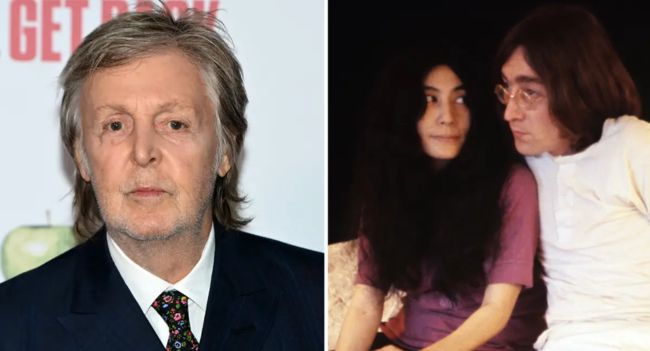
The remark, delivered in such a raw and emotional period, left McCartney momentarily unsure how to respond. Years later, when reflecting on it, he explained that his reaction wasn’t one of judgment or dismissal—but of quiet consideration. Lennon, after all, had always been a complex and deeply expressive person, someone who resisted simple definitions.
McCartney’s response, as he later shared, leaned toward acceptance rather than certainty. He acknowledged that if Lennon had felt that way, it would have been part of who he was. At the same time, McCartney reflected on his own experiences with Lennon—the years of friendship, creative partnership, and personal closeness they had shared.
Their bond, forged in the early days of The Beatles, went far beyond songwriting. Together, they created music that defined a generation, but they also navigated fame, pressure, and personal change side by side. That history gave McCartney a perspective rooted not in speculation, but in lived experience.
:max_bytes(150000):strip_icc():focal(674x316:676x318)/yoko-ono-john-lennon-021023-3-5400226f688643aebafe300619867cb1.jpg)
In interviews over the years, McCartney has spoken about Lennon’s openness—his willingness to challenge conventions and explore ideas about identity, relationships, and self-expression. Lennon often blurred boundaries, both in his art and in his personal philosophy. Yet McCartney has also emphasized that Lennon’s inner life was ultimately his own, something no one else could fully interpret.
What makes this story resonate decades later is not simply the statement itself, but the glimpse it offers into a private moment between two people processing loss. It highlights how grief can open unexpected conversations—ones that don’t always have clear answers, but still carry emotional truth.

For fans, the renewed interest in this exchange reflects a broader fascination with Lennon—not just as a musician, but as a person. His life, like his music, invites interpretation. And moments like this add nuance to the way his story is understood.
At the same time, the conversation underscores the enduring connection between Lennon and McCartney. Even after years of distance, disagreements, and separate paths, their bond remained significant. In reflecting on Lennon, McCartney isn’t just revisiting the past—he’s honoring a relationship that helped shape both of them.

In the end, the phone call doesn’t redefine Lennon. Instead, it adds another layer to an already complex portrait. It reminds us that behind the легенд of The Beatles were real people—complicated, evolving, and deeply human.