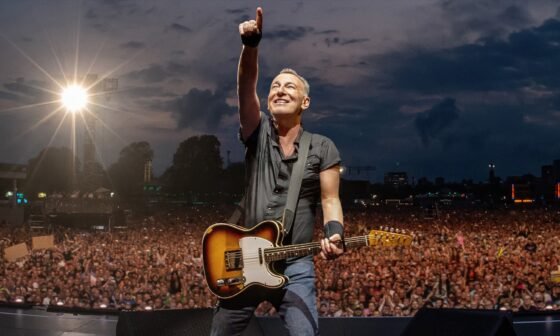
There are certain places in music history that feel almost untouchable. The rooftop of Apple Corps Headquarters is one of them.
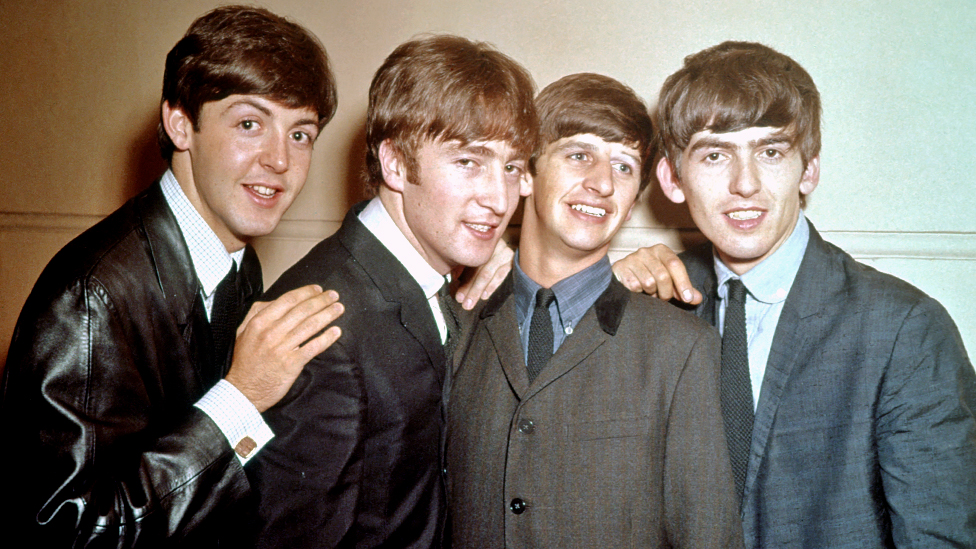
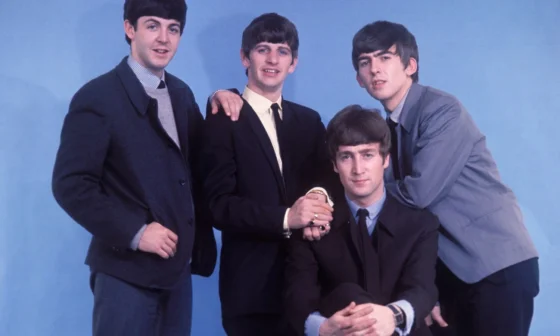
On a cold day in 1969, The Beatles climbed those stairs and performed what would become their final live appearance. It wasn’t planned as a grand farewell, yet it turned into something mythic—a spontaneous concert floating above London, equal parts rebellion and release. The city paused, the police intervened, and music history quietly shifted.
More than half a century later, that same rooftop has stirred again—but in a very different way.
This time, it wasn’t Paul McCartney, John Lennon, George Harrison, and Ringo Starr who stood there. Instead, it was their sons: James McCartney, Sean Lennon, Dhani Harrison, and Zak Starkey.
At first glance, the symbolism feels almost too perfect. Four musicians, each carrying a piece of one of the most influential bands in history, standing in the exact spot where it all once unfolded. But what made this moment compelling wasn’t the symmetry—it was the restraint.
There were no matching suits, no carefully recreated setlists, no attempt to echo the past note for note. If anything, the absence of those elements defined the performance. The sons didn’t arrive to relive 1969. They came to exist in the present.
That distinction matters.
For decades, anything connected to The Beatles has carried the weight of expectation. Fans often look backward, measuring every tribute against an impossible standard. But on that rooftop, the mood felt different. The music wasn’t about comparison; it was about continuation.

Each of the four has spent years carving out their own artistic path. James McCartney has explored introspective songwriting, Sean Lennon has blended experimental and melodic influences, Dhani Harrison has built a sound that honors but doesn’t mimic his father’s spirit, and Zak Starkey has earned his place behind the drums through collaborations with major acts. Individually, they’ve stepped out of the shadow. Together, they created something more nuanced—a conversation between past and present.
The setting did much of the talking. The London skyline, the open air, the quiet sense of history embedded in the bricks—it all framed the moment without overwhelming it. Unlike the original rooftop concert, there was no chaos below, no urgent sense of disruption. Instead, there was space. Space to listen, to reflect, to imagine.
And perhaps that’s where the real power of the moment lies.
Because it invites a question that has no clear answer: what does legacy actually mean? Is it preservation, keeping something exactly as it was? Or is it evolution, allowing it to change shape with each new generation?
On that rooftop, the answer seemed to lean toward the latter.

The sons didn’t erase the past, nor did they try to replace it. They acknowledged it simply by being there. But the music itself moved forward, shaped by different lives, different influences, and a different era.
For those who watched—or even just heard about it—the performance offered something rare. Not a reunion. Not a tribute. Something quieter, but arguably more meaningful: a reminder that even the most iconic moments in music aren’t endpoints.
They’re beginnings that echo.
And as the final notes drifted into the London air, one thing felt certain. The story that started on that rooftop in 1969 hasn’t ended. It’s just being told in a new voice.