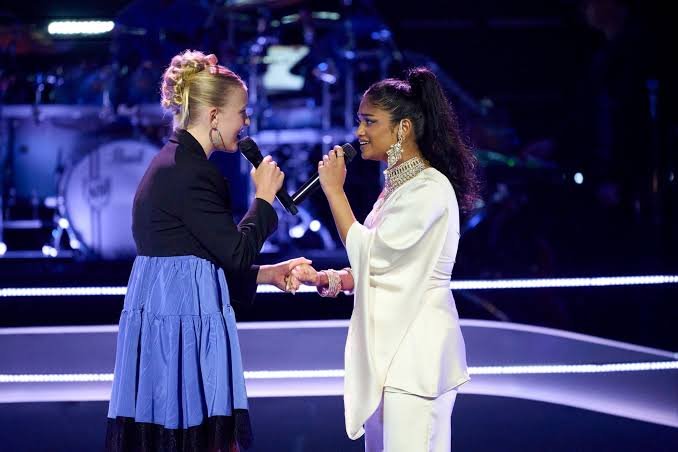
A powerful performance, a difficult decision, and an elimination that viewers are still discussing. The latest Battle Rounds of The Voice Season 30 delivered an emotional moment when 14-year-old Minnesota singer Brooklyn Marie faced fellow contestant Kavi Nyx in a performance that left the coaches with a tough choice.
The two young performers took the stage on the October 26 episode to sing “Titanium,” the hit by Sia and David Guetta. Although both singers impressed the panel, coach Kelly Clarkson ultimately selected Brooklyn to continue in the competition, bringing Kavi’s journey on the show to an end.
A Battle That Put Two Different Voices Against Each Other
Brooklyn and Kavi brought noticeably different vocal styles to the same song. Brooklyn’s performance stood out for its light, sweet and youthful quality, while Kavi delivered a richer, more mature sound.
Before announcing her decision, Kelly described both singers as some of the most unique artists on her team. She praised the individual qualities that made each performer stand out, making it clear that choosing a winner would not be easy.
The coaches also shared their thoughts. Adam Levine praised Brooklyn’s higher notes and described her performance as a revelation. Queen Latifah was impressed by the notes Brooklyn could reach at just 14, while Riley Green encouraged Kavi to continue developing her distinctive style.
TV Insider+1
In the end, Kelly chose Brooklyn.
Why Kavi Nyx’s Elimination Surprised Viewers
For many viewers, the biggest surprise wasn’t simply that Brooklyn won. It was that Kavi left the competition without another coach using a Steal to keep her.
Kavi had already made an impression during her Blind Audition with a performance of Billie Eilish’s “Wildflower.” Both Kelly Clarkson and Adam Levine turned their chairs for her, showing that her voice had caught their attention from the beginning.
Good Housekeeping+1
After the Battle, however, none of the other coaches chose to bring her onto their teams.
That decision quickly became a talking point among viewers. Some fans believed Kavi should have won the Battle, while others felt that even if Kelly preferred Brooklyn, another coach should have used the opportunity to save Kavi.
One viewer questioned why nobody had stolen what they considered one of the show’s most distinctive voices in years. Others similarly argued that Kavi had delivered the stronger performance.
The reactions show just how divided the audience was over the result.
Good Housekeeping+1
Did Brooklyn Marie Speak Out About Kavi’s Elimination?
The headline surrounding the elimination suggests that Brooklyn made a surprising comment about Kavi’s departure. However, there is an important distinction between the reported reaction and what has actually been confirmed.
As of the available October 2026 coverage, there is no verified public statement from Brooklyn specifically reacting to Kavi’s elimination, so it would be misleading to attribute a particular comment or emotional response to her.
What has been reported is that Kavi herself had expressed excitement ahead of the Battle. On October 25, she shared a message on Instagram encouraging viewers to watch her performance with Brooklyn.
That post showed her enthusiasm about the upcoming performance, but it was shared before the elimination and should not be mistaken for a response to the result.
Good Housekeeping+1
Brooklyn’s Journey Continues on Season 30

For Brooklyn, the Battle victory represents another important step in her journey. The 14-year-old singer from Alexandria, Minnesota, is now hoping to make history as the youngest U.S. winner of The Voice.
According to the Minnesota Star Tribune, Brooklyn is a ninth grader who has been taking music lessons and balancing her school life with the demands of the competition. Her age has become part of what makes her journey especially interesting to viewers.
The next challenge won’t necessarily be easier. Season 30 is moving into Cut Week, where each coach must reduce their team to just three artists for the Live Shows. Two artists will automatically advance, while the remaining contestants must perform again to fight for the final place.
Fans Are Still Debating the Coaches’ Decision
The Brooklyn-versus-Kavi Battle has become one of the most discussed moments from the final night of the Season 30 Battles.

Some viewers believe Kelly made the right decision by choosing the singer whose performance stood out to her. Others remain convinced Kavi deserved another opportunity, especially considering how much potential she showed during her audition and Battle.
Ultimately, competitions like The Voice require coaches to make difficult decisions, and not every talented performer gets the chance to continue.
But one thing is clear: Kavi’s elimination has left viewers wondering whether the coaches missed an opportunity to keep a truly distinctive voice in the competition.