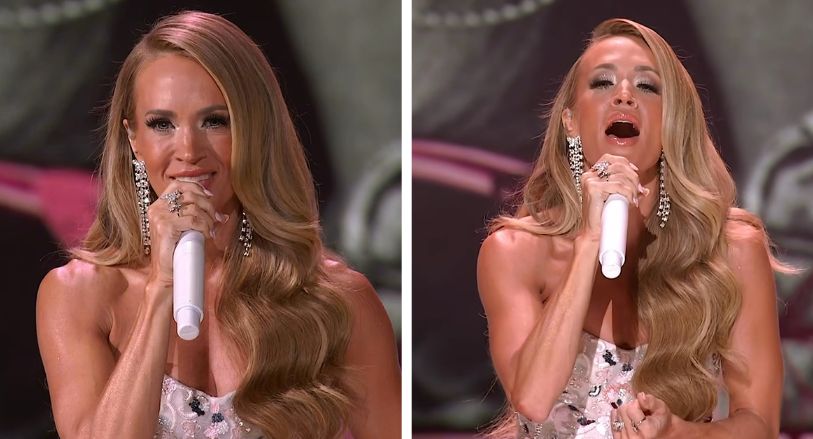
Carrie Underwood’s emotional performance at the CMA’s October 21 tribute to Dolly Parton was the culmination of a relationship that stretches back to the earliest days of her career. Long before she stood onstage to sing “I Will Always Love You” at the celebration of Parton’s life, Underwood had already shared memorable musical moments with the country legend and publicly expressed how much she admired her. Looking back at those encounters reveals why Underwood’s role in the tribute carried a significance that went far beyond closing a television special.
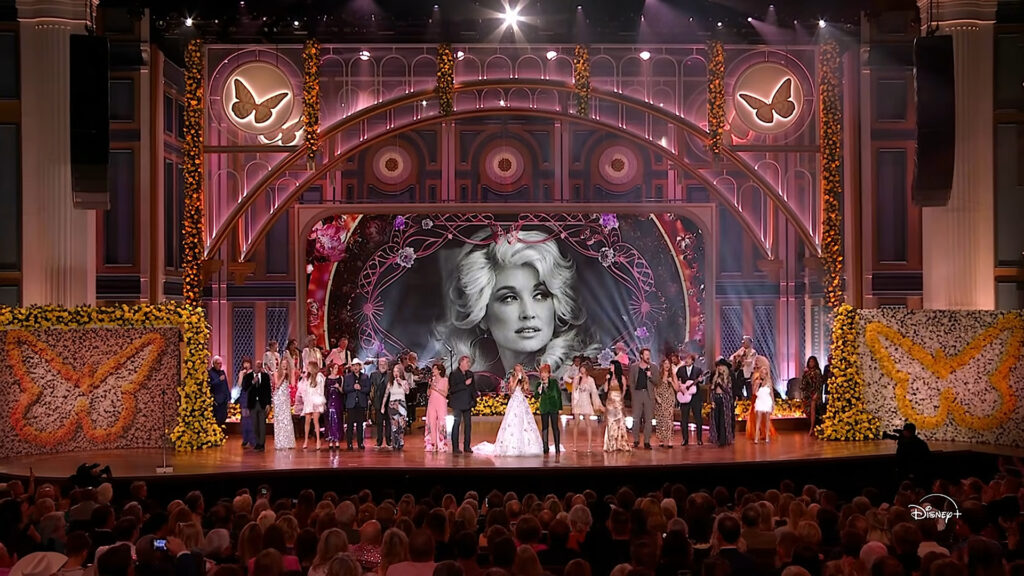
The two-hour event, “CMA Presents I Will Always Love You: A Celebration of Dolly Parton,” brought together performers from across the entertainment world to celebrate Parton’s music, songwriting, generosity, and influence. Underwood joined an impressive lineup that included Reba McEntire, Vince Gill, Ella Langley, Lainey Wilson, Darius Rucker, Zac Brown, and Carly Pearce. Each artist represented a different part of the musical community Parton helped shape, but Underwood’s appearance carried a particularly personal dimension because their paths had crossed repeatedly throughout her career.
Their story reaches back to 2006, when Underwood was still establishing herself following her American Idol victory the previous year. That December, she participated in the Kennedy Center Honors celebration recognizing Parton’s contributions to American culture. Underwood performed “Islands in the Stream” alongside Kenny Rogers, Parton’s longtime musical partner on the famous duet. The performance offered the young singer an opportunity to honor one of country music’s biggest stars while sharing the stage with another legendary performer.
It was a remarkable opportunity for an artist whose professional life had changed dramatically in a short period. Winning American Idol had introduced Underwood to a national audience, but appearing at an event celebrating Parton placed her within a much longer history of country music excellence. Rather than simply performing one of Parton’s songs, Underwood participated in a tribute that connected established legends with a new generation of performers.
Three years later, the relationship became even more direct. In 2009, Parton joined Underwood to perform “I Will Always Love You” during Underwood’s holiday television special. The song was already one of the most celebrated compositions in modern music, and having its writer perform it alongside a younger country star created a special connection between the song’s origins and its continuing influence. For Underwood, the opportunity to sing the ballad with Parton herself was a musical milestone that would become particularly meaningful years later.
The importance of that collaboration becomes clearer when considering the song’s history. Parton wrote “I Will Always Love You” in 1973 as a farewell to Porter Wagoner, her professional mentor and collaborator, as she prepared to pursue her own career. Although many listeners associate the song with Whitney Houston’s enormous 1992 hit version, its roots lie in Parton’s own experience of change, gratitude, and moving forward. Its ability to express deep affection without bitterness has helped the song remain relevant across generations.
That emotional flexibility also helps explain why Underwood returned to it for the CMA tribute. The performance was not simply an opportunity to demonstrate her vocal range. It was a chance to revisit a song that had already connected her with Parton at an earlier point in her life and career. The meaning had changed with time, but the musical connection remained.
Their professional paths crossed again in 2016 through “Forever Country,” the star-studded recording created to celebrate the Country Music Association Awards’ 50th anniversary. The project brought together recognizable songs from different eras of country music, combining them into a single musical tribute to the genre’s history. Underwood was among the artists associated with the project, which reflected the same idea that would later define the Dolly Parton special: country music is a tradition carried forward by artists who respect its past while creating something of their own.
By 2019, Underwood and Parton were sharing the spotlight in another way. Underwood co-hosted the CMA Awards alongside Parton and McEntire, bringing three prominent women in country music together for one of the genre’s biggest annual events. Their appearance demonstrated how country music’s leading women could occupy the same stage while representing different generations and career experiences. It also highlighted the enduring appeal of Parton, whose influence remained strong even as new artists continued to emerge.
Underwood’s admiration for Parton was not limited to musical collaborations. Following Parton’s death on August 25, 2026, Underwood shared a heartfelt tribute reflecting on the qualities she admired most about the singer. She emphasized Parton’s faith, grace, talent, beauty, and humor, describing someone whose warmth could make others feel special. Her message revealed that the connection went beyond professional respect and included a genuine appreciation for the person behind the celebrated public image.
Underwood also expressed her belief that Parton’s faith offered comfort in the face of loss. Her words reflected the spiritual perspective she has often discussed publicly, while acknowledging the sadness of losing an artist whose work had touched so many people. The message provided additional context for the emotion she brought to the CMA finale, although the exact feelings behind a performance are ultimately something only the performer can fully explain.
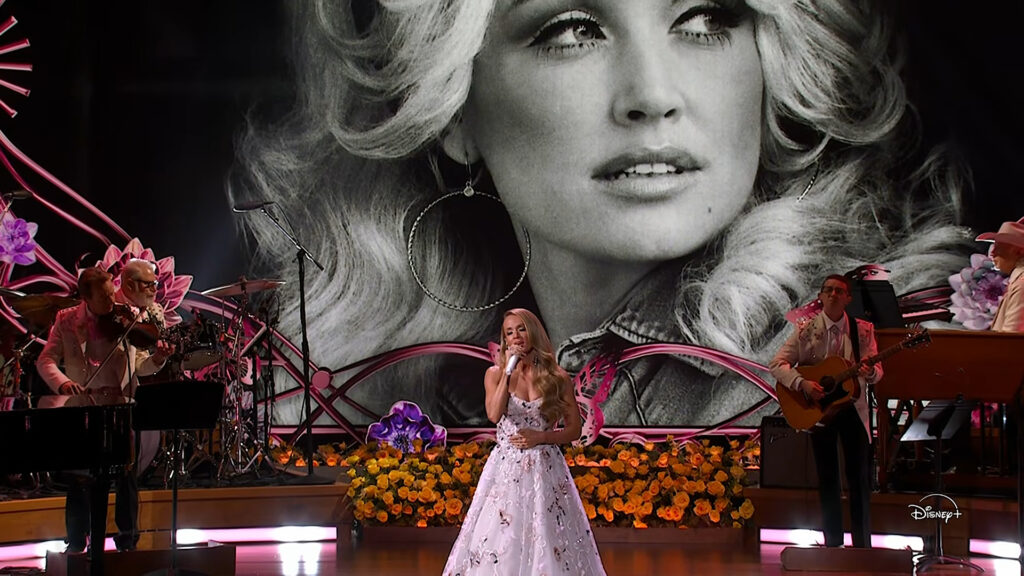
When Underwood finally took the stage to close the October 21 special, she wore a sparkling gown against a backdrop featuring pink butterfly wings. Her rendition of “I Will Always Love You” grew especially emotional near the end, as she appeared to struggle with the weight of the moment. Other performers and special guests eventually joined her for the closing notes, turning the finale into a collective expression of appreciation for Parton’s life and music.

The response to the performance reflected how differently audiences can interpret an emotional moment. Many viewers praised Underwood’s powerful vocals and the sincerity they felt in her delivery, while others argued that she was simply singing the song beautifully rather than breaking down. Both reactions point to the unusual challenge of performing a familiar classic at a memorial tribute: the audience brings its own memories and feelings to the music, and those experiences can shape what each person sees onstage.
Underwood’s long history with Parton gives the finale another layer of meaning. She was not merely selected to sing a famous song because she possessed the vocal ability to deliver it. She had already performed alongside Parton, celebrated her work in major musical tributes, and shared the stage with her at important moments in country music history. Those experiences helped establish a connection between the two performers that the final song brought into focus.
The evening also honored Parton’s work beyond music, with proceeds supporting Dolly Parton’s Imagination Library, the book-gifting program she founded to encourage early childhood literacy. That commitment reflects another important part of her legacy: using success to create opportunities for others. The artists who gathered to celebrate her were honoring not only a remarkable catalogue of songs but also a career shaped by generosity and an enduring desire to help people.
Ultimately, Underwood’s performance was powerful because it connected several chapters of country music history in one moment. It recalled her early career, her collaborations with Parton, and the song that has become one of the most recognizable expressions of love and farewell in modern music. The other performers joining her onstage reinforced the idea that Parton’s influence belongs to an entire community, not just to one artist or generation.
Perhaps that is the most meaningful part of their story. Underwood’s journey from a newly crowned American Idol winner to one of country music’s leading performers unfolded alongside opportunities to celebrate the woman whose songs had already become part of American musical history. Their shared performances now form part of that history, offering a reminder of how one artist’s influence can continue through the voices of those who follow.
Which moment in Carrie Underwood and Dolly Parton’s musical history stands out most to you: their 2009 duet, their appearances together at major country music events, or Underwood’s emotional performance at the CMA tribute? And what do you think makes “I Will Always Love You” such a powerful song for saying goodbye?