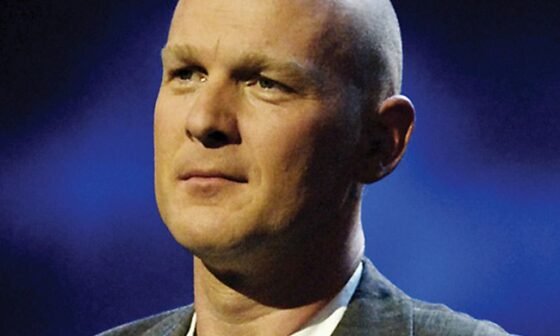
When Celtic Thunder took the stage in Ontario in 2009, few could have predicted that one of the night’s most unforgettable moments would come from the group’s quietest member — George Donaldson.
With his warm Scottish voice and down-to-earth presence, Donaldson poured his heart into the live performance of “Yesterday’s Men,” a haunting ballad about the pain of watching life change too fast, of losing purpose, and of feeling forgotten by time.

From the very first line, the audience could sense the deep personal connection Donaldson had with the song. “’Twas Joey the weasel that gave us the wire, they were closing our factory down,” he sang, his voice echoing through the concert hall with an emotional honesty that made the story feel real. The lyrics tell of loyal factory workers suddenly facing redundancy — men who had devoted decades to their jobs only to find themselves discarded, replaced by machines, and labeled as “yesterday’s men.”
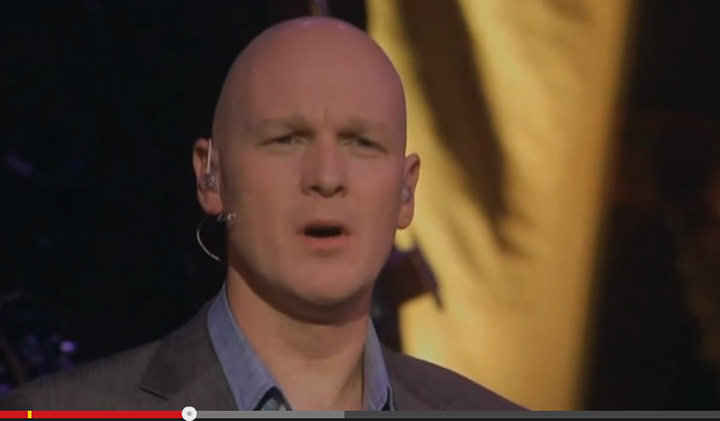
As the song progressed, the emotion only grew stronger. Backed by Celtic Thunder’s powerful orchestral arrangement, Donaldson stood under soft lighting that cast a nostalgic glow — like a memory come to life. Each verse painted a picture of loss and longing: the final goodbyes at the factory gates, the fear in the workers’ eyes, and the painful reality of coming home to tell your family the job is gone.
The chorus hit like a wave of emotion:
“Farewell my companions, my friends and my workmates,
Farewell to the paydays, the pints and the craic…”
Donaldson delivered those words with a quiet strength, as though he were saying goodbye to his own friends. The heartbreak in his tone was undeniable — not theatrical, but deeply human. His ability to convey such truth turned “Yesterday’s Men” into more than a song; it became a story of dignity, resilience, and the fading pride of a generation who built their lives around honest work.
.jpg?format=auto&width=600)
By the time he reached the final verse — “Now I’m on the scrap-heap, and I’m thirty-nine, just one of the hundreds, shot down in my prime” — the audience was completely still. Every word felt personal, every note carried the weight of experience. There was no need for vocal acrobatics or flashy staging — just George, his voice, and a story that spoke for millions of working men around the world.
When the last note faded, the crowd erupted in applause, many visibly moved. It wasn’t just appreciation for a well-sung tune, but respect for a performer who had given a piece of his soul on stage.
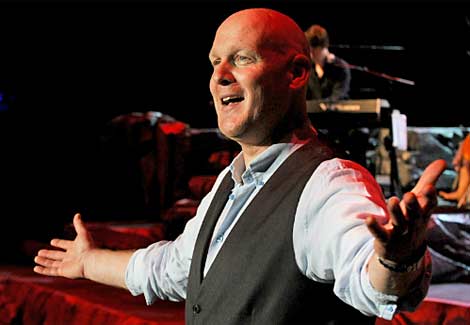
Even years later, fans remember this as one of George Donaldson’s most heartfelt performances, one that showcased not just his rich voice, but his deep empathy and storytelling power. “Yesterday’s Men” remains a timeless reminder of the human cost of change — and of how a true artist can make even the hardest truths feel beautiful.