There are performances that entertain, and then there are those that transport. When Celtic Thunder takes the stage with Home From The Sea, it becomes something more than a live rendition—it becomes a journey into the heart of Ireland itself.
From the very first note, the performance establishes a sense of place. The song, originally written by Phil Coulter, draws deeply from Irish maritime life, telling a story shaped by the sea, loss, and longing. It reflects a history where the ocean was both a source of livelihood and a force of unpredictability—something that shaped generations of families along the coast.
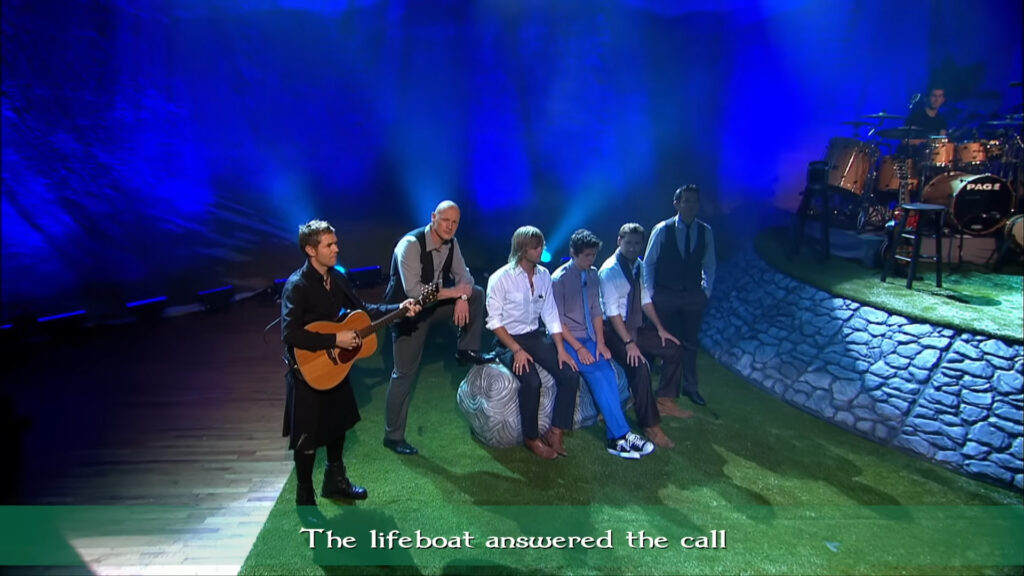
Celtic Thunder approaches the piece with a careful balance of precision and emotion. Their harmonies are tightly woven, each voice contributing to a layered sound that feels both powerful and intimate. There’s a restraint in the delivery—no unnecessary embellishment, no attempt to overshadow the song itself. Instead, the group allows the story to unfold naturally.
That’s what makes the performance so compelling.
Rather than relying solely on vocal strength, the singers lean into the emotional weight of the lyrics. You can hear it in the phrasing, in the subtle shifts in tone, and in the way each line is given space to breathe. The result is a performance that feels deeply personal, even when shared with a large audience.
Visually, the staging often complements this mood. Soft lighting and minimal distractions allow the focus to remain where it belongs—on the music and the story it carries. It creates an atmosphere that feels almost reflective, inviting listeners to connect not just with the performance, but with their own interpretations of the song.
Over time, Home From The Sea has become one of those pieces that lingers. Even years after hearing it, listeners often recall not just the melody, but the feeling it evoked. That’s a testament both to the songwriting and to Celtic Thunder’s ability to honor it.
In many ways, the performance stands as an example of what the group does best: bringing traditional and contemporary influences together in a way that feels authentic rather than forced. They don’t simply perform Irish music—they interpret it, carrying forward its themes while making it accessible to modern audiences.
For fans, it’s a reminder of why live music continues to matter. Recordings can capture sound, but performances like this capture something less tangible—a sense of connection, of shared experience, of being part of a story that stretches beyond the stage.
And perhaps that’s why it still resonates.
Because at its core, Home From The Sea isn’t just about Ireland’s past. It’s about universal emotions—loss, hope, and the enduring pull of home. And in the hands of Celtic Thunder, those themes find a voice that continues to echo, long after the performance ends.