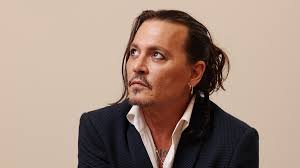
When it was announced that Johnny Depp would step into the role of Ebenezer Scrooge, the reaction was immediate—and sharply divided.
Some called it inspired casting.
Others called it reckless.
Very few were indifferent.
Within hours, social media split into two camps. Supporters praised the choice as bold and fitting, arguing that Depp’s ability to inhabit damaged, morally complex characters makes him uniquely suited to Dickens’ most famous redemption arc. Critics, however, questioned whether the casting blurred the line between art and controversy too closely, reigniting debates Hollywood has struggled to navigate for years.
What quickly became clear is that this wasn’t just about A Christmas Carol.
It was about Johnny Depp’s place in the industry—and whether Hollywood has truly decided what redemption looks like.
Those close to the production describe Depp’s interpretation of Scrooge as restrained and deeply internal. Less theatrical bitterness. More quiet isolation. A man hardened not by greed alone, but by years of emotional withdrawal. In early footage, Scrooge isn’t snarling—he’s distant. Closed off. Watching the world from behind walls he built himself.
That approach has earned praise from directors and actors who see the role as a natural extension of Depp’s long-standing interest in fractured, misunderstood figures. “Scrooge isn’t a villain,” one insider noted. “He’s a warning—and a possibility.”
Still, the backlash has been fierce.
Some critics argue that the casting risks overshadowing Dickens’ message with real-world controversy, while others believe the discomfort itself proves the casting’s power. Dickens’ story, after all, has always been about confronting uncomfortable truths—about society, responsibility, and whether change is possible at all.
Hollywood’s reaction has been telling.
Studios, agents, and commentators have largely avoided taking firm positions, reflecting an industry still uncertain about how to move forward in a post-controversy era. The silence itself has become part of the story. Is Depp’s Scrooge a sign of cautious reintegration—or a test case the industry is watching from a safe distance?
Audiences, meanwhile, are asking a simpler question: can art exist without requiring consensus?
For some viewers, Depp embodies the very tension Scrooge represents—a man shaped by isolation, judged by reputation, and offered the possibility of transformation. For others, the casting feels too loaded to ignore.
Whether this performance is ultimately remembered as genius or miscalculation remains to be seen. What’s already certain is that it has reopened conversations Hollywood hasn’t resolved—about forgiveness, accountability, and who gets to tell stories about redemption.
In that sense, the reaction may be the most Dickensian thing of all.