Julian Lennon’s Untold Story: Growing Up in the Shadow of a Legend

Julian Lennon

The legacy of The Beatles is often told through groundbreaking music, cultural revolution, and the larger-than-life figures who defined a generation. Yet within that story lies a quieter, more complicated narrative—one that centers on Julian Lennon, the first son of John Lennon.

By the late 1960s, as the Beatles’ global influence reached unprecedented heights, John Lennon’s personal life underwent a major shift. His separation from Cynthia Lennon marked not only the end of a marriage but the beginning of a new chapter that would reshape family dynamics in lasting ways.

For Julian, that transition meant growing up largely outside the world his father inhabited. While Lennon moved forward with Yoko Ono and embraced a new lifestyle in places like New York, Julian remained in England with his mother. His upbringing was grounded and relatively ordinary, far removed from the wealth and influence associated with his father’s name.

Happy Birthday, Julian Lennon

This contrast became more visible over time. On occasional visits to see his father, Julian would briefly step into a vastly different environment—one defined by artistic circles, global attention, and significant resources. But those moments were temporary. His daily life remained rooted in a more modest reality, shaped by routine, schooling, and the practical challenges his mother worked to manage.

The emotional complexity of that experience is difficult to overlook. Growing up with a famous parent can already create distance, but in Julian’s case, that distance was reinforced by circumstance. The world knew John Lennon as an icon, a voice of change, and a symbol of a cultural era. For Julian, he was also a father whose presence was limited and whose life existed largely elsewhere.

Julian Lennon explains why he recently legally changed his name

Following Lennon’s death in 1980, those complexities did not simply fade. Questions around legacy, inheritance, and personal connection continued to shape Julian’s relationship with his father’s memory. Over the years, these issues would eventually lead to legal discussions regarding the estate—an effort to find some resolution within a situation that had long been complicated.

Yet what stands out most is not the legal outcome or the financial details, but the path Julian chose to take. Rather than being defined solely by his connection to one of music’s most famous figures, he worked to establish his own identity. In the 1980s, he stepped into the music world himself, earning recognition as an artist in his own right. Beyond music, he explored photography and became involved in philanthropic efforts, building a career shaped by personal passion rather than expectation.

In many ways, Julian’s story is one of contrast—not just between wealth and modesty, or fame and privacy, but between legacy and individuality. It highlights the reality that even within the most celebrated histories, there are personal stories that don’t always align with the public image.

Julian Lennon Only Saw His Dad John 'A Couple Of Times Before He Died' |  iHeart

And perhaps that is what makes his journey so compelling.

Because while the world continues to revisit the legacy of John Lennon, Julian Lennon’s life offers a different perspective—one that speaks not of inheritance, but of resilience.

0 Shares:
Leave a Reply

Your email address will not be published. Required fields are marked *

You May Also Like
Hugh Jackman
Read More

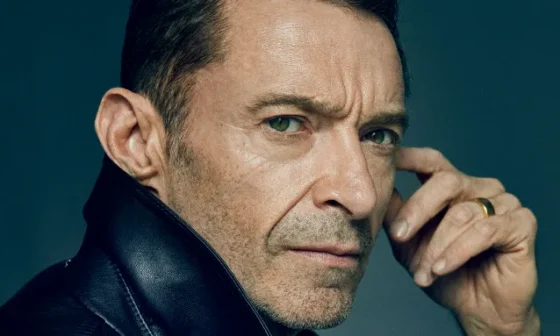
“THE MOST BEAUTIFUL MOMENTS ARE THE ONES YOU DON’T PLAN.” Hugh Jackman said it with a shrug and a smile, but the simplicity hit harder than any spectacle. In a world addicted to noise, his quiet celebration with Kate Hudson landed like a deep breath. No fireworks. No speeches. Just two stars sharing laughter, timing, and an ease that felt earned rather than performed.

Hugh Jackman and Kate Hudson linked up and let loose Monday night, grabbing mics at an NYC pub and belting out…
Il Volo
Read More

THE NIGHT IL VOLO STOPPED SINGING — AND THE ROOM HELD ITS BREATH. It was supposed to be another flawless Il Volo concert. Velvet lights. Perfect harmonies. Nothing out of place. Until the music broke. One voice hesitated. Another lowered his mic. And then—silence. “He showed us how to sing with truth,” one of them said softly. A wheelchair moved into the blue light. No announcement. No buildup. Just Andrea Bocelli, waiting. Il Volo stepped back. One knelt beside him and whispered, “Tonight, this voice is why we are here.” What followed wasn’t a performance. It felt like a passing. A fragile voice meeting younger ones, not to compete—but to entrust. When the final note faded, no one clapped. Because it wasn’t clear… who was saying goodbye—and who had just inherited the song.

The Night Il Volo Stopped Singing — And the Arena Realized This Wasn’t Just a Performance Some concert…
Beatles-on-the-Rooftop
Read More

The police were storming up the stairs. The Beatles turned the amps up to 11. London was freezing that January afternoon, the wind numbing their fingers. Downstairs, the bobbies were pounding on the door, threatening arrests. Most bands would have panicked. The Beatles? They just played louder. For 42 glorious minutes, the years of bitter infighting vanished. John and Paul locked eyes—a fleeting, secret smile that screamed, “Let’s give them hell one last time.” It wasn’t just a concert; it was a final, deafening act of rebellion against the world. When the plug was finally pulled, the silence was heavier than the noise. John leaned into the mic, smirking: “I hope we passed the audition.” But the real story isn’t the quote. It’s what happened in the seconds after the feedback died—a detail that changes the entire history of their breakup…

London, January 30, 1969. It was a Thursday, and the city was locked in the gray, bone-chilling grip…
paul
Read More

On a winter night at the Kennedy Center, Paul McCartney wasn’t honored as a legend or a Beatle—he was celebrated as something more enduring. Surrounded by family and generations of artists shaped by his songs, the music stopped being history and became inheritance. What unfolded wasn’t just a tribute, but a moment when a lifetime of melodies was handed from one generation to the next.

The Night Music Became Family: Kennedy Center Honors Paul McCartney The Night Music Became Family: Kennedy Center Honors…