
“When a love refuses to loosen its grip, it doesn’t always roar—sometimes it simply keeps singing, quietly, faithfully, long after the goodbye.”
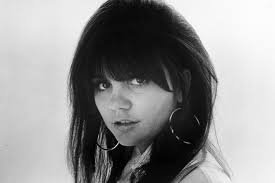
Here is the heart of it, right away. Linda Ronstadt transformed “I Can’t Help It (If I’m Still in Love with You)”—a 1951 heartbreak classic originally written and recorded by Hank Williams—into one of her defining country performances. Her studio version is found on Heart Like a Wheel, released on November 19, 1974. Remarkably, for what many remember as a rock-pop breakthrough album, this song climbed to No. 2 on Billboard’s Hot Country Songs in 1975. Even more telling is that this performance earned Ronstadt the Grammy Award for Best Country Vocal Performance, Female at the 18th Grammy Awards.
Then, on February 2, 1975, at the Capitol Theatre in Passaic, New Jersey, she sang it live. This performance came at a moment when the album’s success was no longer just a rumor, but a vibrant reality. The title Live in Capitol Theatre, Passaic, NJ, 1975 is not merely a timestamp; it is a doorway back to a specific kind of night when a voice could fill a hall and still feel as if it was speaking directly to you alone.
To understand why this song fits Ronstadt so perfectly, one must remember what Hank Williams built into it. Released in May 1951 as the B-side of “Howlin’ at the Moon,” the original recording climbed to No. 2 on the Billboard country chart. The lyric is plainspoken—almost shockingly so—and that is its power. There is no elaborate metaphor to hide behind. The line between dignity and surrender is razor-thin, and the narrator crosses it with eyes wide open.
I can’t help it.
It is not I won’t change, nor I don’t care, but a softer, more honest confession. I’m still here inside this feeling, and I don’t know how to leave.
Ronstadt’s genius, especially during her mid-1970s peak, was that she could honor a song’s original emotional framework while making it feel newly inhabited. On Heart Like a Wheel, her approach was not rustic cosplay; it was conviction with clean, luminous phrasing. The track stands among pop and rock material, yet it never sounds out of place because Ronstadt does not shift genres as much as she shifts emotions. She goes wherever the truth lies. And truthfully, this is one of those songs that demands a singer willing to stand still in the midst of pain: no winking, no rushing, no protective irony.
That is why the 1975 Passaic performance feels so emotionally charged. Live, the song ceases to be a neat three-minute recording and becomes more like a scene unfolding in real time. The room itself matters—the slight edge of a touring band, the breath between lines, the way a crowd softens when they recognize something real. You can sense how Ronstadt, already famous and chased by the spotlight, still chooses the humility of this lyric. She admits that love can outlast pride, outlast reason, and outlast whatever story we try to tell ourselves during daylight.
There is also a bittersweet symmetry in timing. By early 1975, Ronstadt was riding a powerful wave. Heart Like a Wheel had reached No. 1 on the Billboard 200, and her major hits were pulling her name into every corner of radio. Yet, on stage, she pauses to sing a song that refuses triumph. “I Can’t Help It (If I’m Still in Love with You)” does not celebrate winning; it confesses ongoing presence. It is a song for anyone who has smiled politely through a painful season, only to go home and feel the old ache return the moment the door clicked shut.
Perhaps that is why, decades later, this live version still resonates so deeply. It preserves the sound of a singer at the height of her powers, choosing for a few minutes to be nothing but human—standing in the light and speaking the simplest sentence that love keeps repeating.
Video