
A Battle Round performance on The Voice has put two Team Adam singers at the centre of a passionate music debate. Lexi Stephens and Marilyn Hucek took on Paramore’s emotionally demanding rock song “All I Wanted,” giving the coaches a difficult decision and leaving viewers with plenty to discuss.
TV Insider+1
The October 26, 2026, episode featured the pair going head-to-head under coach Adam Levine. Although both singers received praise, Levine ultimately chose Lexi to advance to Cut Week. The decision meant Marilyn’s journey on the show ended, prompting some viewers to revisit the performance and debate which singer best captured the song’s spirit.
TV Insider+1
Online headlines have described the reaction as widespread anger among Paramore fans, with claims of more than 1,000 comments and pleas for frontwoman Hayley Williams not to watch. However, the exact comment count and the claim about fans addressing Williams could not be independently verified in the available reporting. What is confirmed is that the performance attracted attention and divided opinions over the singers’ different approaches.
1. Why ‘All I Wanted’ was such a challenging song choice

“All I Wanted” is a Paramore song known for its intense emotional build and demanding vocal climax. Originally released on the band’s 2009 album Brand New Eyes, it has become a standout for listeners who appreciate the group’s mix of alternative rock energy and vulnerable songwriting.
The song is particularly challenging for singers because it requires more than hitting powerful high notes. A successful performance needs to build tension gradually, preserve the emotion of the verses, and deliver the climactic moments without losing control.
For a televised singing competition, that presents a difficult balancing act. Contestants may feel pressure to demonstrate their vocal range, but fans who know the original recording may also expect the performance to retain the song’s emotional character and rock intensity.
That difference between technical ability and interpretation can help explain why familiar songs sometimes provoke strong reactions when performed on competition shows. Viewers arrive with their own memories and expectations, and they may judge an arrangement differently from the coaches evaluating the singers in the room.
2. Lexi Stephens and Marilyn Hucek deliver contrasting performances

Lexi entered the Battle with a strong reputation: she had earned a four-chair turn during the Blind Auditions. Marilyn, who had received two chair turns, brought a different vocal character to the pairing. Adam Levine matched the two singers for a song that would test both their individual styles and their ability to share a demanding performance.
TV Insider+1
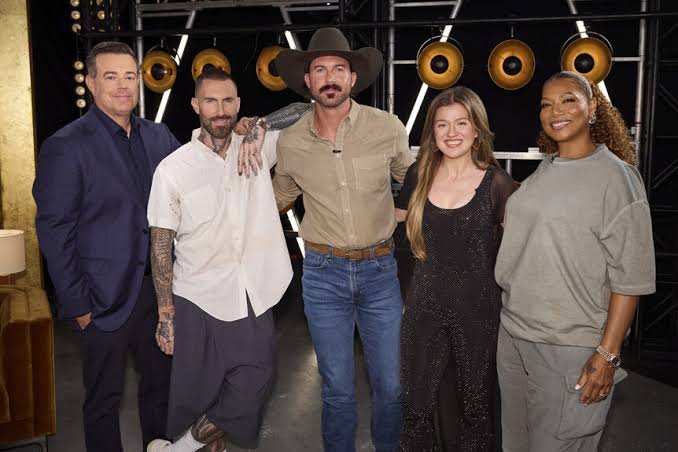
The coaches noticed those differences. Queen Latifah stood up during the performance and praised Lexi’s lower register, while also complimenting Marilyn’s tone, texture, and vibrato. Riley Green was impressed by Lexi’s range, but said Marilyn’s ’90s punk-inspired vibe appealed to him.
TV Insider+1

Kelly Clarkson offered one of the most memorable comparisons of the night. She described Marilyn as a sly fox because of her subtle vocal approach, while comparing Lexi to a mountain lion because of her power and ferocity. Clarkson also acknowledged that Marilyn’s performance involved more technical difficulty than might be immediately obvious.
Levine praised Marilyn for the improvements she had made between rehearsal and the stage. He also highlighted Lexi’s power and precision. Ultimately, he chose Lexi, explaining that his decision followed the instinct he had held throughout their preparation.
TV Insider+1
3. Why some Paramore fans may be particularly protective of the song

Paramore fans often have a strong connection to Hayley Williams’ vocal performances. Her delivery combines power with vulnerability, and the band’s songs can carry personal meaning for listeners who have followed them for years.
That is why a competition performance of a well-loved Paramore track can attract a different kind of scrutiny than a less familiar song. Some listeners may prefer a faithful interpretation of the original, while others enjoy hearing a singer reshape it with a distinct voice or arrangement.
There is an important distinction, though: a different interpretation is not automatically a bad performance. The coaches’ reactions show that the duet offered qualities they valued, even though their preferences differed. Queen Latifah and Kelly Clarkson praised different aspects of both singers, and Riley Green expressed a preference for Marilyn’s particular style.
TV Insider+1
At the same time, the available sources do not establish that Paramore fans universally rejected the performance, or that Hayley Williams herself has responded to it. Those claims should not be treated as confirmed without direct evidence.
4. Adam Levine’s decision becomes the biggest talking point

For viewers who preferred Marilyn’s punk-inspired interpretation, the result may have been disappointing. Others could understand why Levine selected Lexi, whose power, precision, and ability to surprise the audience impressed the coaching panel.
The disagreement reflects one of the central challenges of The Voice: the coach is not simply choosing the singer who sounds most like the original recording. They are also considering artistic identity, vocal control, stage presence, and potential for future rounds.
Lexi’s victory moves her into Cut Week, where she will have to compete for a place in the Live Shows. Marilyn, meanwhile, leaves the competition after a performance that earned praise from multiple coaches.
Parade+1
5. Did the performance really receive more than 1,000 complaints?
The claim that more than 1,000 comments shared the same complaint is part of the circulating headline, but the available news coverage does not independently establish that number. Nor does it verify that fans collectively asked Hayley Williams not to watch the performance.
What reputable recaps do confirm is that the performance prompted strong reactions from the coaches and showcased two very different approaches to the song. The distinction matters: fan disagreement can be genuine without every viral statistic or dramatic claim being accurate.
For now, there is no verified public response from Williams about Lexi and Marilyn’s rendition. Unless she comments directly, claims about what she thinks of the performance would be speculation.
Final thoughts
Lexi Stephens and Marilyn Hucek’s Battle was memorable because it brought together two contrasting vocal styles for a demanding Paramore song. Adam Levine ultimately chose Lexi, while the other coaches highlighted different strengths in both singers.
Whether listeners preferred the power of Lexi’s delivery or Marilyn’s alternative-rock character is a matter of musical taste. What remains unconfirmed is the headline’s claim about more than 1,000 comments and fans specifically pleading with Hayley Williams not to watch.