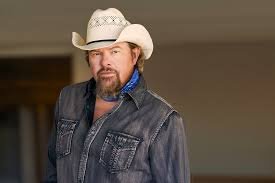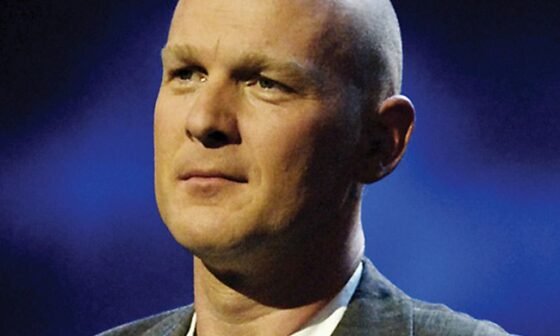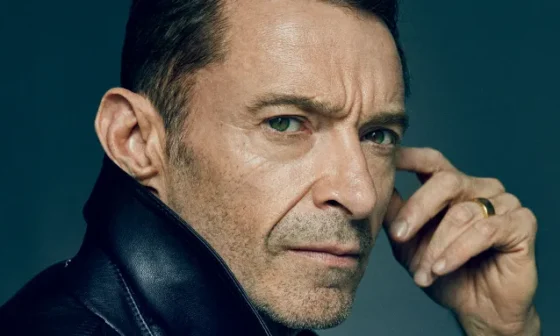
SOME PEOPLE GREW UP ON TOBY KEITH — AND NEVER GREW OUT OF IT. Some musical loyalties aren’t trends, they’re traditions. For many listeners, growing up with Toby Keith meant more than memorizing lyrics; it meant absorbing a soundtrack rooted in confidence, humor, patriotism, and everyday American life. His songs didn’t chase approval or polish themselves to fit passing radio formulas. They spoke plainly, sometimes loudly, and always with a sense of identity. Years later, that pull hasn’t faded. In 2026, his music still shows up not out of nostalgia, but recognition — a clear voice, a clear point of view. The songs come from a time when country told stories without sanding the edges. It isn’t about resisting change. It’s about honoring music that knew exactly what it was. Some artists define a moment. Toby Keith defined a mindset — and that’s why the songs still land where they do.

toby-keith
“Scroll down to the end of the article to listen to music.”
Introduction

Some songs are written to entertain, and some are written because the writer had no choice but to get the words out. Toby Keith’s “Courtesy of the Red, White and Blue (The Angry American)” falls firmly into that second category. Released in 2002, the song was born out of Toby’s grief after losing his father, a proud Army veteran, and the anger that swept the nation following the September 11th attacks.

This wasn’t a carefully polished Nashville ballad — it was raw, direct, and fueled by emotion. Toby has said he wrote it in about 20 minutes, almost like it poured out of him. And you can feel that urgency in every line. The song is defiant, patriotic, even confrontational, but at its core, it’s personal. It’s Toby saying: This is how I feel. This is my truth.

Musically, it leans on straight-ahead country-rock energy — pounding drums, roaring guitars, and Toby’s booming baritone leading the charge. It’s less about subtlety and more about strength, capturing the collective spirit of a country still reeling from loss but determined not to bow.

When Toby performed it for U.S. troops overseas, it became more than just a song — it was an anthem of solidarity. Soldiers cheered, sang along, and carried it with them like a battle cry. For others, it was controversial, even polarizing, because it didn’t shy away from blunt language and imagery. But that was the point. Toby never intended it to be polite — he intended it to be real.

Two decades later, “Courtesy of the Red, White and Blue” remains one of Toby Keith’s most defining songs. It may not be tender like “You Shouldn’t Kiss Me Like This” or reflective like “Don’t Let the Old Man In,” but it captures another side of him: the straight-shooting son of a soldier, unafraid to say what he felt in the heat of the moment.

At the heart of the song is a simple message: America’s strength lies in its people, its pride, and its resilience. Love it or hate it, this song made sure no one could ignore Toby Keith — and it gave voice to a nation that desperately needed something to hold onto.

Video

Lyrics

American girls and American guys
We’ll always stand up and salute
We’ll always recognize
When we see Old Glory flying
There’s a lot of men dead
So we can sleep in peace at night when we lay down our head
My daddy served in the army
Where he lost his right eye but he flew a flag out in our yard
‘Til the day that he died
He wanted my mother, my brother, my sister and me
To grow up and live happy
In the land of the free
Now this nation that I love has fallen under attack
A mighty sucker punch came flyin’ in from somewhere in the back
Soon as we could see clearly
Through our big black eye
Man, we lit up your world
Like the fourth of July
Hey Uncle Sam, put your name at the top of his list
And the Statue of Liberty started shakin’ her fist
And the eagle will fly man, it’s gonna be hell
When you hear mother freedom start ringin’ her bell
And it feels like the whole wide world is raining down on you
Oh, brought to you courtesy of the red white and blue
Oh, and justice will be served and the battle will rage
This big dog will fight when you rattle his cage
And you’ll be sorry that you messed with
The U.S. of A.
‘Cause we’ll put a boot in your ass
It’s the American way
Hey Uncle Sam, put your name at the top of his list
And the Statue of Liberty started shakin’ her fist
And the eagle will fly it’s gonna be hell
When you hear mother freedom start ringin’ her bell
And it’ll feel like the whole wide world is raining down on you
Oh, brought to you courtesy of the red white and blue
Oh-oh, of the red, white and blue
Oh-oh, of my red, white and blue

0 Shares:
Leave a Reply

Your email address will not be published. Required fields are marked *

You May Also Like
Elvis
Read More

THE VOW OF SILENCE — ANN-MARGRET FINALLY BREAKS FOR ELVIS PRESLEY Introduction LOS ANGELES — For more than half a century, she kept her lips sealed. Not a whisper, not a confession, not even a nostalgic slip. Ann-Margret, the flame-haired dynamite of the Silver Screen, refused to add fuel to Hollywood’s longest-running rumor: her secret love with Elvis Presley. But now — older, wiser, and finally ready — she steps out of the shadows, not to sell a scandal, but to mourn the only man who ever matched her fire. Her voice trembles as she says the words that instantly send shockwaves through Hollywood’s golden memories: “It was intense… deeply real,” Ann-Margret admits. “What we had was serious, profound, and genuine.” No ghostwriters. No book deal. No TV tell-all. Just a woman revealing the truth she guarded like sacred scripture. THE UNSTOPPABLE SPARK THAT SHOOK 1960s HOLLYWOOD Spring 1963. The sun bounces off chrome cars, gossip magazines scream from every newsstand, and the set of Viva Las Vegas becomes the epicenter of a cultural earthquake. On one side: Elvis Presley, already a living myth — the King of Rock and Roll, adored by millions, worshipped like a deity. On the other: Ann-Margret, the Swedish-born wildcat with a voice like velvet and a soul that defied Hollywood’s fragile femininity. The moment they met, the air cracked. Sparks didn’t fly — they detonated. Crew members later described their chemistry as “radioactive,” “dangerous,” and “too real for the cameras.” Even between takes, their laughter synced, their bodies moved in rhythm, and their energy pulled like magnets. Director George Sidney confirmed what the entire set had already whispered: “They didn’t need to act. The electricity you saw on film—that was them. Completely authentic.” Their on-screen flirtation spilled effortlessly into late-night motorcycle rides through the Nevada desert, intimate dinners far away from the flashbulbs, and long emotional conversations about fear, fame, and the loneliness of living in the spotlight. Ann-Margret eventually admitted: “We were soulmates. He understood me in ways no one else ever did.” But destiny had already written a cruel footnote in their love story. THE HEARTBREAK NO SCRIPT COULD FIX Elvis was already promised — not by contract, but by expectation — to Priscilla Beaulieu, the young woman waiting faithfully at Graceland. Ann-Margret grew up with strict values. Loyalty wasn’t negotiable. She refused to become the woman who broke another heart, even if it shattered her own. And so the affair ended. Not with a fight. Not with betrayal. But with two people letting go of something bigger than either of them could control. Their romantic relationship ended — but their bond never died. THE FLOWERS NO ONE SPOKE ABOUT In the decades that followed, Hollywood moved on. Paparazzi found new obsessions. Fans forgot. Publicity machines buried the truth. But something quiet and haunting endured. Every opening night of Ann-Margret’s career, a bouquet arrived in her dressing room. Always elegant. Always perfect. Always anonymous. No card. No initials. No signature. Just the familiar whisper of memory. She never needed to ask. The tradition lasted more than ten years — until the night everything changed. AUGUST 16, 1977 — THE WORLD STOPS Ann-Margret was preparing for her Lake Tahoe performance when a stagehand leaned in and delivered the sentence that cracked her world open: Elvis Presley was gone. Gone at 42. Gone too soon. Gone with a silence that roared across the planet. Ann-Margret could barely speak when recalling the moment to a close friend: “I couldn’t breathe. It felt like the world stopped.” The crowd waited. The band tuned up. The spotlight dimmed. But she never walked onto the stage that night. Instead, she wept behind the curtain — not as a Hollywood star, but as a woman mourning the man she once loved. Days later, while thousands flocked to Graceland, Ann-Margret slipped quietly through a side entrance. No cameras. No entourage. No reporters. She said goodbye alone. Invisible in a sea of grief. But grieving more deeply than anyone around her could imagine. FOUR DECADES OF LOYALTY AND A PROMISE SHE NEVER BROKE For the next forty years, Ann-Margret did something unheard of in Hollywood: she kept her silence. No tell-all memoir. No scandal-driven interviews. No exploitation of the most explosive love story of her life. She calls her silence “a promise.” “It wasn’t something to sell,” she told a journalist quietly. “It was something to protect.” She later married actor Roger Smith, a man who understood, accepted, and respected the quiet devotion she still carried for Elvis. Their marriage lasted until Smith’s death — a testament to loyalty, maturity, and emotional truth. Even those closest to Elvis confirmed it: Longtime friend and Memphis Mafia member Marty Lacker stated: “She truly loved Elvis — and he loved her. That was real. He just couldn’t live two lives.” Those words—simple, raw, devastating—explain everything better than any tabloid ever could. A SONG THAT NEVER STOPS PLAYING The world spins forward. Graceland welcomes new generations. Hollywood rewrites itself every year. But the story of Elvis and Ann-Margret remains frozen—glowing, untouchable, and strangely eternal. It’s not about scandal. Not about gossip. Not even about forbidden love. It’s about two souls who collided with the force of a supernova and carried the warmth of that collision for decades afterward. Ann-Margret’s silence was never emptiness. It was respect. It was love. It was the last gift she could give the man who once held her heart with the intensity of a thousand spotlights. And now, finally breaking her vow, her truth reveals the quiet heart of a legend we all thought we already knew. Some stories don’t fade. Some flames don’t die. Some promises echo louder than words ever could. And perhaps this one isn’t finished yet. Video

Introduction LOS ANGELES — For more than half a century, she kept her lips sealed. Not a whisper,…
Toby Keith
Read More

When the crowd stood up, you could see it hit him all at once. Not the applause. The meaning of it. Toby Keith held the microphone a little tighter than usual. His shoulders stiffened. For a second, it looked like he might step back. But he didn’t. As the first chorus of “Don’t Let the Old Man In” came around, the room went quiet. Not out of respect for the song — but for the man standing there, pushing through it. By the final chorus, he wasn’t performing anymore. He was enduring. And the audience wasn’t watching. They were standing with him.

Toby Keith’s “Don’t Let the Old Man In”: A Quiet Masterpiece of Strength and Solidarity At the 2023…
George Donaldson
Read More

HE SANG ABOUT HARD DAYS AND HEARTS — AND HIS VOICE STILL BREAKS US 10+ YEARS LATER. Remember George Donaldson — the warm-voiced Celtic Thunder star who made fans everywhere feel every lyric deep in their chest? His iconic performance of “Working Man” — a haunting tribute to real life and real struggle — isn’t just a song anymore — it’s an emotional landmark that still hits no matter how many years have passed.

George Donaldson’s live performance of *Working Man* with Celtic Thunder in Poughkeepsie remains one of those moments fans…