The Almost Beatle: How Billy Preston Brought Light to The Beatles’ Darkest Hour

paul

By the time Billy Preston walked into the studio, The Beatles were no longer the unified force that had once reshaped popular music. It was early 1969, during the tense recording sessions that would become Let It Be, and the cracks within the band were impossible to ignore. Arguments were frequent, patience was thin, and the joy that once defined their collaboration seemed to be slipping away.

Then Preston arrived—and something shifted.

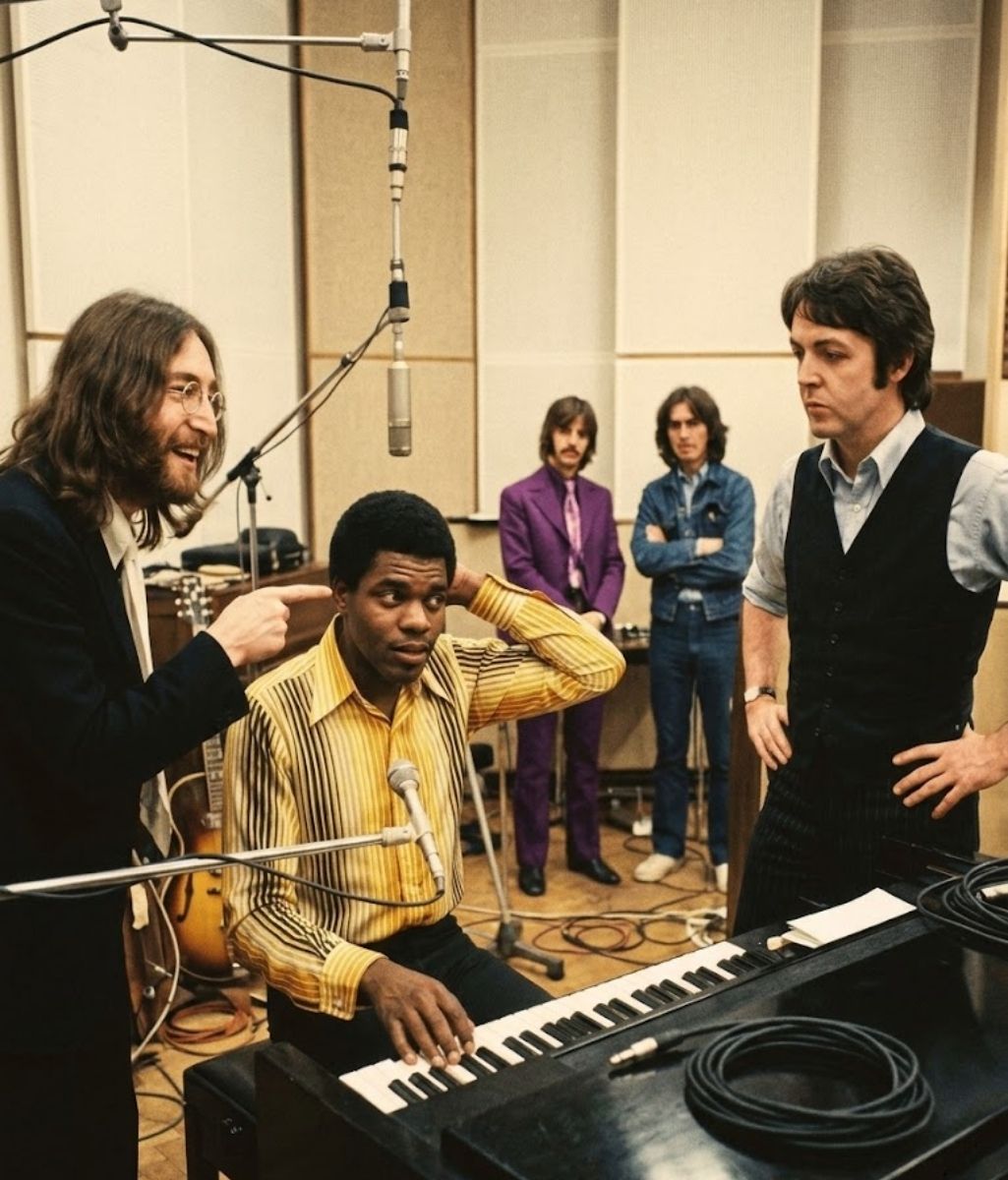
He wasn’t a stranger. Preston had crossed paths with the band years earlier, back when they were still cutting their teeth in Hamburg. But this time, his presence carried a different weight. Invited in almost casually, he sat down at the keyboard and began to play. What followed wasn’t just accompaniment—it was transformation.

Suddenly, the atmosphere softened. The tension that had filled the room loosened its grip. With Preston there, the others seemed to rediscover a sense of purpose. His playing—fluid, soulful, and deeply rooted in gospel and rhythm and blues—added a warmth the sessions had been missing. Tracks like “Get Back” came alive in a new way, driven not just by structure, but by feeling.

There’s a famous moment when John Lennon, half-joking yet half-serious, floated the idea of Preston as a “fifth Beatle.” It wasn’t an official proposal, but it spoke volumes. For a band notoriously protective of its identity, even suggesting an outsider as part of the inner circle was extraordinary. And yet, in that moment, it felt almost natural.

Preston’s influence went beyond his musicianship. His presence changed the dynamic between the four Beatles themselves. With someone else in the room—someone they respected—they behaved differently. There was less friction, more focus. It was as if Preston acted as both collaborator and buffer, easing tensions simply by being there.

So why didn’t it last?

The answer isn’t simple, but it lies in the reality of where The Beatles were at that point. The issues within the band ran deeper than any one person could fix. Creative differences, business disputes, and personal ambitions had already set them on diverging paths. Preston could bring light into the room, but he couldn’t rebuild what was already breaking apart.

There may also have been an unspoken understanding. The Beatles weren’t just a band—they were a phenomenon defined by a specific chemistry. Expanding that circle, even for someone as gifted as Preston, might have altered something essential. His role worked precisely because it was temporary, because it didn’t come with the weight of permanence.

And so, the door that seemed to open never fully did. Preston contributed to their music, left an undeniable mark, and then stepped back out. No formal title, no lasting membership—just a brief but powerful chapter.

Yet his impact endures. Listen to those recordings, and you can hear it—the lift in the sound, the subtle shift in energy. In a period often remembered for its discord, Billy Preston’s presence stands as a reminder of what The Beatles could still be when everything clicked, even if only for a moment.
He may never have officially become a Beatle, but for a short time, he helped them find their way back to the music. And sometimes, that’s more meaningful than any title could ever be.

0 Shares:
Leave a Reply

Your email address will not be published. Required fields are marked *

You May Also Like
John Lennon
Read More

“We hadn’t really rehearsed.” In September 1969, while The Beatles still existed “on paper,” John Lennon walked onto the Toronto stage like a man with nowhere left to hide. No Paul to smooth the edges, no George to add colour, no Ringo to hold the centre — just a band thrown together in 24 hours: Eric Clapton, Klaus Voormann, Alan White… and Yoko Ono standing as an equal presence, not in the background. By most accounts, John was so terrified he vomited before going on. This wasn’t ordinary stage fright — it was something deeper: am I still enough without The Beatles? The set was rough, raw, sometimes shaky… but it was electric because for once the crowd wasn’t watching “Beatle John.” They were watching John Lennon, exposed and unfiltered, proving he could still stand on his own. And maybe right there — in that fear, and that survival — the “divorce” had already begun.

“WE HADN’T REALLY REHEARSED” — The Night John Lennon Faced the World Alone “WE HADN’T REALLY REHEARSED” —…
Ella Langley
Read More

“SHE TOOK HOME 5 ACM AWARDS — BUT NO ONE KNEW SHE WAS FALLING APART: Ella Langley’s Triumph Turns Into a Heart-Stopping Backstage Breakdown That Stunned the Entire Country Music World”! Ella Langley’s five-award sweep should have been the kind of night artists dream about — cameras flashing, crowds roaring, the stage lit in gold as her name echoed again and again. But what viewers didn’t see was the storm brewing behind those perfect smiles. Moments after stepping offstage, the rising star faced an emotional collapse that left insiders shaken, revealing a private battle she had carried alone through the entire ceremony. Her victory became the backdrop for a truth far more powerful than any trophy: that even when the world is applauding, someone’s soul can be fighting to stay steady. The country music community is still reeling — and her story is breaking hearts everywhere.

Even when you seem to be living on cloud nine, no one knows what you’re going through. Being…
Led_Zeppelin
Read More

HE SAT BEHIND THE DRUM KIT AND ROBERT PLANT COULDN’T BELIEVE HIS EYES. Twenty-seven years had passed since John Bonham died, and Led Zeppelin had vowed never to reunite because “no one could replace Bonzo.” But at the O2 Arena that night, the vow was broken in the most emotional way possible. When the lights hit the drum riser, the person sitting there wasn’t John, but Jason – his son. Jason was the spitting image of his dad, from that slightly hunched posture to the sheer power of his grip on the sticks. When the first thunderous beats of “Kashmir” rang out, Robert Plant turned to look. For a split second, the legendary golden-haired frontman was stunned. His eyes welled up with tears. It was like seeing his dearest friend brought back to life in the form of his son. It wasn’t just music; it was bloodline, a painful yet glorious legacy. But the thing that moved Robert Plant the most was the moment the song ended, when Jason made a small gesture toward his dad up above…

December 10, 2007. The O2 Arena in London. The atmosphere wasn’t just electric; it was suffocating. Twenty million people…