“THE ARENA ERUPTED AFTER JUST ONE CHORD” — KEITH HARKIN AND NEIL BYRNE TURN ‘WHISKEY IN THE JAR’ INTO A FULL-BLOWN MUSICAL REBELLION THAT HAD THOUSANDS ON THEIR FEET SINGING BACK AT THE STAGE.

Keith Harkin

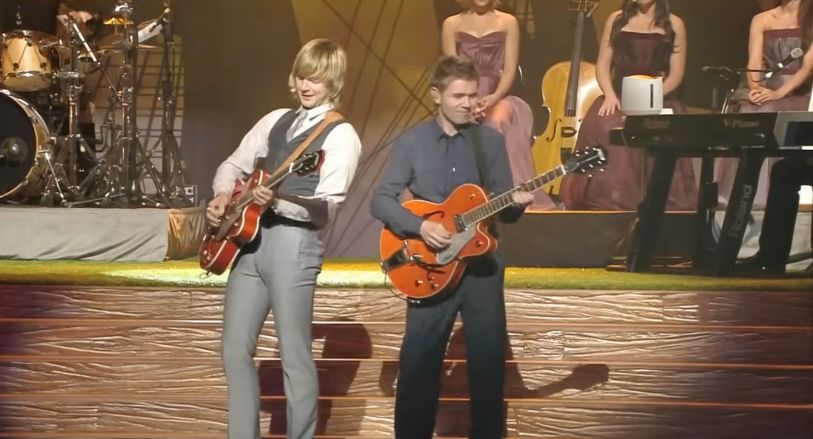
Celtic Thunder’s Keith Harkin and Neil Byrne had fans on their feet during their electrifying live performance of “Whiskey in the Jar”, a timeless Irish ballad that never fails to stir the soul.

Filmed live in Kansas City in 2011, the duo’s guitar work and rich harmonies lit up the stage, reminding audiences why this centuries-old song remains one of Ireland’s most beloved anthems.


Many viewers flooded the comment section to praise the pair’s chemistry and talent, calling it “one of the best performances ever” and “absolutely beautiful.” For countless fans, it brought back the spirit of Celtic Thunder’s golden era and the memory of the late George Donaldson, whose presence remains deeply missed.

Beyond the performance, the song itself carries a remarkable history. “Whiskey in the Jar” tells the tale of Patrick Fleming, a notorious Irish highwayman hanged in 1650. Though he was known for his crimes — robbing both rich and poor — folklore transformed him into a larger-than-life folk hero.
The song recounts a highway robber’s betrayal by his lover, Molly, and his ultimate downfall — themes that resonated with generations facing oppression and hardship.

First emerging in 17th-century Ireland, the tune became a rebel anthem and was later popularized by folk icons like The Dubliners and rock legends Thin Lizzy. Metallica’s gritty cover introduced it to a new generation, while bands like The High Kings and Celtic Thunder have kept its Irish roots alive.

Voyage II - 'Whiskey in the Jar'

Historian Alan Lomax once noted that songs about highwaymen who defied the crown were adored by common people — they represented defiance, pride, and freedom. In Ireland, where such rebels often stood against English landlords, “Whiskey in the Jar” became a symbol of national spirit.

Whiskey in the Jar

Over the centuries, the song traveled with Irish emigrants to America, evolving into new forms — even inspiring the Civil War anthem “We’ll Fight for Uncle Sam.” Yet, its heart has never changed.

In Celtic Thunder’s hands, “Whiskey in the Jar” feels both ancient and alive — a bridge between Ireland’s past and present. For many fans, it wasn’t just a performance — it was a reminder of home, pride, and the music that unites generations across oceans.


0 Shares:
Leave a Reply

Your email address will not be published. Required fields are marked *

You May Also Like
Gianluca Ginoble
Read More

“THE POWER OF LOVE” WAS WRITTEN IN 1985 — BUT TONIGHT, IT FELT BRAND NEW. When Il Volo stepped into “The Power of Love,” nothing felt rushed. The lights were soft. The air felt still. Gianluca Ginoble didn’t overpower the song — he leaned into it. His voice rose slowly, steady and full, like he trusted every word to land on its own. You could see it in his face. Calm. Focused. Honest. The other voices wrapped around him, not competing, just holding the moment together. For a few minutes, it didn’t feel like a cover or a performance. It felt like a memory you didn’t know you had, suddenly coming back. That’s when love songs work best.

When Gianluca Ginoble Channels “The Power of Love” When Il Volo comes together to perform a song as…
Bruce
Read More

“He’s 75, Shirtless, And Stronger Than Ever — Bruce Springsteen Just Proved Age Bows To Power! Striding Onto A French Yacht With A Physique That Could Intimidate Men Half His Age, The Boss Looked Like A Living Legend Reborn. Surrounded By Spielberg, Bono, And The Edge, The Moment Exploded Into A Spectacle Of Pure Rock Dominance — Fans Are Calling It The Most Epic Comeback Of The Century!

Bruce Springsteen is enjoying his newly minted billionaire status in style. The Boss, 74, offered a glimpse of his…
Waylon Jennings
Read More

“AFTER MORE THAN 40 YEARS OF FIGHTING, WAYLON JENNINGS STOPPED RUNNING.” The final years of Waylon Jennings weren’t about rebellion anymore. They were about control. By his early sixties, his body showed every mile he’d lived. On stage, he stood still. Sometimes leaning on the mic. Letting the band carry the moment while silence hung just a little longer than expected. Not for drama. Because life had slowed the tempo. But when he sang, nothing was missing. That voice was still rough. Still honest. Still alive. He didn’t need the outlaw image anymore. No rules left to break. Just a man who learned that survival takes discipline, not defiance. When he left, it didn’t feel like surrender. It felt like choosing his own ending.

For most of his life, Waylon Jennings was defined by motion. Always pushing forward. Always pushing back. Against…