There are songs that belong to a moment in time—and then there are songs that refuse to stay there.
When Wilson Fairchild walked into a Nashville studio, they weren’t just recording music. They were stepping into something far more personal: a legacy shaped by their fathers, Harold Reid and Don Reid of The Statler Brothers.
For decades, the Statler Brothers defined a sound that blended storytelling with harmony in a way that felt both intimate and universal. Their songs often carried themes of everyday life—dreams, disappointments, and the quiet truths people don’t always say out loud. It was that honesty that made their music endure.
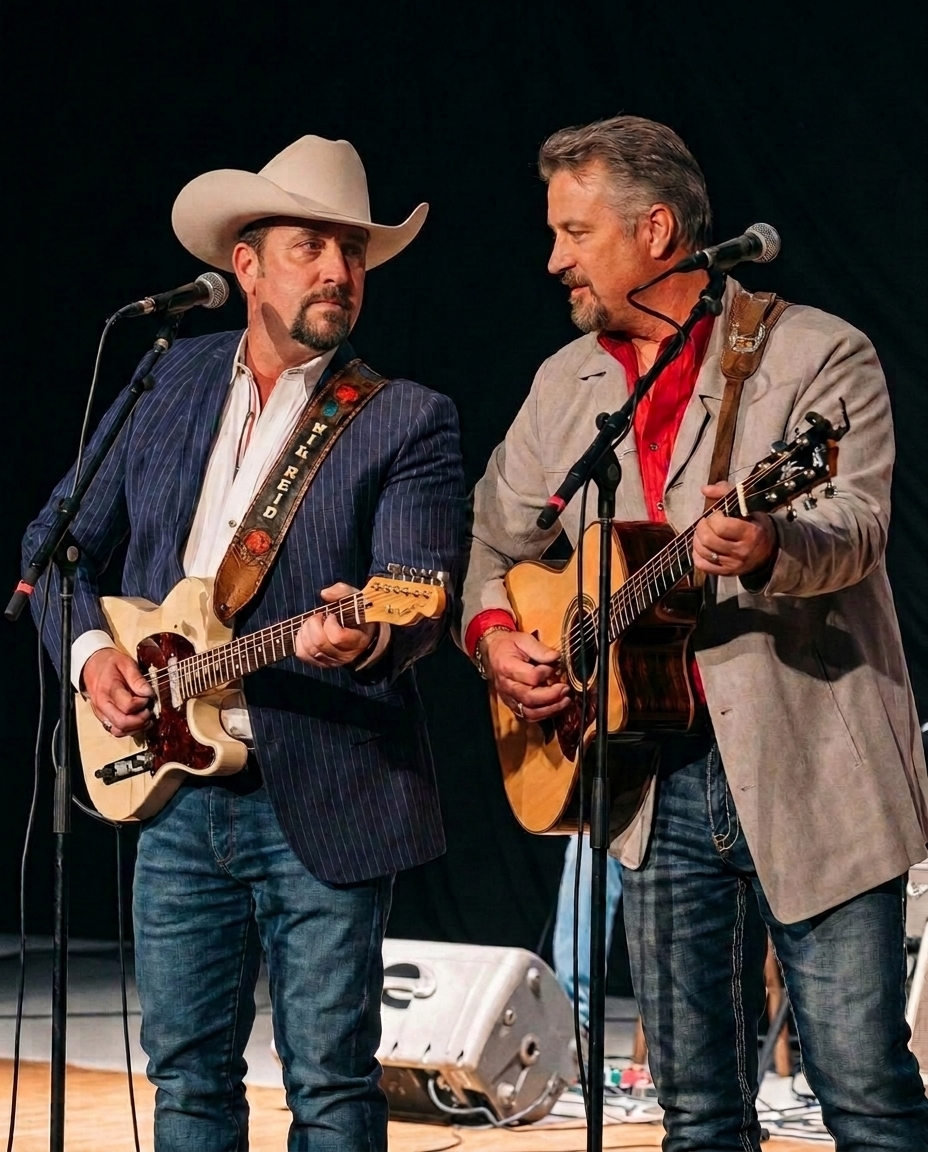
But legacy, especially one as recognizable as theirs, comes with weight. For Wil Reid and Langdon Reid, that weight isn’t just about expectation—it’s about connection. These aren’t just songs they grew up hearing. They are songs they grew up living alongside.
When Harold Reid passed away in 2020, it marked more than the loss of a voice. It felt like the closing of a chapter—one that had defined an era of country music. For many fans, the idea of hearing those harmonies again in the same way seemed impossible.
And yet, something quietly powerful happened.
In that Nashville studio, Wil and Langdon chose to return to one of their fathers’ most emotional songs—a piece built on reflection, on the gap between what we imagine for our lives and what reality eventually becomes. It’s the kind of song that doesn’t fade with time, because its message remains relevant.
What makes their version stand out isn’t reinvention. It’s restraint.
They didn’t approach the song as something to modernize or transform. Instead, they treated it with care, allowing the original spirit to remain intact. Their voices, shaped by both genetics and experience, naturally carried echoes of what came before. Not as imitation, but as inheritance.
Listeners have described the moment as almost surreal. Not because it feels like the past returning, but because it feels like the past continuing. The harmonies are different, yet familiar. The emotion is present, but shaped by a new perspective—one informed by loss, memory, and time.
That’s what gives the performance its depth.
It’s not nostalgia in the traditional sense. It’s not about looking back and trying to recreate something that once was. Instead, it’s about acknowledging where that music came from and allowing it to move forward through a new generation.
For fans of the Statler Brothers, the experience carries an added layer of meaning. It’s a reminder that while voices may fade, the songs themselves don’t disappear. They remain, waiting to be heard again—sometimes in new voices that understand them in ways others cannot.
In the end, Wilson Fairchild didn’t just sing a song.
They carried it.
And in doing so, they proved something simple, but powerful:
Some music isn’t meant to end.