In the heart of Times Square, where movement never truly stops, an unexpected performance turned one of the world’s busiest intersections into a place of silence, emotion, and shared attention.
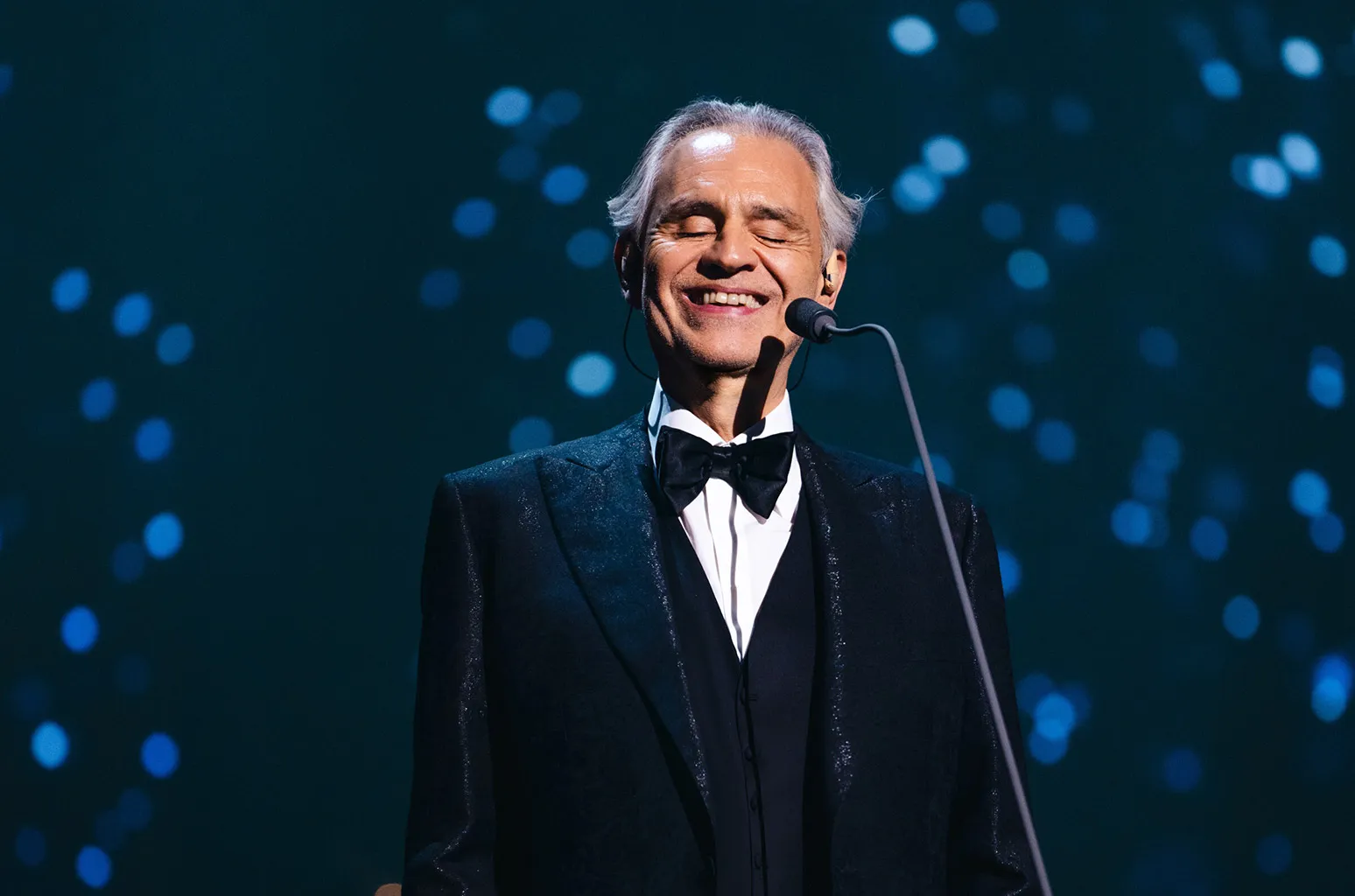
It began with the unmistakable voice of Andrea Bocelli, an artist known for bringing classical and contemporary audiences together through deeply emotional performances. This time, however, the setting was not a grand opera house or a concert hall. It was the open streets of Manhattan, surrounded by flashing screens, traffic noise, and thousands of rushing pedestrians.

As Bocelli’s voice carried through the air, cellist HAUSER joined in, responding to each phrase with sweeping, expressive cello lines. What followed was not just a performance, but a musical exchange — a dialogue between voice and instrument that seemed to cut through the chaos of the city.
At first, people continued walking as usual. Tourists checked their phones. Commuters moved quickly through the crowd. But slowly, almost imperceptibly, something changed. Steps began to slow. Heads turned. And then, one by one, people stopped.
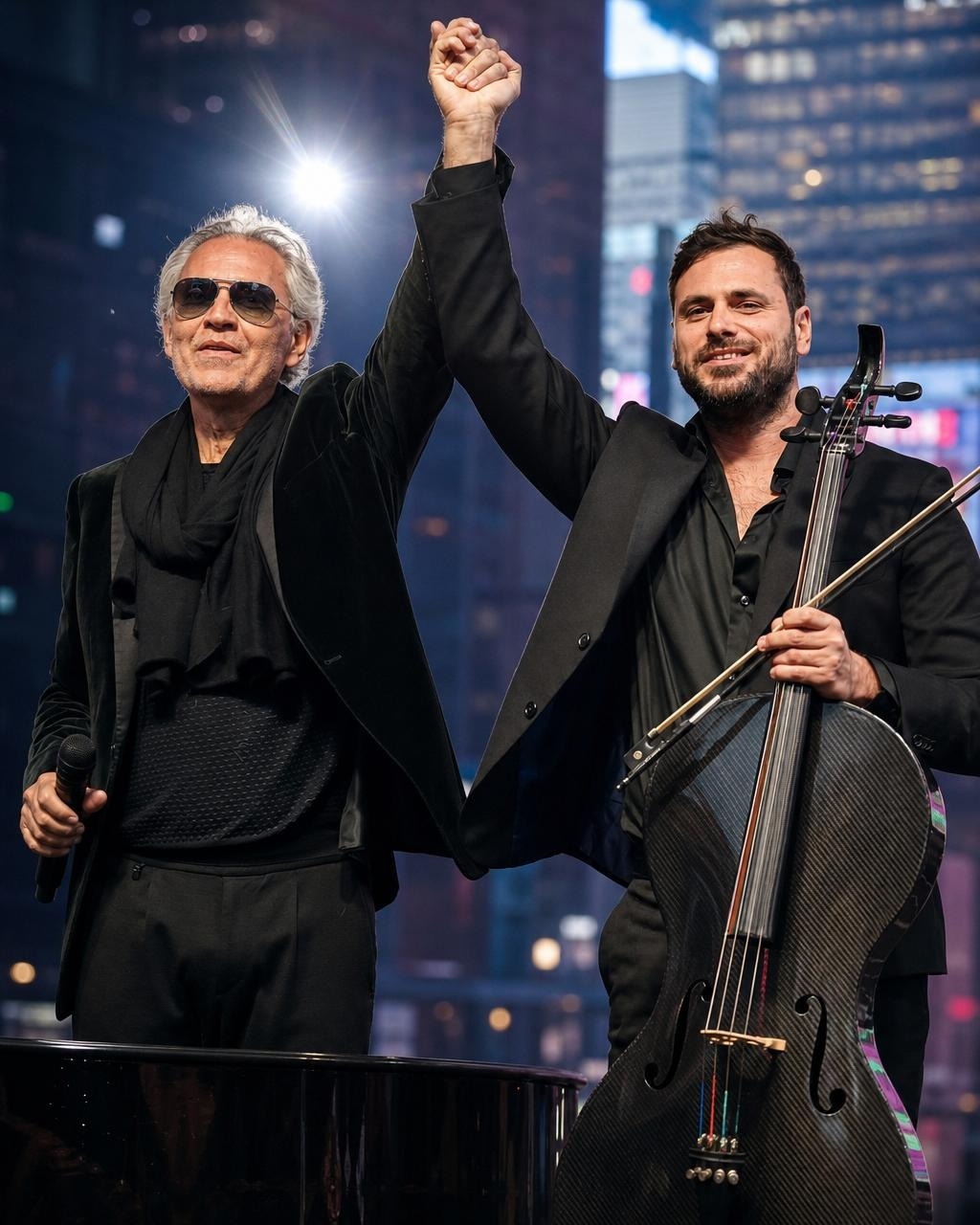
What made the moment so striking was not only the music itself, but the contrast surrounding it. Times Square is rarely still. Its energy is constant, overwhelming, and loud. Yet during this performance, that energy shifted. The usual rush gave way to stillness, as strangers found themselves standing side by side, watching in quiet attention.
The piece performed, “Melodramma,” carries a long history in Bocelli’s repertoire. Originally released more than two decades ago, it has been performed on countless stages around the world. But in this setting, with HAUSER’s cello weaving through every note, the song took on a different atmosphere — more intimate, more immediate, and deeply emotional.
By the final moments, many viewers described the scene not as a concert, but as something closer to a shared emotional experience. Some were visibly moved, others stood silently, simply absorbing the unexpected calm that had settled over the square.
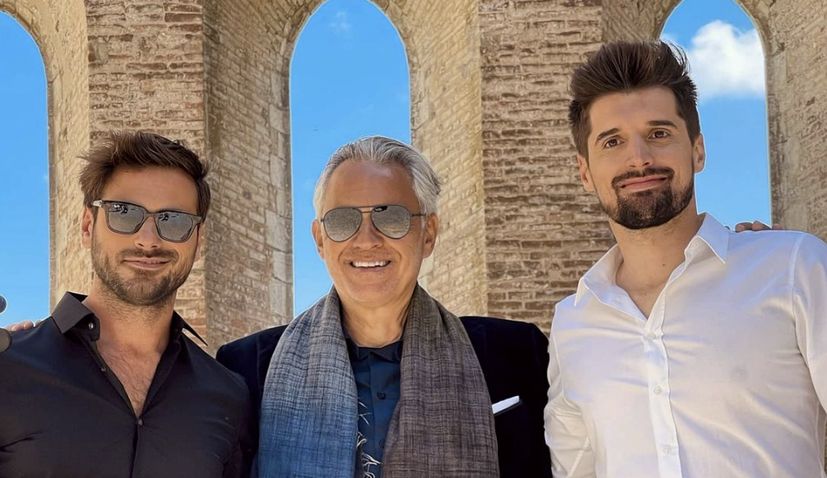
When the last notes faded, the moment ended as quickly as it had begun. The city’s movement returned. Lights continued flashing. Footsteps resumed. But for those who had been there, something lingered — a sense that they had witnessed a rare interruption in the rhythm of everyday life.
In a place known for constant motion, the performance created something unusual: stillness.
And for a few minutes in the middle of New York City, music didn’t just fill the space.
It stopped it.