A Different Kind of Stage: Ignazio Boschetto’s Quiet Moment of Fatherhood

Il Volo

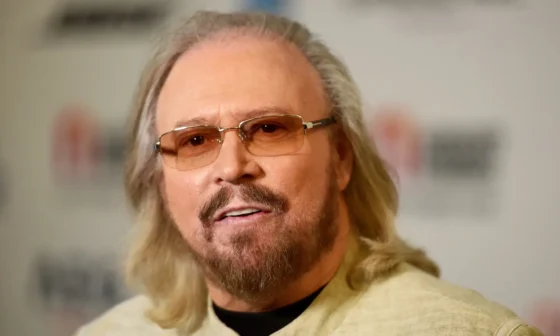
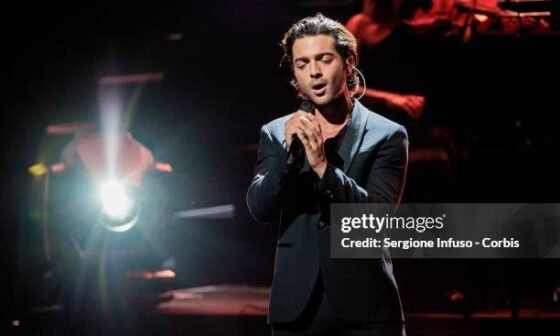
For years, Ignazio Boschetto has stood on some of the world’s most celebrated stages, delivering powerful performances as part of Il Volo. His voice—controlled, expressive, and often intense—has reached millions. But recently, it was a moment away from the spotlight that revealed something even more profound.

It didn’t happen in a concert hall or under stage lights. There was no orchestra, no audience, no applause waiting at the end. Instead, it unfolded in the quiet of a hospital room, where the only sound was the gentle breathing of a newborn child.

For Boschetto, this was a different kind of debut.

Holding his daughter for the first time, the singer who is known for composure and control seemed to let that carefully maintained exterior fall away. The emotions were immediate and visible—tears that came without hesitation, without the instinct to hide or compose himself. It was a moment defined not by performance, but by presence.

For fans, the contrast is striking. On stage, Boschetto’s artistry is polished, shaped by years of training and experience. Every note is placed with precision, every gesture part of a larger performance. But here, there was no structure to rely on—only instinct and feeling.
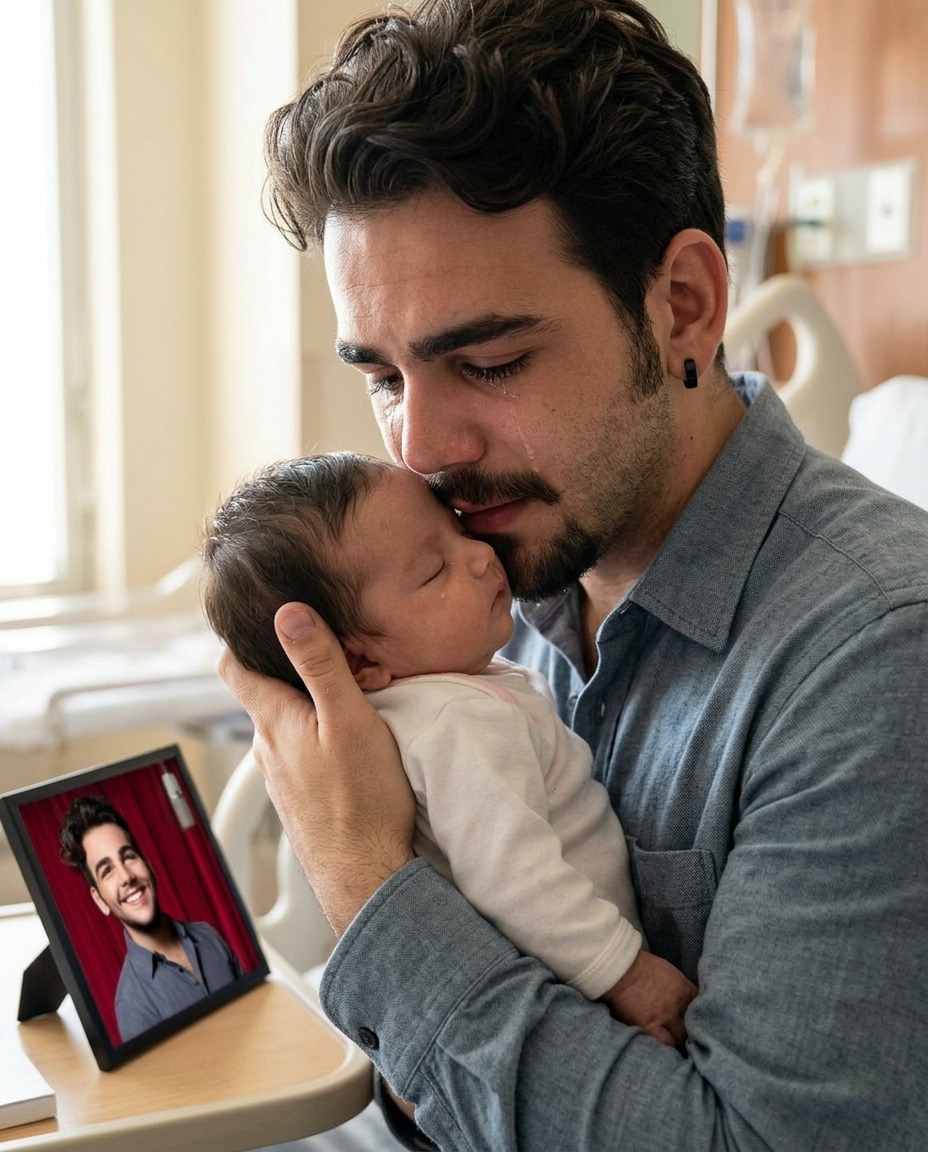
That’s what makes the moment resonate so strongly. It reminds us that behind the public image is a person navigating life’s most personal experiences, just like anyone else. The transition from performer to parent is not something that can be rehearsed or perfected. It simply happens, often all at once, carrying a weight that’s impossible to fully prepare for.

There’s also something universal in the scene. The first moments between a parent and child often exist outside of time, where everything else—responsibilities, expectations, even identity—temporarily fades. For Boschetto, whose life has been shaped by schedules, tours, and public attention, that pause may feel especially significant.

While details of what he said in that moment remain private, it’s clear that the words were less important than the feeling behind them. A whisper, after all, doesn’t need to be heard by anyone else to matter. Its meaning exists entirely between the speaker and the listener.

In many ways, this moment adds a new dimension to how fans might see him. Not by changing who he is, but by revealing another side—one that doesn’t rely on music to communicate. It’s a reminder that vulnerability doesn’t diminish strength; it often deepens it.

As Boschetto returns to the stage in the future, that experience will likely travel with him in ways both subtle and profound. The emotions that define personal milestones often find their way into artistic expression, shaping performances in ways audiences may feel even if they don’t fully understand why.

For now, though, the significance lies in the simplicity of the moment itself: a father, a child, and a quiet beginning. No spotlight required.


0 Shares:
Leave a Reply

Your email address will not be published. Required fields are marked *

You May Also Like
paul
Read More

“F— you, John.” – Paul McCartney finally speaks bluntly about the most explosive moment after suing The Beatles themselves. In the documentary Man on the Run, Paul does not shy away from the darkest chapter in the legendary band’s history: the 1970 lawsuit, the biting diss track How Do You Sleep?, and the period when the entire world viewed him as “the man who broke up The Beatles.” Paul insists: “John was the one who left the band. But I was the one who took the blame.” When Lennon sang, “The only thing you did was Yesterday…,” Paul admits that only one response ran through his mind: 👉 “If all I ever did was Yesterday, Let It Be, Eleanor Rigby… then f— you, John.” What lay behind that expletive? Betrayal? Hurt? Or simply two geniuses so alike that they could no longer coexist? The film not only revisits the legal battle with Allen Klein but also reveals the complicated love–hate dynamic between two legends who once called each other brothers. What truly pushed Paul to sue his closest friends? And what moment led him to utter that shocking line? The answers lie in Man on the Run — and the story behind it is even more intense than you’ve ever heard.

Paul McCartney reveals explosive ‘f— you, John’ moment after Beatles lawsuit Paul McCartney’s ‘Man on the Run’ documentary…
Barry gibb
Read More

A RARE, TENDER MOMENT: LAST NIGHT, STEVE GIBB — SON OF BEE GEES ICON BARRY GIBB — TOOK THE STAGE AND OFFERED A SOFT, EMOTIONALLY DEVASTATING TRIBUTE TO HIS FATHER In a room built for noise and spectacle, Steve Gibb chose restraint, stepping out without announcement and letting a single, carefully held performance speak for years of gratitude, guidance, and unspoken understanding, his voice carrying less ambition than truth as Barry Gibb watched on not as a legend being honored but as a father listening, the moment unfolding quietly, without imitation or excess, shaped by memory rather than legacy and defined by how little it tried to prove. What that song may have settled between them — and what it gently leaves behind — is something that doesn’t end when the lights come back up.

  There are nights in music when nothing flashy happens — and yet everything changes. Last night was one…
paul-mccartney
Read More

“See you down the road, Bob…” Paul McCartney just paid tribute to Bob Weir the only way a Beatle can — like a performance without a stage. No spotlight, no band… just Paul’s words hitting like a slow encore. He remembers the Sphere night, the backstage invite, and Bob still recording on the road like the music never sleeps. Paul even offered to play bass on Bob’s track — a collaboration that now lives only in the “what could’ve been.” And you can almost hear it: one last chord held in the air, for a friend who inspired generations. Rest easy, Bob.

REVEALED: Sir Paul McCartney’s HEARTBREAKING final meeting with Grateful Dead legend Bob Weir — the Sphere backstage invite, the ‘I’ll…
George-Strait
Read More

“The King’s Secret Under the Brim”. Out there, 80,000 voices are screaming the name George Strait, waiting for the final hit, Amarillo By Morning. But inside this cramped room, there is no king. Only an aging father, searching for courage. For forty years, George Strait built a career on calm — a face that never cracked, emotions kept carefully out of sight. What few people knew was the quiet ritual before every show. He would gently kiss a faded photograph hidden inside the brim of his hat — the picture of his young daughter, Jenifer, who left this world in 1986. Tonight is the final performance. George places the hat on his head, hiding eyes heavy with tears. He whispers into the silence, “This song is for you, Jenifer.” When he steps into the light, the crowd sees a legend. But he sees only a small angel, smiling at the end of the road. Some pain doesn’t break a man. It crowns him.

The stadium was vibrating. You could feel it in the concrete floor of the dressing room—a low, rhythmic thrum…
John Lennon
Read More

“It’s cool to be singing with John again.” That night at Glastonbury didn’t feel like a normal set — it felt like time folding in on itself. Paul McCartney stood on the Pyramid Stage, aging in the present, while John Lennon appeared on the screen, forever young in 1969… and then their voices met on “I’ve Got a Feeling” as if the last forty years hadn’t happened. What broke people wasn’t the technology — it was the way Paul kept turning toward John, smiling with a look that held both joy and ache, like a friend getting one more song with his mate. And when it ended, that tiny wave into the darkness felt like a goodbye the whole crowd understood… even if no one could quite hear what he whispered next.

The mud of Glastonbury has seen history before. It has seen Bowie in his prime, the Rolling Stones…