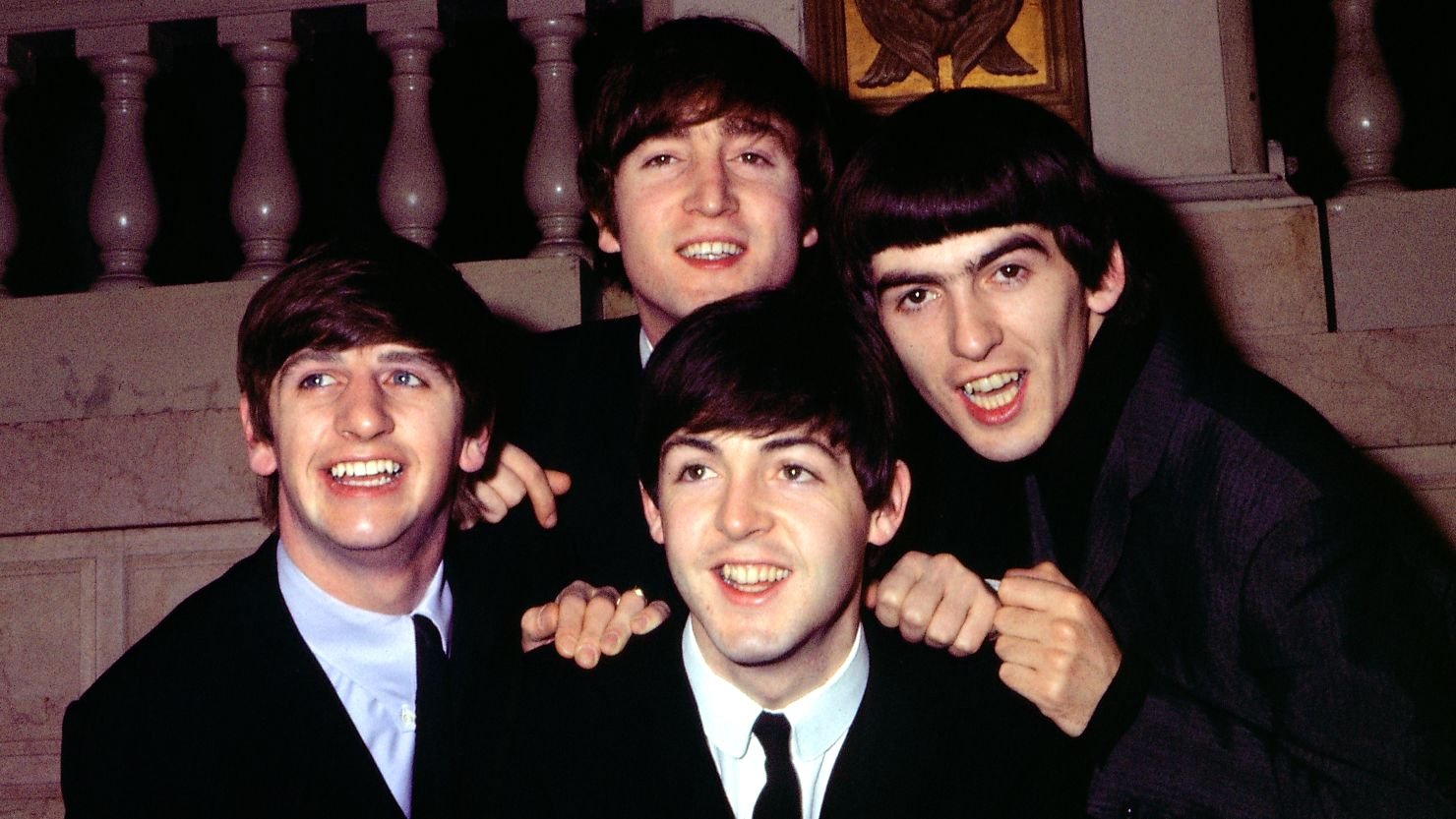
In April 1970, inside the familiar walls of Abbey Road Studios, something subtle yet profound was coming to an end. The Beatles—a group that had redefined popular music and global culture—found themselves together in the studio one last time. There was no grand announcement, no dramatic finale. Instead, the closing moments of their journey unfolded with a quiet, almost unspoken understanding.
For years, John Lennon, Paul McCartney, George Harrison, and Ringo Starr had created music that resonated across generations. Their partnership had endured relentless touring, creative breakthroughs, and personal evolution. But by the time they returned to Abbey Road for those final sessions, the unity that once defined them had begun to shift.
Tensions had been building for some time. Each member was growing in different artistic directions, and the collaborative spirit that fueled their early success was becoming harder to sustain. Still, when they stood together in the studio, there remained a shared history that couldn’t simply be set aside. That history filled the room as much as the music itself.
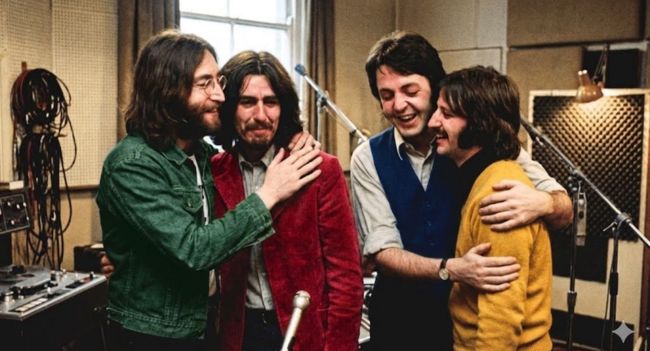
The recordings from that period didn’t feel like a victory lap. Instead, they carried a reflective tone—an awareness that this might be the last time they would create together as a band. Conversations were quieter. Interactions were more measured. The energy was not gone, but it had changed.
What makes this moment so compelling is not a single dramatic incident, but the absence of one. There was no explosive argument that ended everything in an instant. Rather, the breakup of The Beatles resembled the slow closing of a chapter. A few words spoken during those sessions reportedly acknowledged what everyone already sensed: the group, as it had existed, was reaching its natural conclusion.

For fans, the idea of The Beatles parting ways felt almost impossible to accept. They weren’t just a band—they were a cultural force, a symbol of creativity and connection. Yet for the four individuals inside Abbey Road Studios, the decision to move on was rooted in reality. They had spent nearly a decade in an intense creative partnership, and the need for personal space and new directions had become undeniable.
There is something deeply human about the way their story ends. No grand farewell concert, no carefully staged goodbye—just four musicians finishing their work, aware that things would not be the same again. It’s a reminder that even the most extraordinary collaborations are shaped by time, growth, and change.
Today, the legacy of The Beatles remains as powerful as ever. Their music continues to inspire, influence, and connect people around the world. But those final moments at Abbey Road offer a different kind of insight—not into their fame, but into their humanity.
In the end, their farewell wasn’t defined by spectacle. It was defined by understanding. And perhaps that quiet ending says as much about them as the music that made them unforgettable