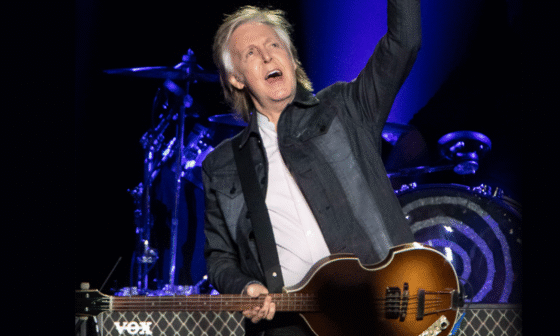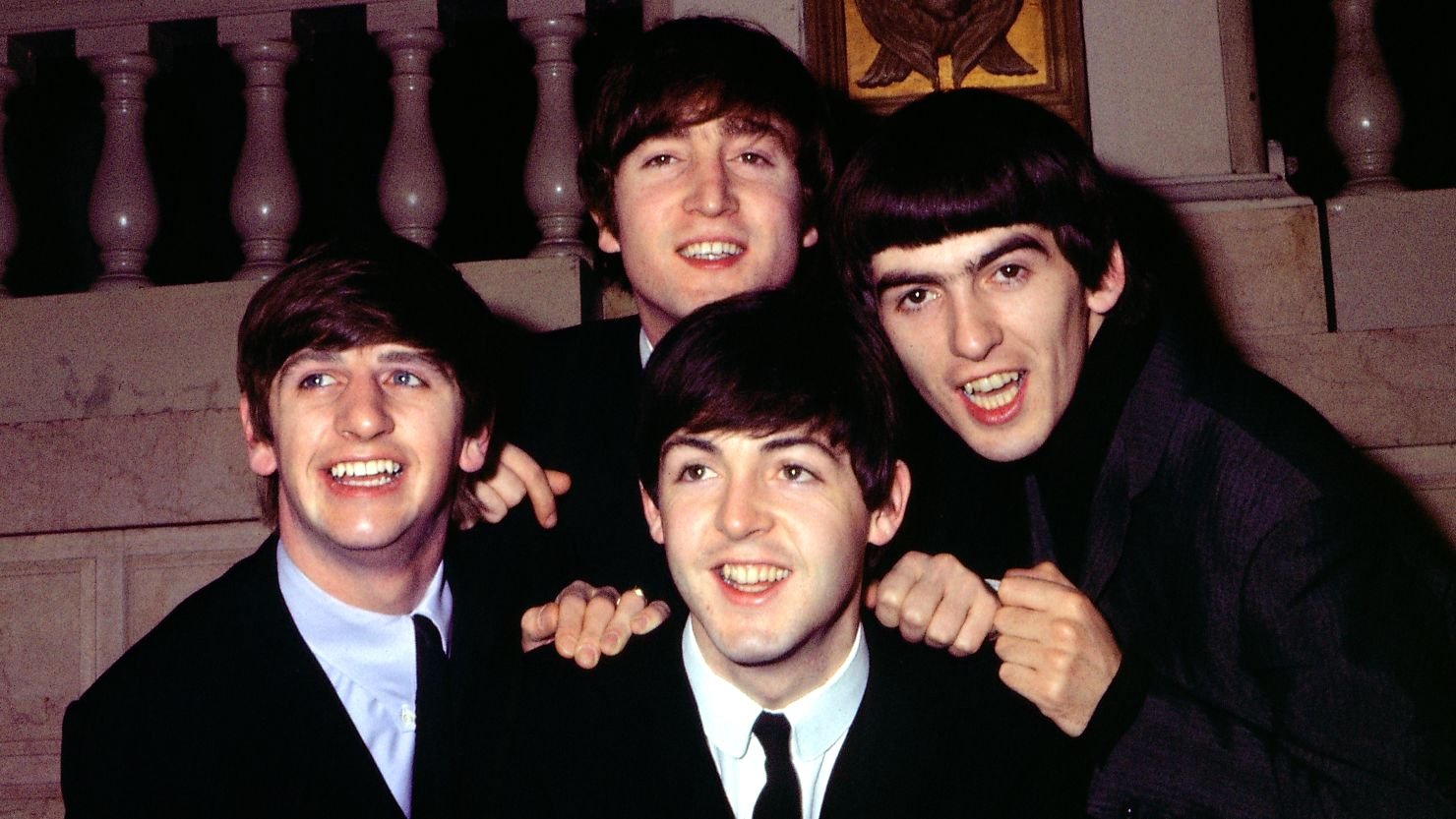
On August 15, 1965, The Beatles stepped onto the field at Shea Stadium and into history. The crowd — more than 55,000 fans — erupted into a wall of sound so intense it blurred the line between music and noise. It wasn’t just a concert; it was a cultural explosion.
From the opening chord, the atmosphere was unlike anything seen before. The screams were constant, piercing, and deafening. Paul McCartney, John Lennon, George Harrison, and Ringo Starr could barely hear themselves, let alone each other. Yet somehow, the show went on.
But within the chaos, a story has lingered for decades — a fleeting, almost cinematic moment when the performance appeared to falter. Some fans recall a brief pause, a shift in energy, as if the band’s focus had been pulled away from the massive crowd and toward something — or someone — else.
At the center of the story is a mysterious figure: a girl dressed in blue, standing among thousands, holding a tape recorder. According to the tale, something about her presence caught the band’s attention. For a split second, the noise, the frenzy, and the performance itself seemed to fall away.

Was it real? Or is it a story shaped by memory and myth?
What we do know is that Shea Stadium marked a turning point. The scale of the event revealed both the power and the limitations of Beatlemania. Technology at the time simply couldn’t keep up — the sound system was designed for announcements, not rock concerts, and the band’s music was often drowned out completely.
In interviews years later, the members of The Beatles admitted they were often guessing where they were in the songs. The performance became less about precision and more about endurance. In that context, moments of hesitation or disconnection were almost inevitable.
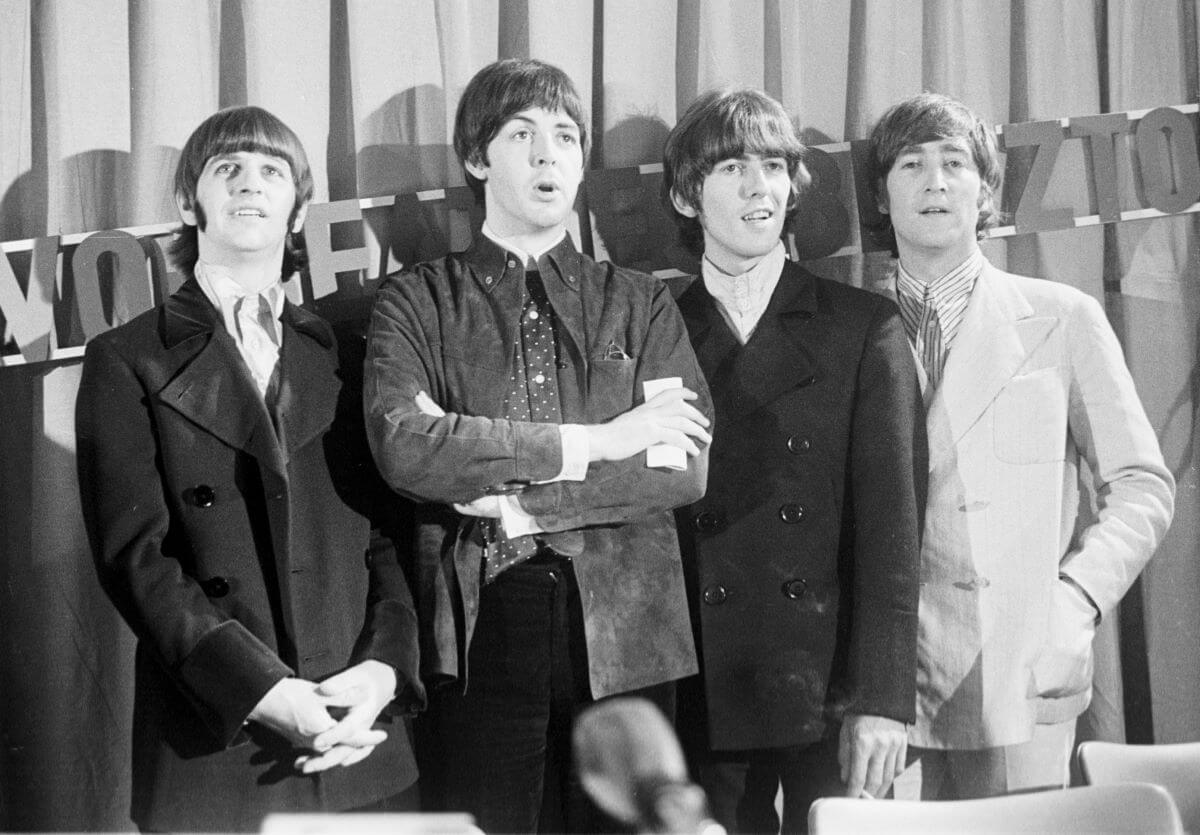
And yet, fans continue to search for meaning in those fragments of uncertainty. The idea that, amid the chaos, a single individual could momentarily capture the band’s attention speaks to something deeper — the human connection behind the spectacle.
The mention of “Michael’s final wish,” often tied to this story in modern retellings, adds another layer of intrigue, though concrete details remain elusive. Like many legends surrounding iconic moments in music history, it exists somewhere between fact and interpretation.
What remains undeniable is the impact of that night. Shea Stadium didn’t just host a concert — it redefined what live music could be. It exposed the growing gap between artist and audience, between performance and experience.

Whether the band truly paused for a girl in blue or whether the story has grown in the telling, the image endures: four musicians standing in the middle of overwhelming noise, navigating a moment that was bigger than any one of them.
Sometimes, history isn’t just about what happened — it’s about what people remember, what they feel, and the stories they carry forward. And in the case of that August night in 1965, the legend may be just as powerful as the truth.